Tennis Strategy and Skills with Steve Annacone   

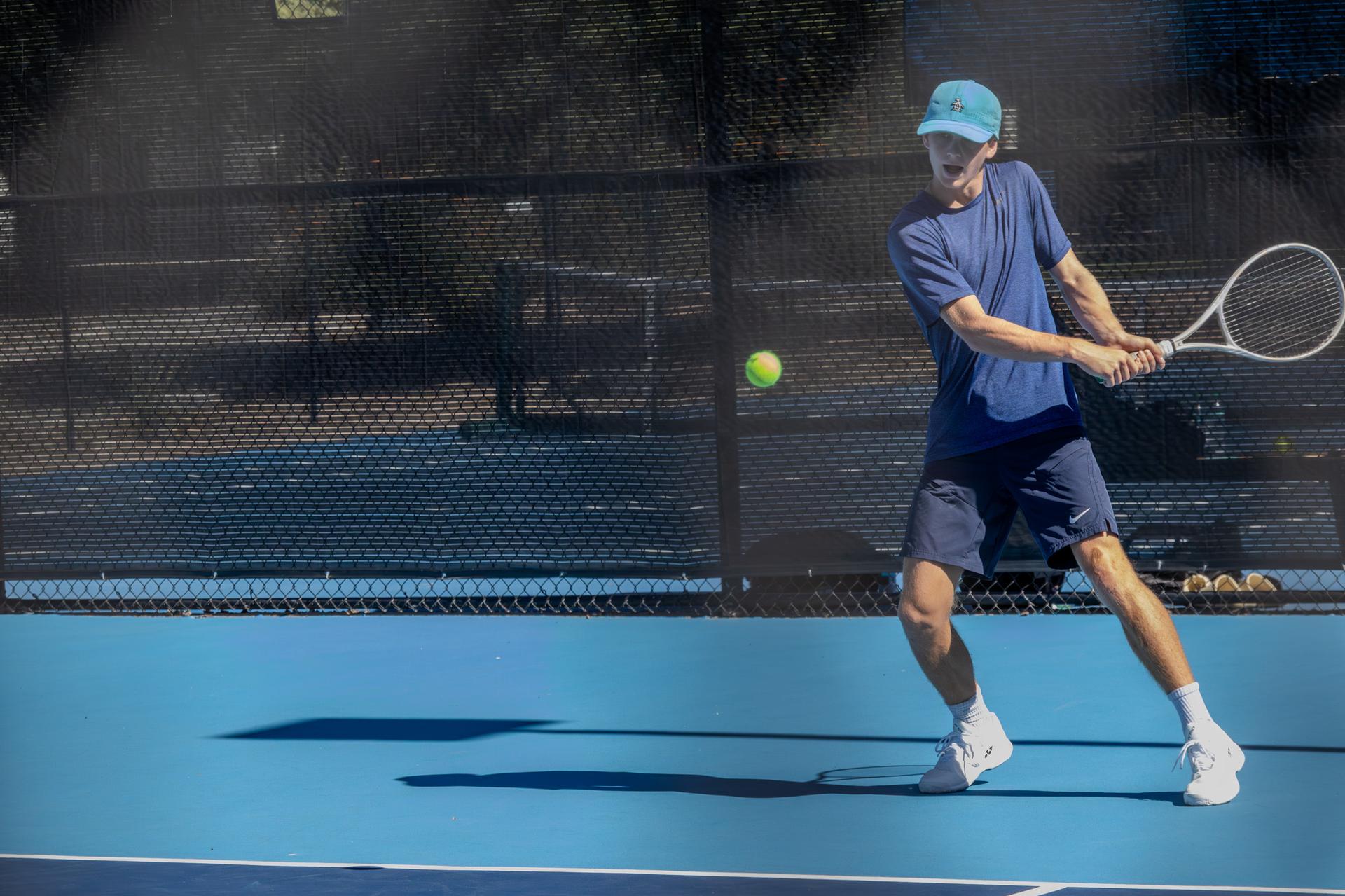
JCC Maccabi teen hitting a tennis ball outside on tennis courts

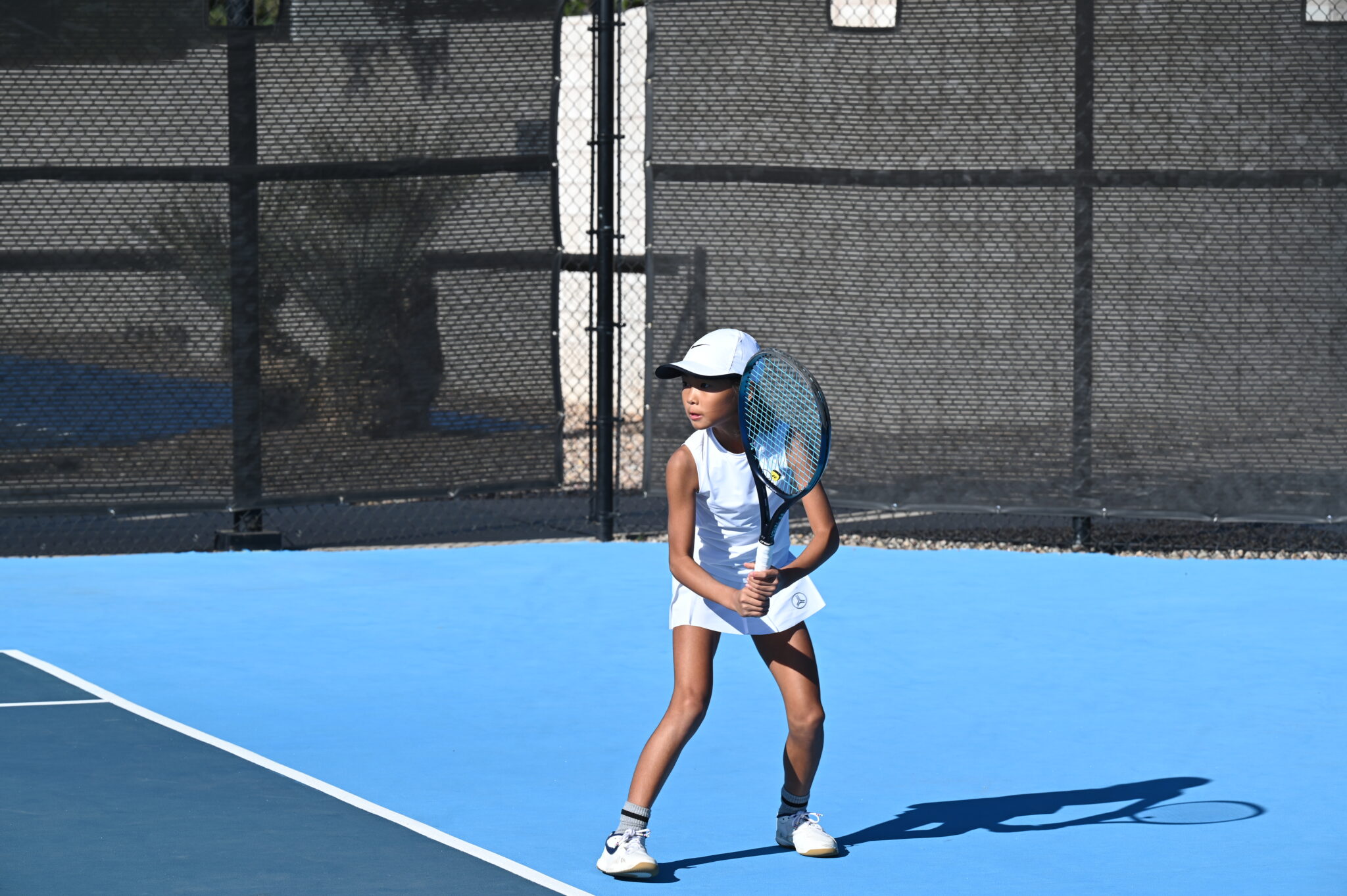
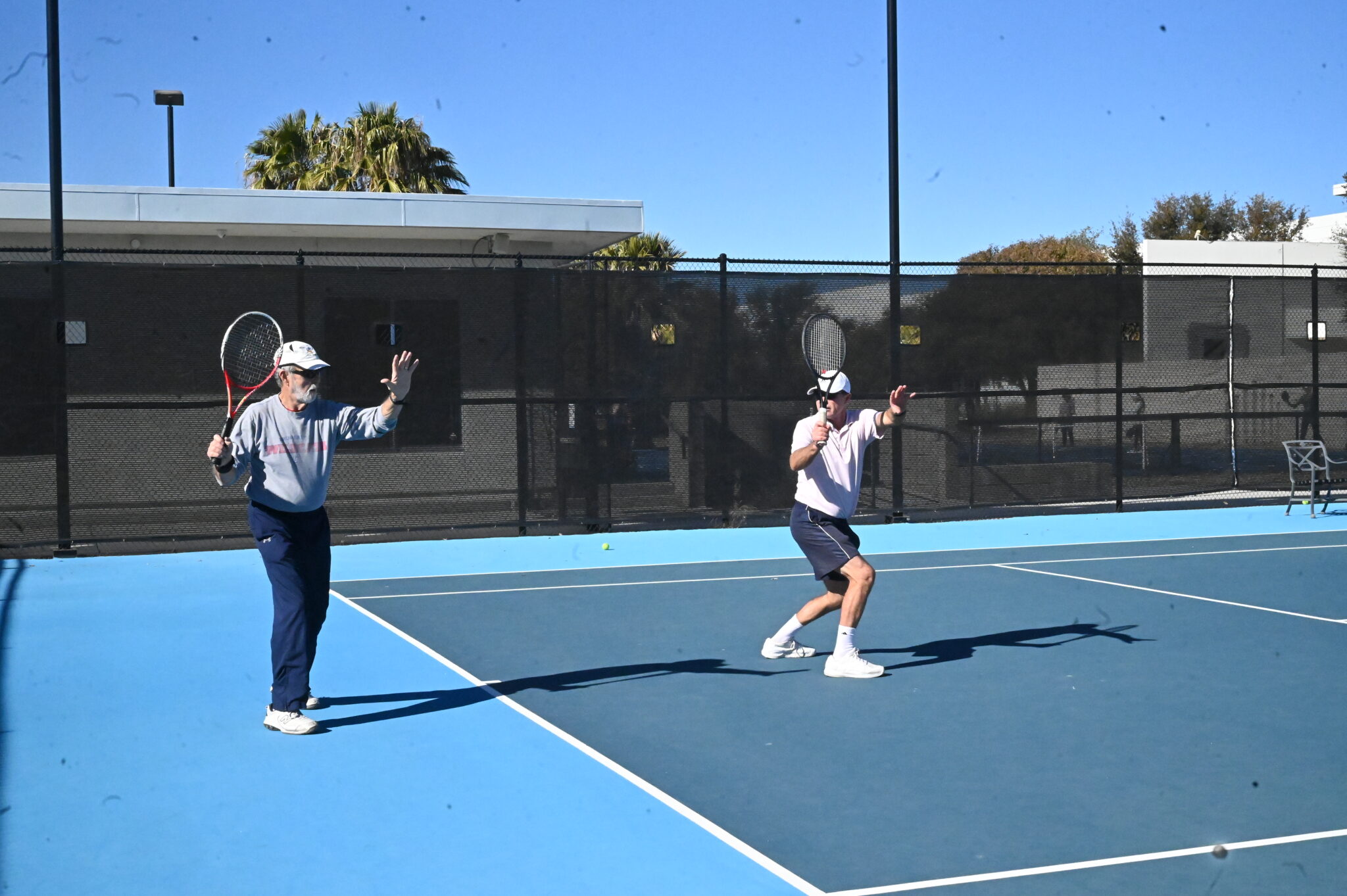
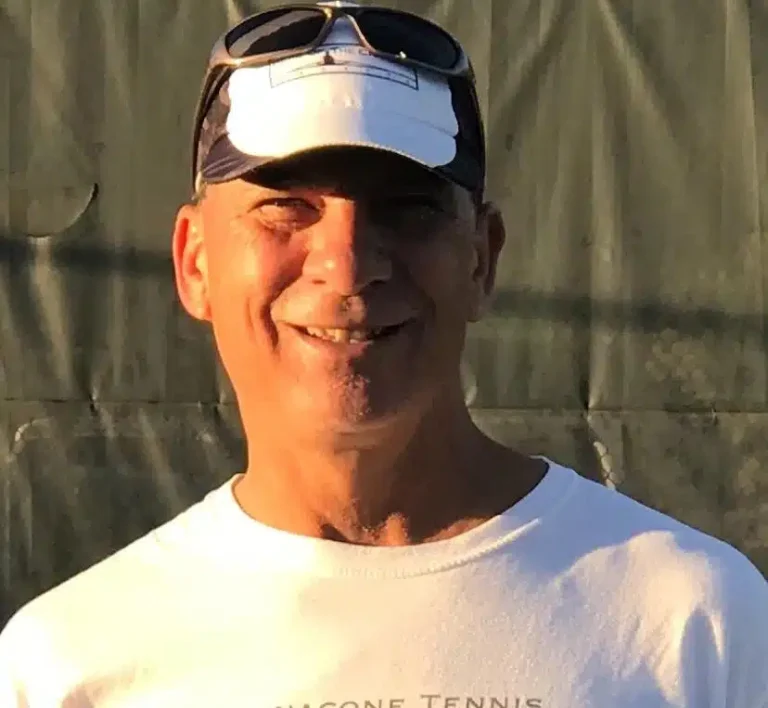
With over 40 years of tennis coaching experience, Steve Annacone, a long-time seasonal tennis pro at the Tucson J and founder of the Smoky Mountain Tennis Academy (SMTA) in Knoxville, TN, has incredible knowledge and wisdom of the sport. In this series, we are sharing some of Steve’s top tips for improving all aspects of your game!  
As every athlete knows, sports are as much about mental strategy as they are about physical ability — especially tennis. Keep reading to explore some of Steve’s best tips for framing your mindset the next time you are on the court.  

Hang in and Fight Through the Difficult Matches

All of the best tennis players realize that they will play at their optimum level only a couple (maybe) times a year. This means that a player must be able to come up with things that are working well on that given day to have a chance to win matches when everything is not going as planned. 


Players can actually win matches when they are playing poorly if they don’t give up and let the frustration take over rather than playing every point the best they can. Focus on the very basics: watch the ball, get ready after each shot and try to put two or three shots together on each point. 


These simple things can keep you in the match and allow you some success even on your most difficult days. 

Be Specific

Although it is extremely difficult these days to get the tennis ball to go exactly where you want, it is important that you aim for a specific target for your shot. 


If you tell yourself to just try to get the ball to land in, your focus and concentration is not likely to be as good as when you tell yourself to get the ball to land halfway between the baseline and the service line and on the deuce side of the court. Since the serve and return of serve are the first shots you hit, before the point starts, look at the target; exactly where you want the ball to land, and make sure you have in your mind that your swing will be traveling in that direction. 


Even though there will be many times that the ball does not go where you want it to, this will improve the quality of your shot because you are being decisive. If you choose an area with a good margin for error (not right on the baseline, sideline or any line!) your shot is likely to go in the general direction and be pretty successful. 


Make your target specific and you will help your focus and concentration as well as keeping your swing more free and relaxed. 

You Can Always Get Better 

Tennis is an incredible sport. As you are learning the game, you can work on so many different areas to improve on. 


Most of us initially focus on the actual hitting of the ball-strokes, footwork, placement, etc. As you improve, it becomes pretty obvious that winning a tennis match is not always directly related to how well you hit the ball. Sometimes it is selecting the right shot at the right time. 


Other times it is the effect that your strategy has on your opponent over the course of the match. Even as you get older and cannot run as fast or hit the ball as hard, you can improve by being a student of your own game and using what has worked well for you in the past. Arthur Ashe came up with one of my favorite quotes for approaching both tennis and life: 


“Start where you are, use what you have, do what you can.” 


Take a few minutes and try to grasp exactly what this means. It will give you a great chance of continuing to get better at tennis, as well as providing you an awesome model to deal with all of the things that our thrown at us in our day to day lives. 

Use an Image and a Thought to Play the Ideal Point

Keep a mental note of the point you would like to play in your head. 


Picture what that point is like-good serve, good crosscourt first shot and a ball hit early from inside the baseline to get the opponent in trouble or win the point. 


Remind yourself before the point starts what you want the point to be like, how many hits you would like it to be, and how you would like to finish the point. A good way to do this is to recall a point that you have already played. 


Remember where you hit the serve or return, what type of shot came back, and what response you had on the next ball. Things will often repeat themselves but remember that each point is slightly different. 


Try to give yourself more of a chance of repeating a good point by reminding yourself just prior to the start of the point, what you have done well! 

About Steve Annacone

Steve has been a tennis professional and coach for the last 40 years. His experience includes seven years of ATP Tour experience as coach for Paul Annacone (highest world rankings, #12 in singles, #2 in doubles).  


In 1996, Steve founded Smoky Mountain Tennis Academy (SMTA) in Knoxville, TN. For 19 years, he was Facility Director, Head Coach, and Camp Director at SMTA. More than 75 SMTA students went on to compete in college, including one All American and many at the Division 1 level. A large number of these players started playing at SMTA and trained there throughout their college careers. Steve was named USTA/Tennessee Pro of the Year in 1998 and has served as Tennis Director or Head Tennis Professional at numerous facilities and clubs in New York, Florida, and Tennessee. An Elite USTA Tennis Professional, Coach Steve is available for private lessons. 

ACEing Autism Brings Inclusive Sports to the Tucson Community

An adult helps a child play tennis.

This fall, the Tucson J was proud to once again host ACEing Autism, a national nonprofit dedicated to helping children with autism grow, develop, and benefit from social connections and fitness through affordable tennis programming. 


ACEing Autism held a successful six-week clinic for participants ages 5-18+ at the J. The program relied on dedicated Tucson volunteers who paired up with participants to lead the clinic. This year, many of the volunteers were made up of faculty and students from the Speech, Language, and Hearing Sciences department at the University of Arizona.


Families, participants, and volunteers alike found meaningful connection and movement throughout the ACEing Autism experience. Keep reading to explore their final thoughts on the program.
 

“We love ACEing Autism tennis!  


This fall of 2025, we were excited to have ACEing Autism back in Tucson. My child started his tennis journey back in 2022, and I still remember clearly when I first enrolled him in this program. I was surprised by the professional attitude towards identifying goals and the practical-based outcome, which proves that tennis can offer many benefits for children with autism—physically, socially, emotionally, and behaviorally.  


Tennis helps with hand-eye coordination, balance, and overall body control. It also supports communication: Coaches often use clear, repetitive language and visual cues—ideal for children who are speech delayed. Surprisingly, my child builds his confidence step by step through each time attending ACEing, from feeling anxious and escaping in the beginning, to improving focus on the ball and self-regulation in the team movements; from feeling super upset from failing to hit the ball, to patiently engaging with peers, keeps staying in the group, and loudly encouraging everyone: “let’s do it! Try it again!” 


Compared with other large groups, loud and fast speed sports activities, ACEing Autism gracefully works well for my child! Tennis has predictable routines (point and direction). It allows individualized instruction—one child per coach or small ratios. The game’s structure can be easily adapted (larger balls, slower pace, shorter courts). Everyone is understandable and compassionate, without having misunderstandings of our kids’ behaviors from other regular players.  


The ending cheers are always our favorite part, and my child enjoys the joyful expression: “We Love Tennis!”


Jing, Parent

“ACEing autism is really beneficial not only to develop leadership skills for volunteers but also to increase their involvement in the community. I think it’s doing a great job benefiting the autism community since the program has been absent for a few years. I’m glad that ACEing Autism is back and can’t wait to see it expand in the Tucson area.” 


Morgan, High School Program Director

“I really love being out here and making sports more accessible for all kids. I am super grateful to be a part of this experience. Thank you for everyone who contributes and comes out to support ACEing Autism.” 


Allie, Volunteer

“ACEing Autism has been great for the kids. They’re able to interact with each other and interact with the volunteers. They gain social communication skills and work on their tennis at the same time, which is amazing.” 


Ashley, Volunteer

“My son absolutely loved this program. Although he can struggle when asked to try new things, the exceptional level of support at ACEing Autism made him feel safe and open to discovering and developing new competencies—I could tell he didn’t mind if things didn’t come out perfect on the first try. Program volunteers were deeply caring and fully present, meeting our kiddos wherever they were and allowing them to explore at their own pace. Someone recently asked him if he likes sports, and he said, ‘I play tennis.’ He would not have said that five weeks ago.”


Rachel, Parent

“ACEing Autism is a really wonderful opportunity for children with autism to have communication opportunities with other individuals, whether it’s other players or adult volunteers. It’s also a really wonderful opportunity for volunteers to familiarize themselves and develop their skills through working with individuals from the community. It’s a great way to connect and build team bonding opportunities as well.” 


Alicia, Volunteer 

“Since starting ACEing Autism, I have grown more connected to the Tucson community. Being a student at U of A, university life is just one bubble, but volunteering and participating in other organizations off campus allows me to feel more connected to Tucson as a community.  


In addition to this, ACEing Autism has definitely helped me develop stronger skills when working with those who are on the spectrum. These are skills I can use as a future clinician as a speech language pathologist to better care for my patients. I feel like ACEing Autism is definitely beneficial to those in the autism community because I’ve seen firsthand how this specific program promotes positive interaction among those within the community that otherwise, they wouldn’t get. One athlete I worked with has become more confident in his ability to do certain tasks and has also strengthened his communication skills through the program. ACEing Autism also provides a fun exercise environment to those who otherwise wouldn’t choose to participate in exercise.”


Camila, Volunteer 

“My son, 6, participated in ACEing Autism in Autumn 2025. We were so impressed with the volunteers, organizers, and leaders. My son learned tennis skills, made friends, and was even able to take his new skills home to play with our family dog! We are so grateful to the entire team for their dedication and fun. Providing opportunities where an Autistic child can be their own person and feel comfortable is a hard thing to find, but at ACEing Autism we not only felt we belonged, we felt a part of a team.”


Lisa, Parent

“As an out-of-state student at the University of Arizona, ACEing Autism has allowed me to feel more connected to the Tucson community. It has served as a great learning experience to get to understand the autism community better and work with individuals with all sorts of different needs.  


I have enjoyed seeing the participants get more confident and comfortable on the court during each clinic. I particularly love seeing the kids get excited when we play games such as Red-Light Green-Light, which also serves as an awesome way for both the volunteers and participants to socialize. I love how this program makes sports more accessible to children with autism, and I cannot wait to see the program flourish and expand further within the Tucson area.”


Ari, Program Director
 

Building a Dementia-Friendly Community at the Tucson J

SUpporting People Living With Early/Mild Stage Dementia

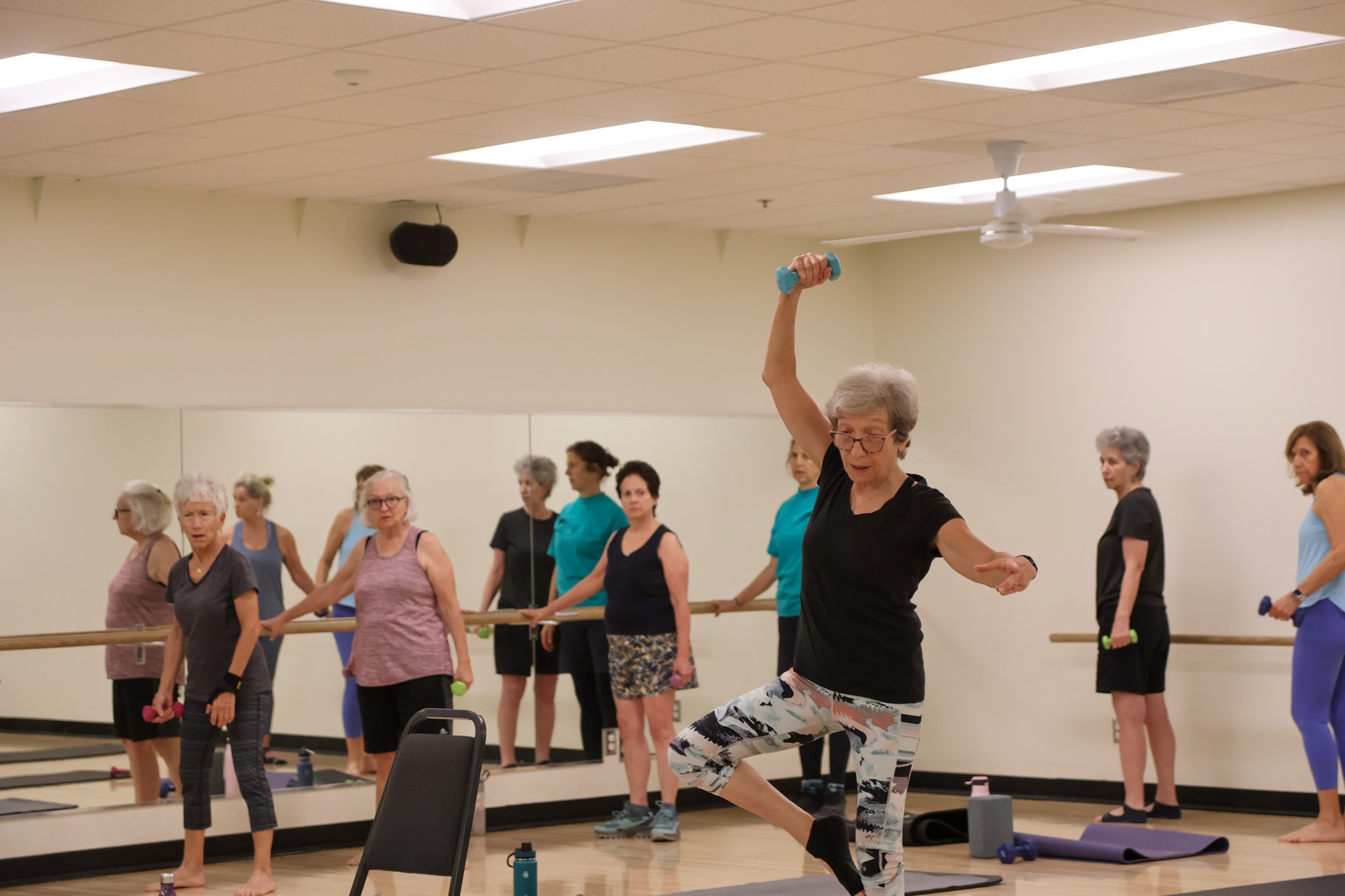
At the Tucson J, we value inclusivity and strive to maintain a welcoming space for all, including Tucson’s aging community and people with dementia. Being part of the J community, you may meet individuals with dementia in the halls, in a group fitness class, or in other programming. About 10% of adults aged 65 and older live with dementia, so there’s a good chance you know someone–or even have a close friend or family member–who could benefit from extra kindness and understanding as they navigate the symptoms of this common condition. 


This tip sheet offers guidance to help you communicate with people with dementia and foster a dementia-friendly environment for our community, and in your life outside the J, too! 

OVERALL COMMUNICATION TIPS:

  • Speak at a slower pace than normal and use simpler sentences
  • Maintain eye contact when speaking.
  • Be patient and allow time for them to respond.
  • Do not interrupt them, even to help them find a word – as it can break the pattern of communication.
  • Make sure your body language is open and relaxed.
  • Actively listen to the person’s words.
  • Avoid arguing or correcting.
  • Validate their feelings and emotions.
    • “That does sound tough, I am sorry to hear that.”
    • “I hope you start to feel better.”
    • “That sounds very interesting, thank you for sharing!”
  • Avoid questions that require short-term memory recall.
    • Do not ask questions about what they had for breakfast or did earlier that day or week.
    • Stick to questions that use long-term memory like their favorite music, family members, if they like hot weather or cold weather, etc.
  • Give a person choices instead of asking an open-ended question

HOW CAN I MAKE THE PERSON FEEL WELCOME?

  • Speak in-front of the person, face-to-face
  • Keep a positive and friendly attitude
  • Keep an empathetic mindset-try to imagine yourself in their shoes
  • Be patient
  • Smile

WHAT IF I HAVE SOMEONE WITH DEMENTIA IN MY CLASS OR PROGRAM?

  • Pay attention to how the person communicates with yourself/others
  • Pay attention to how the person moves
  • Consider that the person may have trouble with balance
  • Consider how the person may follow instruction

WHAT IF THE PERSON BEGINS TO FEEL AGITATED?

  • Stay calm and collected
  • Do not raise your voice
  • Listen to the person’s concerns/feelings
  • Offer alternative activities.

EASY CONVERSATION STARTERS:

  • “Hello (try to use their name)! Good to see you (this morning, afternoon, evening). I am doing good today, (explain your day to them).”
  • “What kind of music do you like to listen to?”
  • “What do you like to do for fun?”
  • “What would you like to do today?”
  • It is important to explain how you are doing/how your day is going instead of asking the person with dementia because short-term memory recall is difficult.

CONVERSATION REDIRECTION TIPS:

  • “That is so awesome, thank you for telling me about that, but I do need to head to my class.”
  • “I have really enjoyed talking with you today, but I do need to head to the locker rooms.”
  • “Thank you so much for sharing that with me. I do need to meet with my trainer, but I will talk with you again later.”

Q+A: Pamela Adler, Group Fitness Instructor and Healthy Aging Staff

Say hello to Pamela Adler, one of our incredible group fitness instructors and a member of our Healthy Aging Program staff! 


Keep reading to learn more about Pamela and her work at the Tucson J.

Pam Adler

Tell us about your role at the Tucson J?

I am a group fitness instructor specializing in various styles of yoga and meditation. Over the years, I have also taught strength and balance classes at the J. In addition to my current yoga classes, I serve as a facilitator in the Healthy Aging Program, an incredible initiative I’m honored to be part of. I teach Chair Yoga for individuals affected by Parkinson’s disease and work with a wonderful community of people experiencing dementia-related conditions, along with their care-partners. We socialize, we participate in thoughtful, mind-body, playful, fitness activities, a variety of breathwork techniques but the group favorite is sound vibration therapy. I use crystal singing bowls to promote relaxation, wellness, and joy. Each bowl produces vibrations that resonate with the body’s chemistry helping to calm the nervous system, reduce stress, and releases neurotransmitters, hormones, and chemicals to restore harmony to mind and body.


Why is it important to prioritize movement and wellness at any age?

Prioritizing movement is essential at every stage of life because it supports the body, mind, and overall quality of life. Regular movement helps maintain strength, flexibility, balance, and cardiovascular health — all of which contribute to independence and longevity. It also improves circulation, supports healthy joints, and reduces the risk of chronic conditions. Beyond the physical benefits, movement has powerful effects on mental and emotional well-being. It reduces stress, boosts mood, and enhances cognitive function. Staying active also fosters social connection and confidence, especially when done in a supportive group environment.

What’s the biggest myth in fitness that you wish more people understood?

One of the biggest myths about fitness is that it’s only for certain people — the young, the strong, or the experienced. Fitness is accessible to everyone, at any age and any level. Every movement can be adapted to meet individual needs in any given moment. Another common misconception is that fitness must feel like a chore or involve discomfort. The old saying “no pain, no gain” simply isn’t true. Movement can be fun, joyful, empowering — and that’s exactly how it should be!


What is your favorite yoga pose? 

My favorite Yoga pose is Trikonasana or triangle pose. It builds strength, balance, and openness while grounding the body and calming the mind.


Favorite post-workout snack/meal?

My favorite post-workout snack is a toss-up between smashed avocado on rice cakes or my homemade peanut butter on rice cakes. 
IMG_4448

Thank you, Pamela, for reminding us that it is never too late to get moving! 

4 Workouts for Your Next Visit to the Tucson J Fitness Center

adults exercise on large doorframe-like equipment

There are endless ways to engage with exercise at the Tucson J — swimming laps in the pool, enjoying a tennis clinic, taking a group fitness class, working with a personal trainer — but our state-of-the-art Fitness Center, with its variety of machines and weight selections, also offers a plethora of options to satisfy all movers!  


With cardio and weight machines, free weights, a stretching area, and two fitness studio spaces, build strength, increase flexibility, and achieve all of your fitness goals in one place.


Whether you are looking to try something new or switch up your regular routine, continue reading to explore some digital resources to enhance any workout. 
 

Treadmill Workouts

There is nothing wrong with your typical treadmill walk or run, but sometimes it’s fun to try something new! The next time you’re on the treadmill, pop on your headphones and favorite music, and try one of these options!  

Free Weights

Do you look at the weight rack and only think, bicep curls? Then keep reading!   


Weights can be used to target muscles all over your body — not only your
arms. From full- body workouts, to legs and glutes, to abdominals, dumbbells are a powerful and versatile tool in the gym.    

Exercise Bikes

Can’t make it to a Tucson J cycling class? No problem! Hop on a bike in our spin studio when classes aren’t running or find a bike in our cardio machine area and follow along to a guided video.  


Too hot for a bike ride outside? Explore nature on an exercise bike through a
virtual bike ride while in the comfort of the air-conditioned Fitness Center!  

Mat Workouts

When group fitness classes aren’t in session, stop by either of our two fitness studios to enjoy your favorite workout. Pilates? Yoga? HIIT? No matter what you’re into, we have the gear necessary to get moving!  

Ready to get moving? Explore the Fitness Center, Sarver Tennis Center, aquatics programs, and more!

Five Benefits of Playing Youth Sports

From the desk of Mallory Shenker, Director of Athletics and Aquatics

Mallory Shenker

There are endless hobbies and activities for children to discover– and they should explore them all – but finding a favorite movement-based activity is especially important for setting children up for an active lifestyle into adulthood.  


There are countless ways for kids to stay active: running, walking, or hiking outside; exploring movement and music in dance classes; or joining competitive sports, such as volleyball, flag football, karate, or basketball.


While all forms of exercise offer benefits beyond the physical, competitive youth sports provide additional advantages across all areas of child development. Continue reading to learn more about how regular involvement in youth sports can support overall well-being.

Friendship + Social Skills

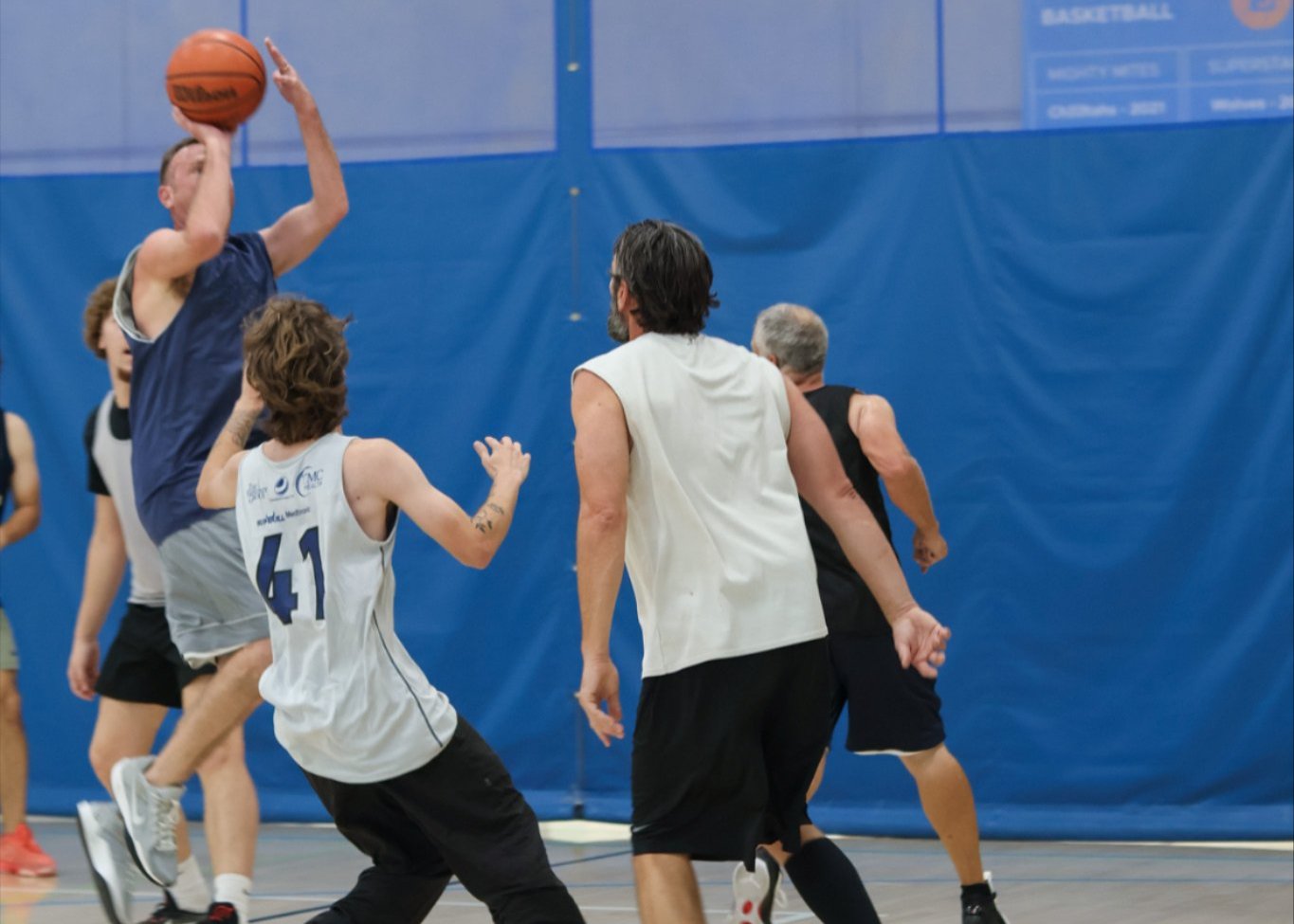
Outside of school or other activities, youth sports offer a fun environment to make new friends around a shared interest. When you join, for example, a youth basketball team at the Tucson J, you join an environment where kids from all over Tucson gather to build their skills, immediately connecting with new friends. 


In competitive sports, kids build trust with their teammates, learning skills like teamwork, sportsmanship, cooperation, and communication – important life skills to set everyone up for success. 
 

Enhanced Mental Health

When kids achieve their goals – finally acing their forehand groundstroke in tennis or nailing their jump shots in basketball– they prove to themselves that they can follow through on their ambitions…otherwise known as building confidence! 


Exercise is a proven outlet for managing stress and anxiety. Movement is a mood-booster, meaning that regular engagement with competitive sports can help guide the big emotions that define childhood and teenagehood. 
 

Character Development

Sports build leadership skills. Between the highs and lows of competition and the daily energy required in athletics, sports build resilience, teamwork, trust, and discipline, important leadership qualities.  


Some of the most well-known leaders across industries such as business, tech, and media, were athletes. For example, Robin Roberts, a news anchor on Good Morning America, played collegiate basketball, and athletes such as Michael Jordan, Shaquille O-Neal, Tony Hawk, and Serena Williams have gone on to become successful investors and businesspeople.

Time Management

Between sports practice and games, school, and other extracurricular activities, kids have a lot going on. And as they get older, even more responsibilities stack on, such as jobs, social outings, family commitments, and more.  


Successfully balancing multiple responsibilities is an important life skill that, when established as a child, makes navigating growing tasks easier. Competitive sports can be an intense time commitment, but one that garners great time management skills. 
 

Lifelong Healthy Habits  

Did you know that habits begin to take root in children by age 9? This means that many of our lifelong routines can be directly informed by all that we experience in childhood.  


One habit that can directly impact living a long and happy life? Exercise! Finding movement that brings you joy at a young age, such as competitive or recreational sports, sets you up for lifetime of activity. 
 

The most important thing to remember, especially for children: it doesn’t matter what type of movement you enjoy, only that you enjoy doing it!


Ready to get moving? Check out the Tucson J’s youth sports offerings, which include lessons, leagues, and clinics designed for athletes of all ages and abilities.

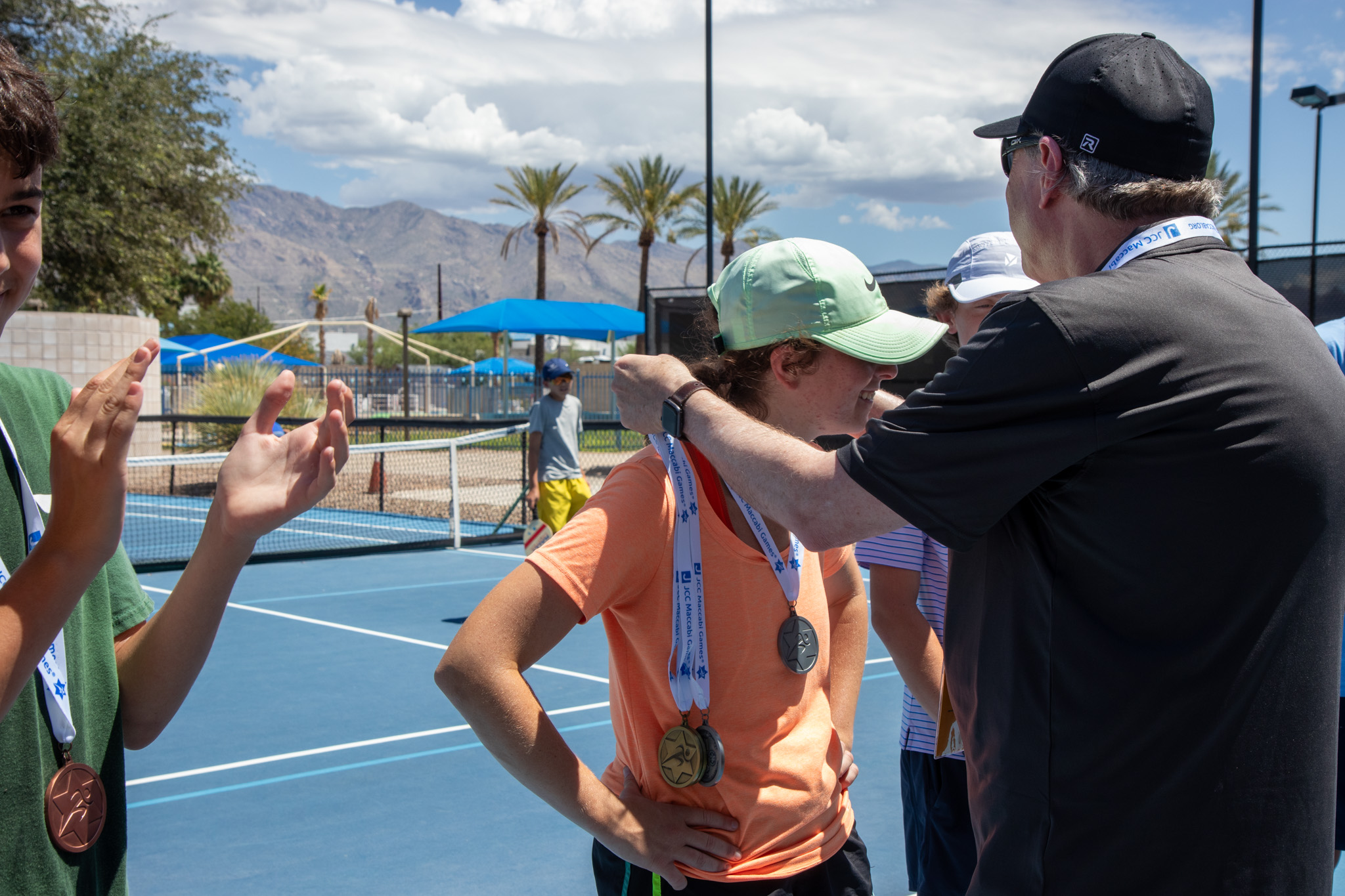
Medals + More: Team Tucson at the 2025 JCC Maccabi Games

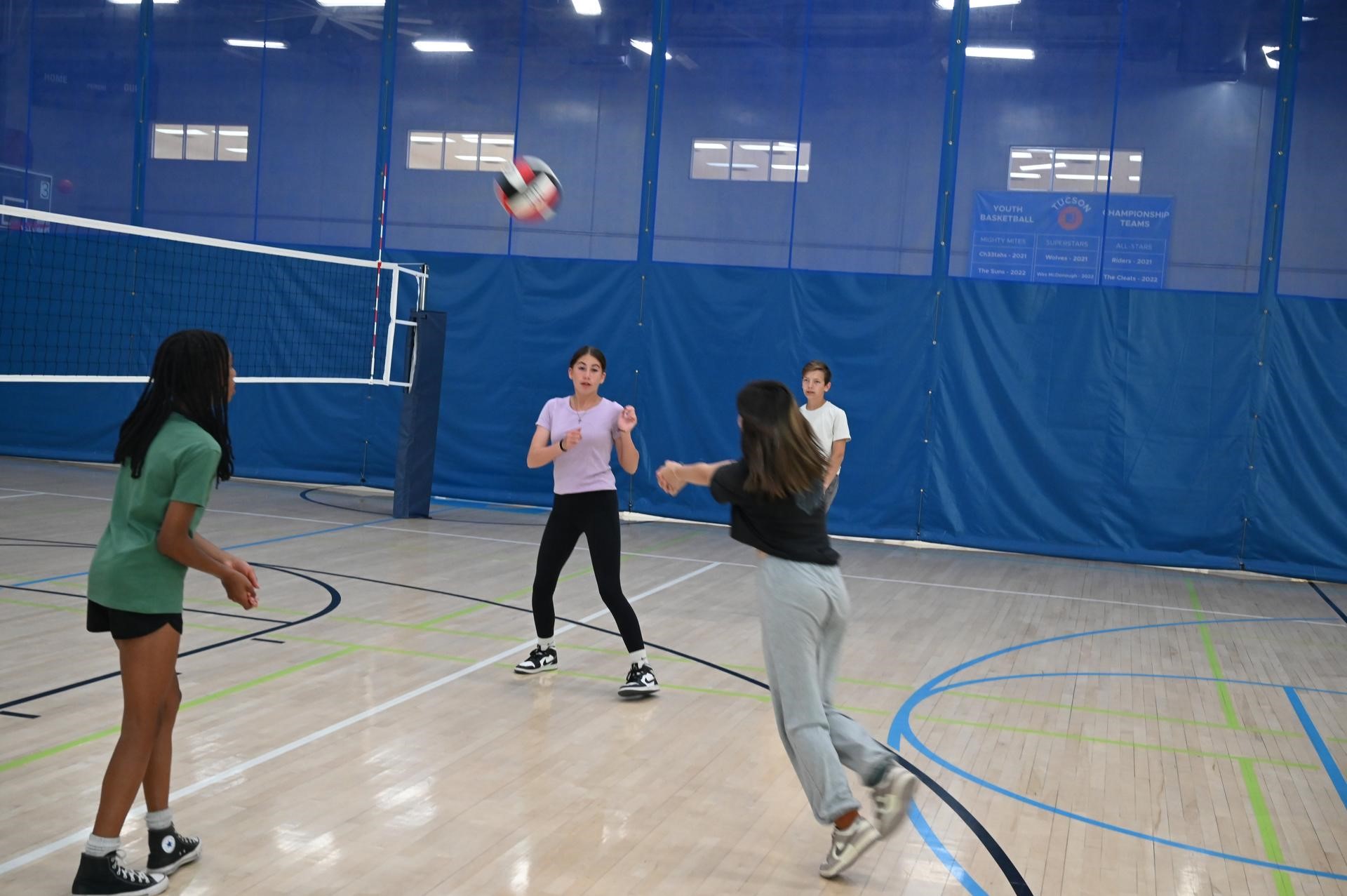
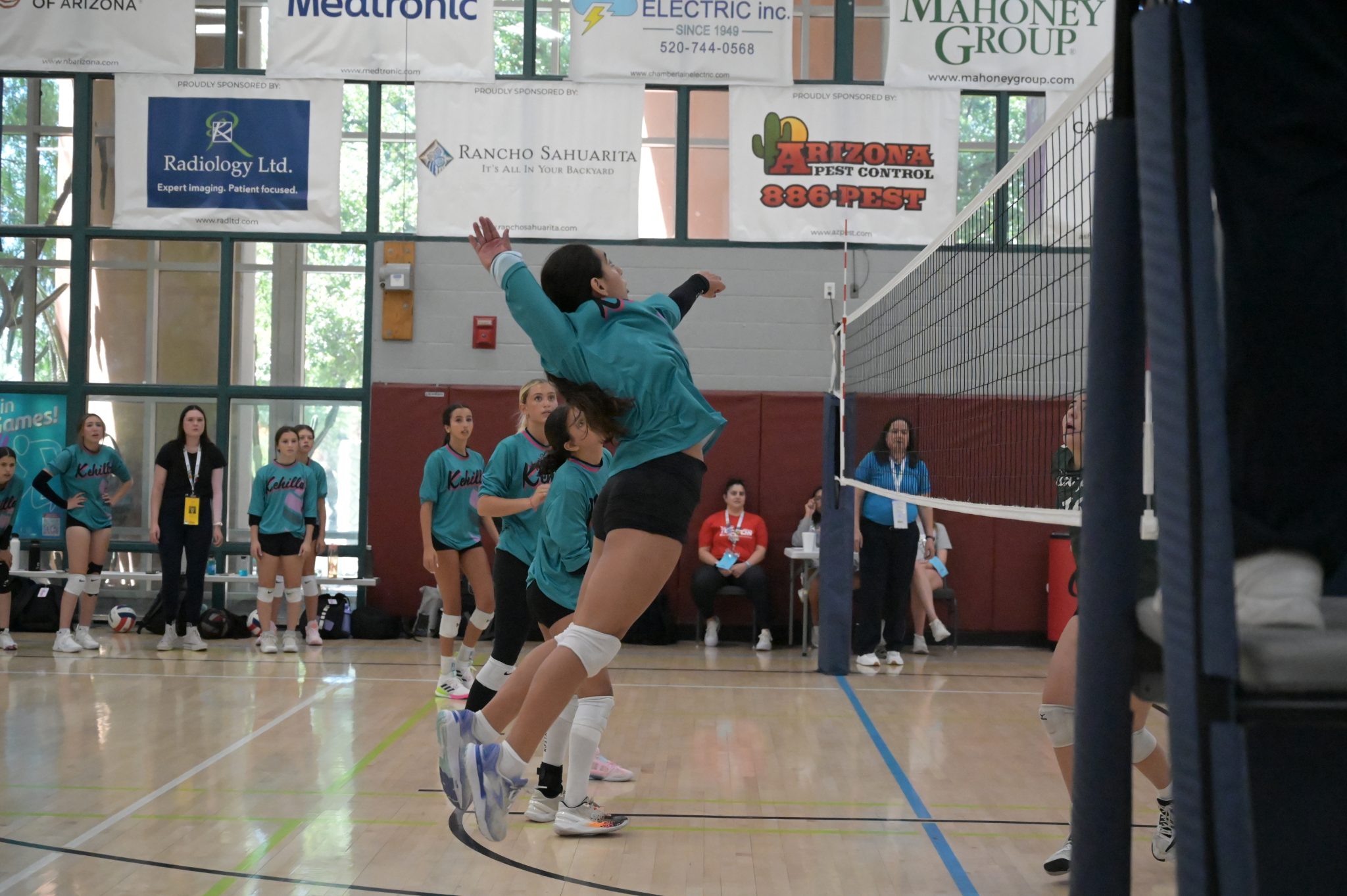
JCC Maccabi girls volleyball athletes smiling on the volleyball courts

The 2025 JCC Maccabi Games were momentous for the Tucson J and will go down not only in history, but our hearts. In addition to the honor of hosting the Games for the first time in 25 years and putting on the first non-pilot year of the Access Games, our own Team Tucson competed with 73 athletes–our largest on record. 

Team Tucson included 65 first-time Maccabi athletes, eight returners from the 2024 Games in Detroit, three teens from Moldova who represented their country as part of the Tucson delegation, and four Access participants. For the first time since 2000, Team Tucson had enough athletes to compete with a full 5v5 basketball team. 


Throughout the Games, Team Tucson represented the Tucson community with generosity as they opened their doors to welcome teens from other delegations in, immense pride for our city, and sportsmanship and skill as they competed in baseball, basketball, soccer, dance, flag football, golf, tennis, swimming, volleyball, and Access competitions with grit and heart. All in all, Team Tucson brought home 20 medals: ten bronze, four silver, and six gold. 


Team Tucson was proud to have five Star Reporters this year, who spent their week reporting on games, developing and editing video content for social media, and learning from local news reporters and influencers.


Join us as we celebrate and say Mazel Tov to every single one of our competing athletes, with a special shout-out for the following: 


Gold Medalists 

  • Melayna Matheson – 1 Gold (Dance: Student Choreography)
  • Aja Fienberg – 1 Gold (Access Swimming)
  • Paxton Clark – 1 Gold (15U Soccer)
  • Nathan Goldstein – 1 Gold (15U Soccer)
  • Michael Green – 1 Gold (15U Soccer)
  • Dylan Hunter – 1 Gold (15U Soccer)
  • Keane Rothman – 1 Gold (15U Soccer)

Silver Medalists


  • Oliver Peppers – 1 Silver (Flag Football)
  • Jordyn Bailey – 2 Silver (Dance: Tap and Student Choreography)
  • Melayna Matheson – 1 Silver (Dance: Lyrical)

Bronze Medalists

  • Rachel Lowenthal – 1 Bronze (Access Swimming)
  • David Arienoff – 2 Bronze (Swimming)
  • Liam McGinnis – 2 Bronze (Swimming)
  • Anya LeBauer – 1 Bronze (17U Girls Tennis)
  • Oliver Sheinbein – 1 Bronze (17U Boys Tennis), 1 Gold (second sport: Table
    Tennis)
  • Oliver Menchik – 1 Bronze (15U Tennis)
  • Quinn Dehnert – 1 Bronze (17U Soccer)
  • Allan Gorbakovsky – 1 Bronze (17U Soccer)


Alongside the competition, some standout moments include:
 

  • Gabby Rottenberg, competed fiercely as the only female Golf athlete in a field of 29. Gabby placed 12th and already plans to compete again next year in Toronto. 
  • Our 17U Boys 5v5 Basketball team, made up mostly of players who hadn’t played together before, held their own in a bracket filled almost entirely with year-round club teams. 
  • Our volunteer coaches, recruited from within the J community, stepped up in a big way: Ava Pritz led her Volleyball team to a silver medal, while David Hunter and Gabe Green coached the 15U mixed Boys Soccer team to gold, a rare and celebrated achievement in a larger team sport like soccer. Nathan and Libby Bacal served as Assistant Delegation Heads. Nathan was a huge and consistent help leading up to and the week of the Games. Libby stepped up in a big way to coach our 17U Girls Soccer team, the Maccabi Wonder, a mixed team that faced tough competition with a younger roster. She co-coached alongside Ethan Myer from the Great Britain delegation, and together they did a terrific job navigating a challenging week.

Keep reading to learn about what Team Tucson had to say about the week!


Avey Hanshaw, Star Reporter

“After participating in the Detroit Maccabi games last year, I couldn’t wait to host them in my hometown of Tucson, Arizona. These past two years have been joyous, exciting, and have brought me so many beautiful connections in the wider Jewish community. I’ve made friends from neighboring states, cities across the country, and even different countries including a 10-year old Ukrainian girl who used a translator to communicate and hugged me tight when it was time to say goodbye. Although Detroit Maccabi last year was an incredible event where I got to experience a new climate (and even got over my fear of kayaking!), being able to host the games was such a special experience that made me appreciate my home so much more. Each time we pass a saguaro, drive up to Gates Pass, or I see the mountains on my daily commute, I remember the wonder and awe of our visitors and I beam with pride. I’ve learned from people, bonded over shared experiences, and listened even to those who hold vastly different opinions than I do. Maccabi is truly a wonderful time and I wish I’d found it sooner!”

three teens standing together and smiling
a group of nine teens standing and smiling together

Coby Jeck, 17U Baseball 

“My favorite thing that I’ve experienced at the Maccabi games is experiencing the diversity of Jews from all different places.” 

Elliya Griver, Star Reporter

“I think I got a great opportunity being in the Maccabi Games. It was a lot of fun getting to meet new people and make friends.” 

Oliver Sheinbein, 17U Tennis Player

“I had a great time at the Maccabi Games this year. It was so cool to meet other Jews my age from all across the US and be able to compete against them in my favorite sport. The tennis tournament was run smoothly, and I got to play over seven matches to end up with a bronze medal in singles. I also liked how I got to proudly represent my hometown of Tucson during the games and feel a sense of pride in the Jewish community we have here.” 

JCC Maccabi teen hitting a tennis ball outside on tennis courts

While the JCC Maccabi Games are for teens, many volunteers, host families, spectators, coaches, and others formed new friendships, witnessed exciting games, and had plenty of fun throughout the busy week. 

We look forward to seeing what Team Tucson accomplishes at next year’s games in Toronto! 

In the News: 2025 JCC Maccabi and Access

Group of teenage boys playing flag football outside on a field

From July 27 through August 1, the Tucson J hosted the 2025 JCC Maccabi Games and Access, the world’s largest Jewish youth sporting event, gathering hundreds of Jewish teen athletes from around the globe, and generating over $4 million in economic impact for metropolitan Tucson.


During the exciting week of athletics, community service, and friendship, local news agencies from around Tucson highlighted meaningful aspects of the Games, including Access athletes, Opening Ceremonies, the host family experience, and so much more!


Check out the stories below to learn more about the Games:

Disabled teens, young adults compete in Tucson’s JCC Maccabi Games

July 27, 2025

13 News explored JCC Maccabi Access Games, the first year, outside of the pilot program, that teens and young adults living with intellectual and developmental disabilities were able to participate in the JCC Maccabi Games!

KVOA Tucson Logo

2025 JCC Maccabi Games kick off with opening ceremony in Tucson


July 28, 2025


To celebrate the beginning of the Games, local sports reporter Jenna Fink stopped by the Opening Ceremonies at the Tucson Convention Center. 

KVOA Tucson Logo

Jewish teen athletes converge in Tucson for Olympic-style games


July 28, 2025


Todd Rockoff, the President and CEO of the Tucson J, shares what can be expected through the week of the Games.

KGUN Tucson Logo

Jewish families host hundreds of teens from around the world for Maccabi Games


July 29, 2025


More than 400 of the visiting JCC Maccabi athletes were hosted by local families in Tucson. KGUN shared how special this experience can be for both families and athletes. 

Arizona Jewish Post Logo

Maccabi Games Opening Ceremony a High-Energy Spectacle


July 30, 2025


Learn more about the master of ceremonies, DJ, and other speakers at the JCC Maccabi Games Opening Ceremony!

Arizona Jewish Post Logo

JCC Maccabi Games put Tucson on display, connects teens around the globe


July 30, 2025


Some of the teens from our Tucson delegation share about their experience meeting and competing against other delegations during the Games. 

Arizona Jewish Post Logo

Swimmers Dive Into Friendly Competition at Tucson JCC Maccabi Games


July 31, 2025


At Oro Valley Aquatic Center, JCC Maccabi swimmers exemplified incredible sportsmanship and kindness while building friendships with athletes from all over the world! 

Arizona Jewish Post Logo

Beyond Sports at the Maccabi Games: JCC Cares and Star Reporters


August 1, 2025


Each year, JCC Maccabi athletes participate in JCC Cares service projects. This year, the Games partnered with Ben’s Bells and Youth On Their Own, two Tucson non-profits. Teens can also participate in the Games another way– as a “Star Reporter,” interviewing athletes and covering the competition. 

KGUN Tucson Logo

Teenage sports news reporters capture Maccabi Games in the Foothills


August 4, 2025


Reporter Andrew Christiansen of KGUN, explored the Star Reporter program, where teens can serve as sports reporters during the Games, and even got to show them some of the tricks of the trade! 

Tucson jewish museum

Defining Winning at the JCC Maccabi Games and Access


August 6, 2025


Martin Reichgott, the Director of Philanthropy of the Tucson Jewish Museum & Holocaust Center and the Co-Commissioner for Swimming for the Games, reflects on the sportsmanship he witnessed during the week.

The Maccabi Experience: What it Means to Jewish Teens

Written by Yael Shapiro, Boston JCC, 2025 JCC MAccabi Games Star REporter

From July 27 through August 1, hundreds of teen Jewish athletes from all over the world gathered in Tucson for the 2025 JCC Maccabi Games and Access. 


Throughout the week, a small group of teens representing delegations from Tucson, Boston, Brooklyn, San Diego, and San Jose served as Star Reporters, interviewing athletes, calling games live, learning from top influencers and reporters, and filming and editing content.


We are proud to share this article from Star Reporter Yael Shapiro of Boston, where she and other athletes reflect upon the week. 

The Maccabi Experience: What it Means to Jewish Teens

On July 27, close to 1000 teenagers arrived in Tucson, Arizona, for a week of sports. The JCC Maccabi Games, an annual sports competition for young Jews, attracts teens from around the world. While the experience focuses on athletics, the sense of Jewish community that can be found here is like no other. Maccabi uses a set of values to direct its mission: Tikkun Olam (Repairing the World), Kavod (Respect), Rina (Joy), Ga’ava (Pride), Lev Tov (Big Hearted), and Amiut Yehudit (Jewish Peoplehood).

This community can be found in every aspect of the games. From pin trading and new friendships to mixed teams composed of players from across the country, Maccabi has it all. One athlete, Phoebe, mentioned her appreciation for the Jewish aspect of the experience, noting, “I get to connect with not only people in my Jewish community but also people who are my age in other Jewish communities and I think that’s really special.” While there are many summer sports events in the U.S as well as around the world, it’s unusual for a sports event to be Jewish-focused. 

Maccabi is known for creating a meaningful week and lasting friendships between players. When asked about the impact of Maccabi on her relationships, three-time JCC Maccabi athlete Ariel remarked, “The Maccabi games brought me a great sense of community because I met many lifelong friends on my mixed basketball team last year … we still keep in touch to this day.” The structure of Maccabi helps create these relationships. For example, many athletes play on teams made up of athletes from different locations. Being on a team with a variety of Jewish experiences and lives gives these athletes a lot to learn.

The Maccabi experience largely focuses on “Tikkun Olam,” a Jewish concept of repairing the world and giving back to the community. During each Maccabi Games, all athletes participate in the JCC Cares program. Here in Tucson, one project was in collaboration with Bens Bells, a local non-profit that spreads kindness through ceramic chimes. Athletes and coaches alike worked together to decorate and paint ceramic flowers, a key part of the Bens Bells wind chimes.

While a bit of a hectic week, Maccabi leaves an overall positive impact on the teenagers involved. I’ve met new friends and learned about their experiences as Jews, as people, and as athletes from around the world. I’ve strengthened my previous connections with adults and athletes, and I’ve seen huge crowds of people cheering for teams they’ve never met. Overall, Maccabi has been an unforgettable Jewish experience that I hope will continue to connect Jews for years to come. 


Swimmers Hone Their Skills and Embrace Community in the Tucson J’s Masters Swim Club  

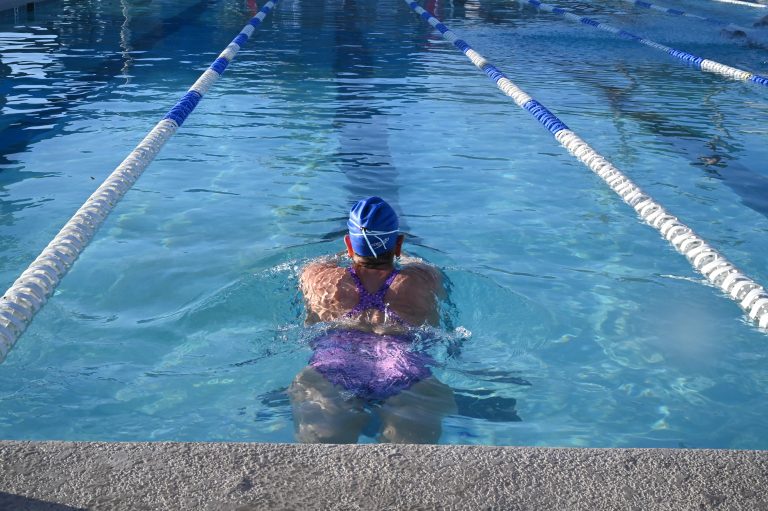
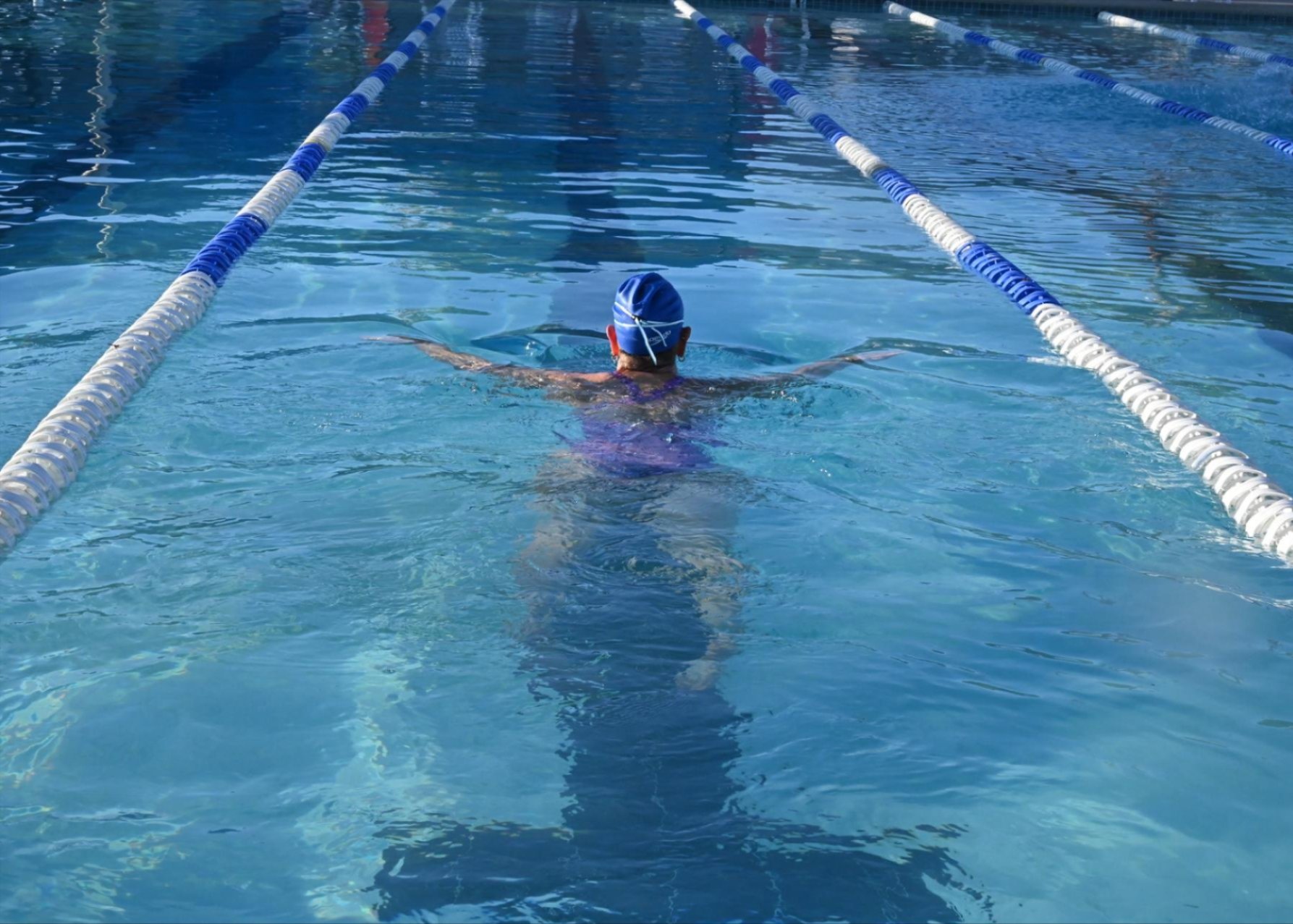
One of the Tucson J’s most beloved aquatics programs, Masters Swim Club, provides coached recreational swimming workouts for adults of all swimming abilities. Coached by Jonathan Batchelor and Katie Melmer, Masters meets weekday early mornings and evenings and offers Saturday morning practices.  


Each session begins with a warm-up followed by an organized swim workout and offers plenty of modifications for those who need them. 


“There’s a lot of community aspect about our masters team,” said Mallory Shenker, Director of Athletics + Aquatics at the J. “It is a time for folks to get better in the pool and to have a strong workout that is led by a coach who challenges them to be their best self in the water.”
 

From Runner to Swimmer

Ken Goodman, a commercial contractor, has been a member of the J since the late 1980s, a board member for the last eight years, and a member of Masters for 16 years. A former sub-three-hour marathoner, Ken transitioned into swimming when running became more challenging for his body. 


“As I was getting older, in running, I was getting slower and getting more injuries,” said Ken. “It was really taking a toll on my body. But with swimming, I have found that I can do more now than I ever did. If you do a coached program like Masters, you actually get faster, and you don’t see that in most other exercise programs.”


“Swimming is a lifelong workout,” said Mallory. “Our community is great as far as the wide variety of people who are participating in the program.”
 

Shared Strokes

At the J, you certainly can reserve a lane and go for a solo swim, but Masters offers swimmers a like-minded community and coaching expertise that provides accountability and skill-building. 


“I’m glad I found Masters swimming because without having a coach, looking at how I was stroking in the water, there was no way I was going to be able to tell how I was doing or what I was doing,” chuckled Ken. 


A Masters swimmer for five years and a J member for six, Mari Thompson is a teacher and has always kept swimming a part of her life. From childhood and into adulthood, Mari has always swum on both teams and recreationally. 


“The camaraderie is amazing. The coaching is fabulous. Jonathan is our coach, and he is so good about making everybody feel welcome,” said Mari. “There are workouts and help with skills if you need it, but there’s not the pressure of performance. Masters really does meet you where you are. It helps you to be a better swimmer or just to socialize and get some exercise.”
 

Embracing Community

While both Mari and Ken love the guided workouts, they are even more passionate about the community they have built in the program. 


“
Once you get into a routine with swimming with the team, it really becomes a pleasurable experience. You develop a camaraderie with your teammates, and that camaraderie transfers into friendships. There are events that we participate in that are not swimming events, like a holiday party, for instance,” said Ken. 


“I would highly recommend Masters swimming for anybody that enjoys swimming, said Mari. “It’s nice to have a little bit of a push, but it’s really nice to have the group of swimmers to swim with. We all are just happy to be together.”


In Masters swimming, there is room for swimmers of all ages and abilities. All that matters is that “you’re striving to be better every workout,” said Ken. 


“I always feel so good after the workout. And if you could just bottle that up and pass it out, that would be great,” said Mari. “But people need to experience it here. Like I said earlier, everybody is welcome!”
 

Be a Part of It 

All adult swimmers are invited to join Masters Swim Club for incredible workouts and community. It is recommended, not required, to know at least two strokes. Swimmers can sign up at a monthly all-access rate or join for Saturdays only; Saturdays are practices with no coaching (bonus: the Saturday-only option is free for members of the J!). If you have any questions about the program, please contact Mallory Shenker.

Masters Swim Club Drop In Practice Schedule

Monday, Wednesday, Friday (coach-led): 5-7am 

Tuesday + Thursday (coach-led): 6-7pm 

Saturday (uncoached, practice/workout provided): 7:00-8:30am