Diego Rogers, 21, has spent most of his life in the water, and this year, that lifelong love of swimming carried him all the way to the Special Olympics USA National Championships.
Born in Tucson, Diego is autistic and has an intellectual disability. He first discovered swimming as a young boy, tagging along and mimicking his younger brother, Sebastian, who was already on a local swim team.
A coach noticed and suggested to Diego’s mother, Marcela, that he give it a try. He took to the water almost instantly. Marcela recalls he was jumping into pools before he was even a year old, swimming with no fear.
Even so, Diego didn’t compete formally until his second year of high school, when a team captain encouraged him to sign up. He joined without much background in swim technique and without any expectation of racing: he simply wanted to be part of the team and the community around it. The turning point came unexpectedly, when a swimmer fell sick before a meet and Diego was called on to fill in.
He’s been racing ever since.
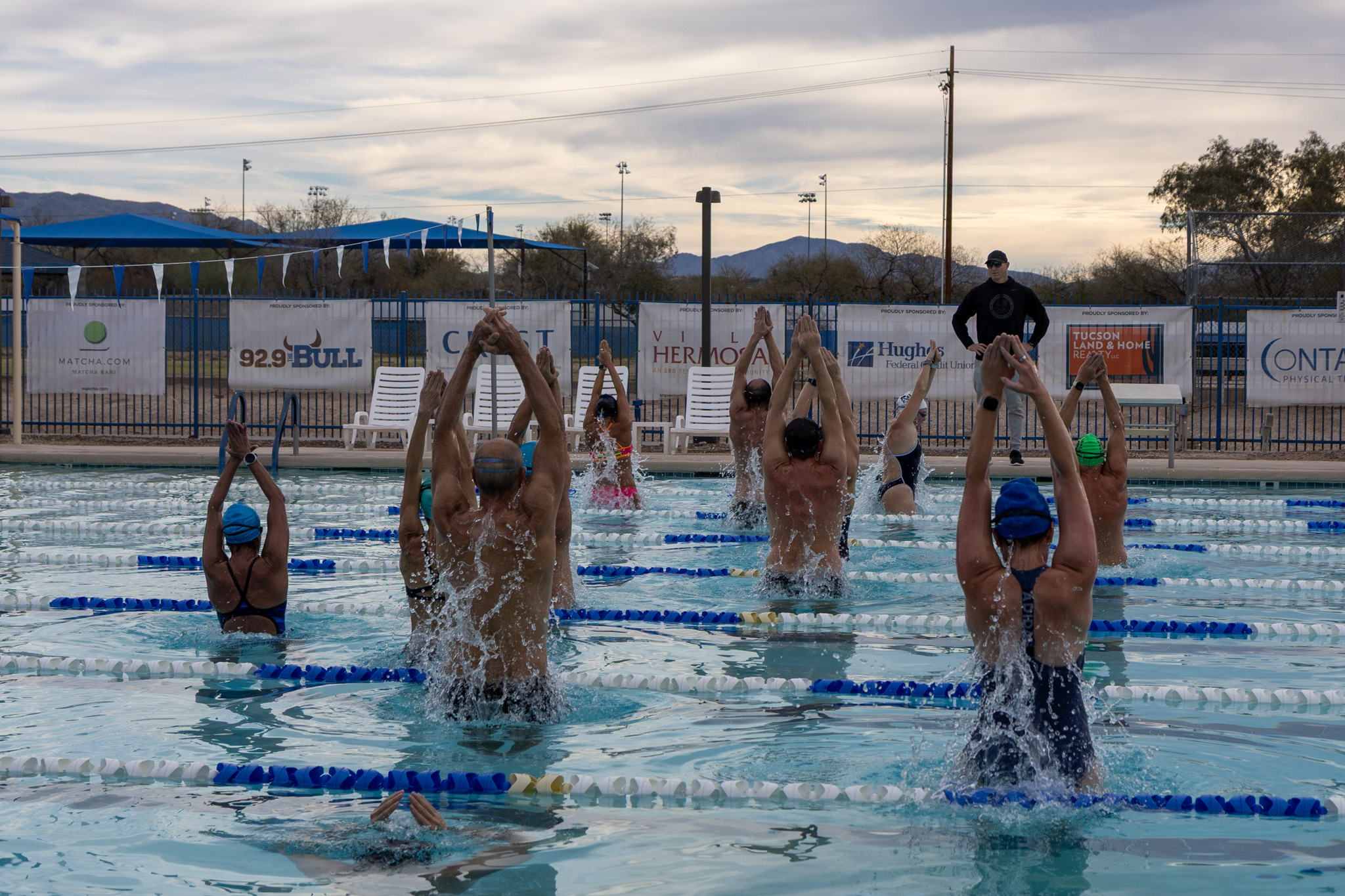
As long-time members, Diego found his home at the Tucson J, first swimming with the Stingrays Swim Team and Coach Evan, and, for the past year, training with the Adult Masters Swim program under Coach Jonathan.
Before he officially joined Masters, Jonathan had Diego come in on Thursday mornings at 5am to train one-on-one with him, to help ease the transition to working out as part of an all-adult team.
That patience paid off and Diego fit right in when he joined the 34-member Masters group earlier this year.
Today, Diego goes to every Masters workout on the schedule: he trains with Coach Jonathan on Monday, Wednesday, and Friday mornings; Coach Katie on Tuesday and Thursday evenings; and Coach Ryan on Saturday morning. On Sundays, he receives specialized open-water swimming training and stroke technique mentoring with Coach Laura at another facility.
In addition, he regularly trains for open-water swimming in Mazatlán, Mexico, with Coach Federico.
Diego also cross-trains with weightlifting at the J, performing a routine Sebastian designed for him, plus enjoying running, biking, and hiking on a regular basis.
“He feels free” in the water, Marcela says, and that feeling is at the heart of what drives him. Diego says that competition is not really about winning, “it’s about the feeling of doing it.”
That drive showed up dramatically this year.
After a long, multi-stage qualifying process consisting of regional championships, then state championships, then a nearly year-long effort to make contact with Special Olympics Arizona, Diego became one of only four swimmers selected to represent Arizona at the Special Olympics USA National Championships, held once every four years.
It was his first year in any Special Olympics competition and his first trip was to the National Championships in Minneapolis.
The final steps to the starting block this past June weren’t easy.
Just weeks before the competition, Diego became seriously ill after competing in a slate of open water competitions in the Pacific. He was hospitalized for roughly two weeks with severe dehydration and dangerously low magnesium levels that left him confused and disoriented. His parents genuinely didn’t know if he’d be able to compete at the National Championships.
Marcela describes traveling to be by his side before the team’s departure, unsure whether he’d even make it onto the flight. He did, and arrived in Minneapolis still not fully recovered, mentally or physically.
He competed anyway.
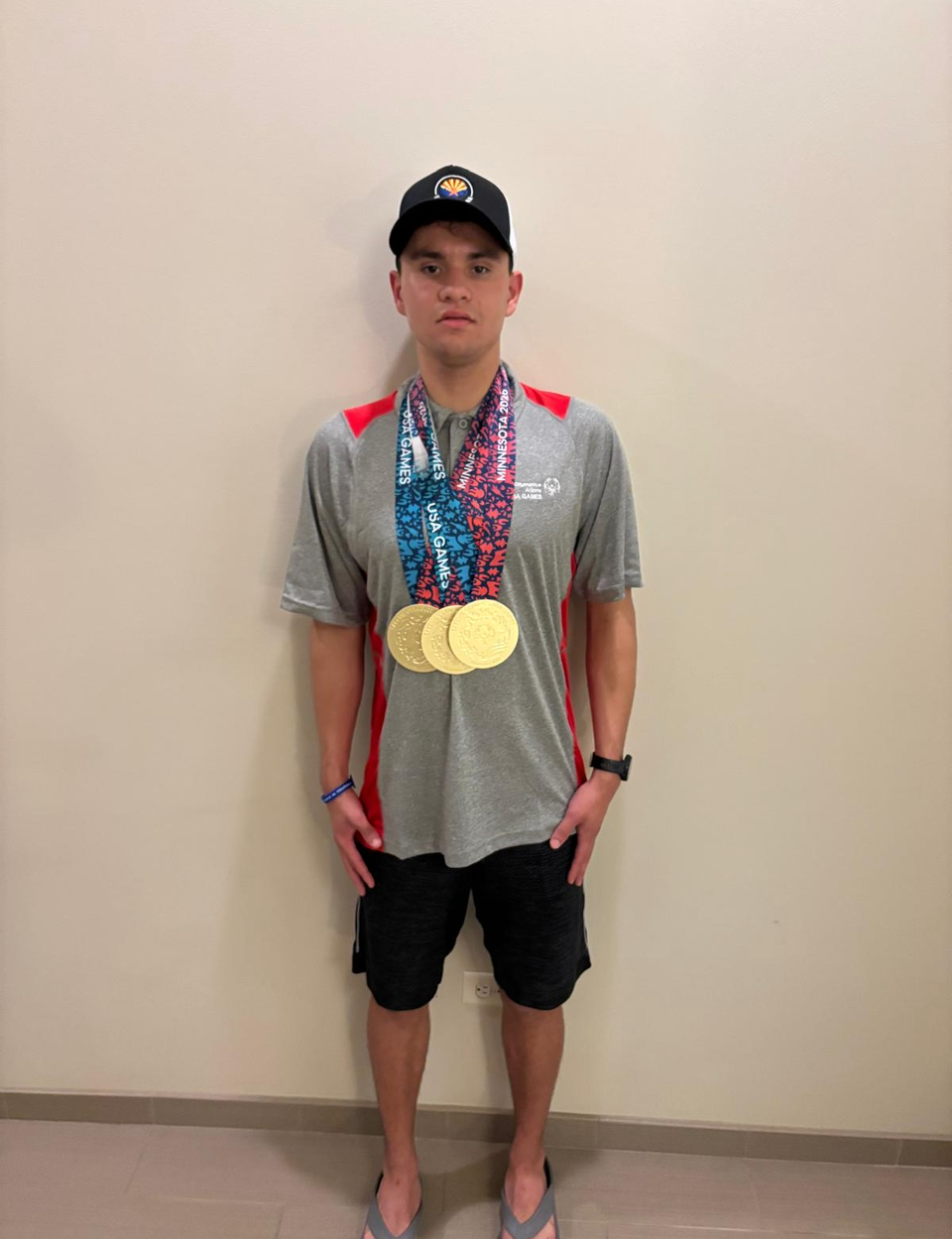
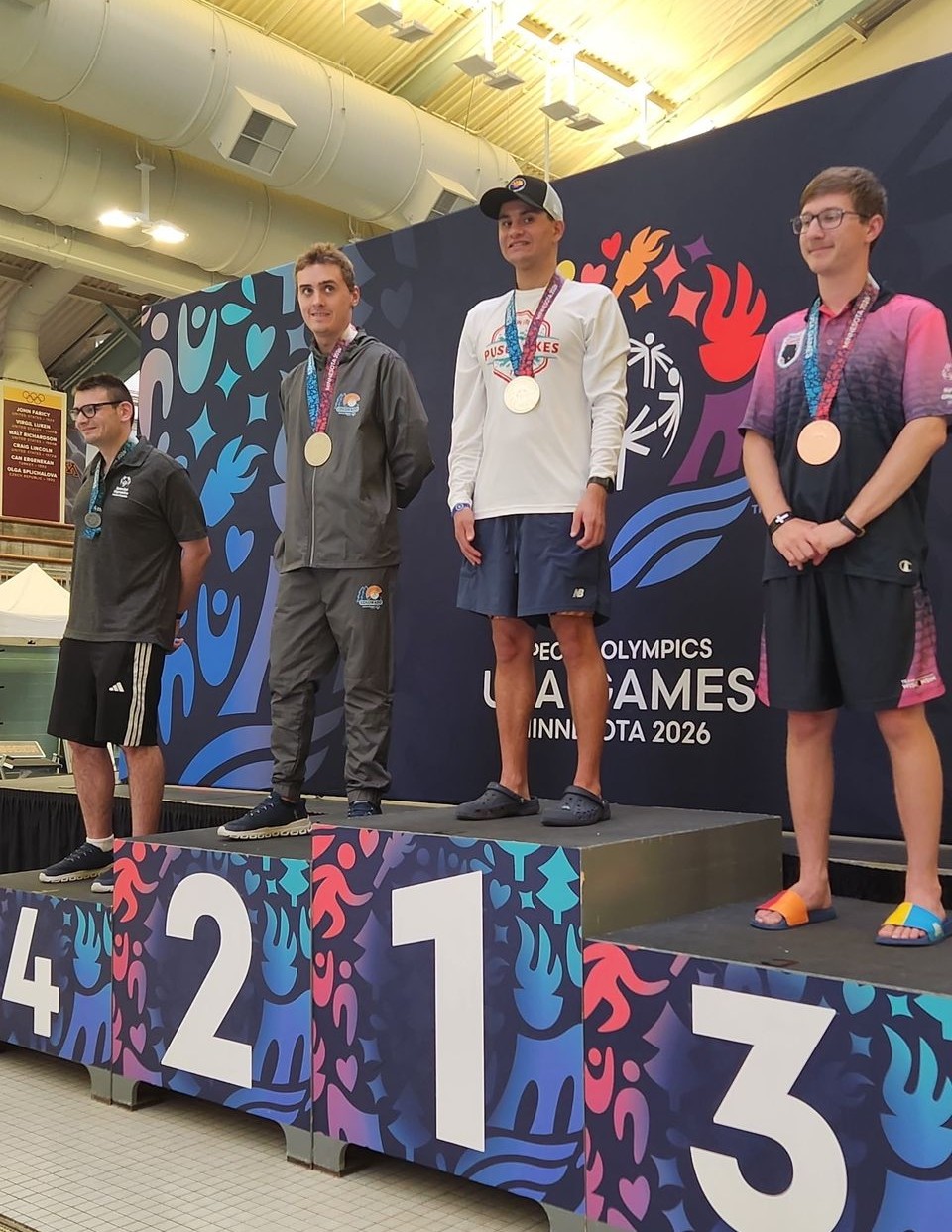
Despite not being at full strength, Diego won the gold medal and set a new American record in the 50-yard backstroke, took gold in the 100-yard backstroke, and finished off with a win and another American record as part of Arizona’s 200-yard mixed medley relay.
Watching him push through and succeed after everything leading up to it, his mother says, was the proudest moment of the whole experience. Diego’s answer, when asked what he wanted to do after it was all over?
“I wanted to go back home.”
One frustration Diego has had to work through: athletes at the National Championships are limited to two individual races and one relay. Diego wanted to compete in all eight individual freestyle and backstroke events and all four relays. His mother says learning to accept that limitation, and trust his coaches’ strategy, has been one of his bigger challenges.
His ambitions don’t stop at Nationals.
Diego has set his sights on the 2027 Special Olympics World Games in Chile, with hopes of reaching the 2028 International Paralympics as well.
It wouldn’t be his first experience testing himself outside the Tucson J pool: Diego has completed a triathlon in Mazatlán, and open water swims in the Pacific and the Mediterranean, often on family trips that double as training opportunities.
Outside of swimming, Diego works at Beyond Bread, where he truly enjoys the sandwiches, practices yoga (a habit that started during the pandemic), and stays close with his parents and Sebastian, who drive him to practice, build his training programs, and cheer him on at every turn.
For Diego, and for the coaches and community at the J who’ve supported him for years, this is just the beginning. As Marcela says, he has everything he needs to keep going, and everyone who knows Diego is eager to see just how far that will take him.