Q+A: Nature and the Cosmos with Terry Dean

As we usher in a new season of art showcased in the Tucson J Fine Art Gallery, we are excited to feature Terry Dean, one of the talented artists selected to exhibit their work. 


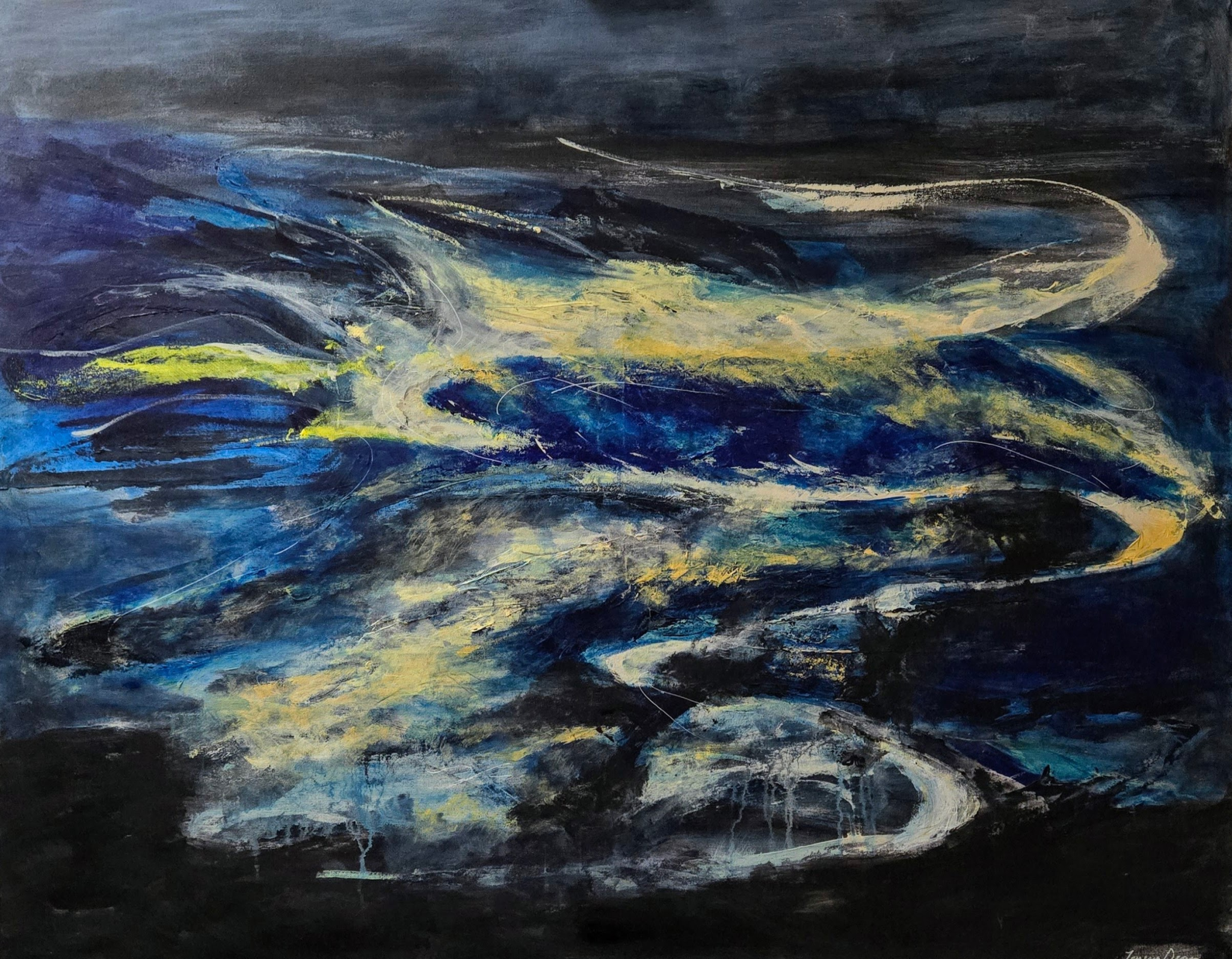
In his first solo show, Nature and the Cosmos, Terry Dean, who specializes in abstract expressionism, examines and interprets nature, deliberately distorting the representational features of what we normally see. Subtly, he explores universal themes of the cosmos—that we are small parts of an infinite universe, and that we are subject to universal laws
we have only begun to comprehend. 


Nature and the Cosmos runs from September 18 through October 19 at the Tucson J, and all are invited to
a free reception celebrating the show’s opening on Sunday, September 21 from 2-3:30pm.  

How did your journey into art take shape?  

My mother lit the spark in my interest in art when I was a boy. An artist herself, she encouraged me to draw, beginning in elementary school. In high school, I took as much art as I could, and on weekends, I would use pastels to create still life paintings. Cezanne was my inspiration. That was the last time I engaged in the visual arts until 3 1/2 years ago, when I resumed pastel painting after spending most of my career as a lawyer and law professor. An art professor friend suggested I try other mediums besides pastels, so I chose acrylic painting. I am self-taught, having studied abstract expressionist paintings on the internet. I learned from my mistakes and have improved my work over time. 


Can you share your creative process, both in the studio and in shaping the overall vision for the show? 

My creative process is similar to that of when I wrote two novels (both unpublished). I begin with a vision, and the vision evolves over a period of days or weeks. After choosing a palette, I begin by painting a background and introducing layers of paint that reflect the theme of the work. Yet, the process is organic, as I modify the painting–sometimes drastically–during the process.  


In a way, the painting paints itself. The process for shaping the vision for the show was much simpler. I have always been interested in nature and astronomy, and the relationship between these two domains. Nature is part of the cosmos, as is astronomy, and so my paintings evoke some of the cosmos by drawing the viewer into a macrocosm that is greater than themselves.


What themes are you exploring in this show, and why are they important to you? 

I think the primary theme is that a complex idea–or a complex painting–changes its shape and evolves as we study it. As this process takes place, the impact– either profound or subtle– that the work has on the viewer does not remain static but similarly evolves. 


Who is your favorite artist or one you draw inspiration from?  

My favorite abstract artist is the French-Chinese painter Zao Wou-ki, whose work embodies the interaction between nature and the cosmos. Yet, perhaps the most inspiring artist for me is Vincent Van Gogh. His art transcends the category of “painting” and enters the realm of the universe. 


Is there a particular piece in the show that holds a meaningful story or memory for you? 

A number of pieces hold a meaningful memory for me, but perhaps the most significant is “Elegy.” I was attempting to show an abstract landscape in which light emerges from the darkest layers of the forest. Light is more powerful than darkness. 


How do you hope viewers feel after experiencing the show? 

I hope viewers feel the profound yet indescribable thrill of having been immersed in overwhelming beauty.  

More Than The Stage: theatre dybbuk Residency at the Tucson J!

From the desk of ChLOE LOOS, DIrector of Arts AND CULTURE

Chloe Loos

We are thrilled to be part of the rolling world premiere of theatre dybbuk’s Dracula (Annotated). This production, with its blend of artistry, history, and provocation, offers a rare opportunity to engage audiences on multiple levels. From the outset, our goal has been to create a month of festivities that speaks to all ages and interests by inviting people into the world of the play and sparking conversations that extend far beyond the stage.


In our early conversations with Artistic Director Aaron Henne, he shared how deeply he values the educational component of theatre dybbuk’s work as a way to ground audiences in the themes and questions explored in performance. This inspired us to develop programming that could illuminate those ideas from different angles. True to the company’s mission of “create[ing] provocative performances and innovative educational encounters that explore Jewish thought to illuminate universal human experience”, we envisioned opportunities for the community to not only witness but also to investigate and express themselves.


From the “One Community, Many Stories” event and a masterclass for artists, to a historical panel at the Tucson Jewish Museum & Holocaust Center, we sought ways to connect the audience to the production. Congregation Chaverim graciously selected Dracula for their October book read, giving participants a literary doorway into the material, while our cooking class playfully explores cultural flavors tied to the story’s setting. Together, these programs form a constellation of exploration, inviting you in to wrestle, revel, and understand the experiences at the heart of this work.

Residency Events

Wednesday, October 8, 2025, 6:45pm at Congregation Chaverim

Even if you don’t read the book—come for the conversation! This month, Chaverim is taking a bold turn with Bram Stoker’s Dracula. While not a Jewish book, this gothic classic offers a rich opportunity to explore themes of othering, fear, and cultural projection—especially resonant in light of current conversations around antisemitism. The discussion will begin with a 30-minute framing session offering context for those who haven’t read the novel (many don’t—it’s totally okay!). Together, we’ll reflect on how Dracula has shaped narratives around “the outsider” and examine the ways literature can reflect and reinforce societal bias.

Thursday, October 9, 2025, 5:30-7:30pm at the Tucson J 

Free • Fun • Fang-friendly!

Join us for a wine and juice tasting, garlicky snacks, and good company as we welcome in the spookiest month and the holiday of Sukkot. This informal gathering is our way of saying: You’re invited. You belong. Whether you’re new to the community or catching up with friends, come raise a glass with us.


Thursday, October 16, 2025, 6-8pm at the Tucson Jewish Museum and Holocaust Center

This panel explores how folklore (Jewish and otherwise) shapes our understanding of fear, identity, and survival. Drawing on Dracula’s symbolic legacy and Jewish storytelling traditions, we’ll investigate the role of supernatural tales, antisemitic myths, and oral histories in carrying memory across generations as well as how institutions preserve and reinterpret communal stories in the digital age. Featuring Lori Shepherd from the Tucson Jewish Museum & Holocaust Center, along with distinguished author, editor, and scholar of fiction and fairy tales Kate Bernheimer, and additional guests to be announced.

Friday, October 17, 2025, 3-5pm at the Tucson J 

Explore the rich flavors and cultural history of the knish—an iconic Ashkenazi dish that has survived for generations through migration, adaptation, and resilience. In this hands-on workshop, you’ll learn how to craft your own savory pastries under the tutelage of Jeremy Kneller, owner of Kneller’s Delicatessen! As you knead, fill, and bake, reflect on the lives of Eastern European Jewish immigrants at the turn of the 20th century—navigating unfamiliar landscapes, preserving tradition, and feeding both body and soul in times of great change. This two-hour-long cooking class is perfect for home cooks, history lovers, and anyone who believes food is a powerful link between past and present. P.S. You’ll also make bagel chips!

Monday, October 20, 2025, 5:30-7:30pm at the Tucson J 

Join us at the Tucson J for One Community, Many Stories—an evening that blends creative writing, storytelling, and performance into one powerful communal experience.


Under the guidance of Aaron Henne, artistic director of theatre dybbuk, you’ll take part in a writing workshop open to all levels, where you’ll craft personal essays or stories rooted in your own lived experience. These pieces will then be curated and performed in a staged reading by Aaron and his ensemble of actors.


Between the workshop and the live performance, enjoy some immersive engagement: sink your teeth into Dracula-inspired snacks and drinks, connect fellow community members, and enjoy a talk by Dr. Joela Jacobs on Jewish icon Franz Kafka—another scholar of the monstrous and the “other.” Whether you mingle, reflect, or just relax, it’s a chance to deepen your engagement with the evening and with one another. This October gathering is playful, powerful, and rooted in the belief that every voice deserves to be heard—even in the shadows.


The workshop is open to participants ages 14 and up. Minors must be accompanied by a parent or guardian. On-site childcare will be available—please email cloos@tucsonjcc.org if you plan to use this service.

Tuesday, October 21, 2025, 1-2:30pm at the Tucson J 

Learn about the first Jewish play, and how the 2nd-century BCE fragment became a 21st-century theatrical experience. Join theatre dybbuk’s artistic director Aaron Henne for a behind-the-scenes exploration of Exagoge, the earliest known Jewish play. Written in Alexandria and modeled after Greek tragedy, this ancient retelling of the Exodus story survives in only 269 fragmented lines.


In this dynamic “page-to-stage” salon, Aaron shares how theatre dybbuk transformed those remnants into a powerful theatrical ritual infused with music, movement, and contemporary stories of exile and belonging. Through conversation, Q&A, and selected excerpts, discover how ancient texts still speak to our most urgent modern questions.


This event is free to the public and designed for adults 60+. 

Tuesday, October 21, 2025, 6-9pm at CATALYST Creative Collective

theatre dybbuk specializes in using historical narratives that intersect with considerations of identity and heritage to illuminate the forces at play in our contemporary societies. In this three-hour masterclass, artistic director Aaron Henne will lead participants through a process in which they gain tools to investigate their own personal and/or communal narratives, texts, and turning points as vessels to create new theatrical work that explores the complexities of our world. The workshop includes guidance for envisioning and developing a new piece. Writing prompts and related structures provide entry points to the artist participants, enabling them to begin creating in the moment. The session uses movement and ensemble-based techniques to help participants identify key moments in the work they are creating and to find new ways to interact with collaborators. Open to all creatives, but particularly relevant to theatre artists, writers, musicians, and dancers.

Dracula (Annotated)

In this rolling world premiere of Dracula (Annotated), theatre dybbuk excavates Bram Stoker’s famous tale, using a unique blend of historical investigation and heightened theatricality to weave together the gothic characters and plot of Dracula with references to societal forces at play in Victorian England that are still timely today. Under the direction of writer/director Aaron Henne and accompanied by a live musical score, a company of five performers play the multitude of characters in the novel while also bringing to life a variety of voices from its time.


How do long-held prejudicial beliefs show up in a popular novel from England written at the turn of the 20th century, and in what ways do those beliefs still operate today? To what extent can perceptions of antisemitism, racism, and xenophobia be deemed as accurate and true, and how much is in the eye of the beholder?


The year is 1897. The British Empire is in the midst of its imperialist expansion. Major technological advances are occurring, with the first wireless communication being sent across open sea. The women’s suffrage movement is growing and the “new woman” is emerging. Eastern European Jewish immigrants are making their way to England in large numbers. And Bram Stoker’s novel Dracula is published; this story of a Transylvanian vampire who invades England captures the popular imagination for generations to come.


This is the second in a series of “Annotated” productions in which theatre dybbuk explodes and explores classic or well-known and culturally influential works to disrupt more familiar or comfortable ways of engaging with them.


Please note the house will be held until 20 minutes before the performance. Please be prepared to park on campus; we will notify registrants if that changes. The performance will be followed by an audience talkback.

We hope you will join us for one or all of these incredible events. If you have any questions or concerns, please reach out to Chloe.

Sculpture Blooms at the Tucson J

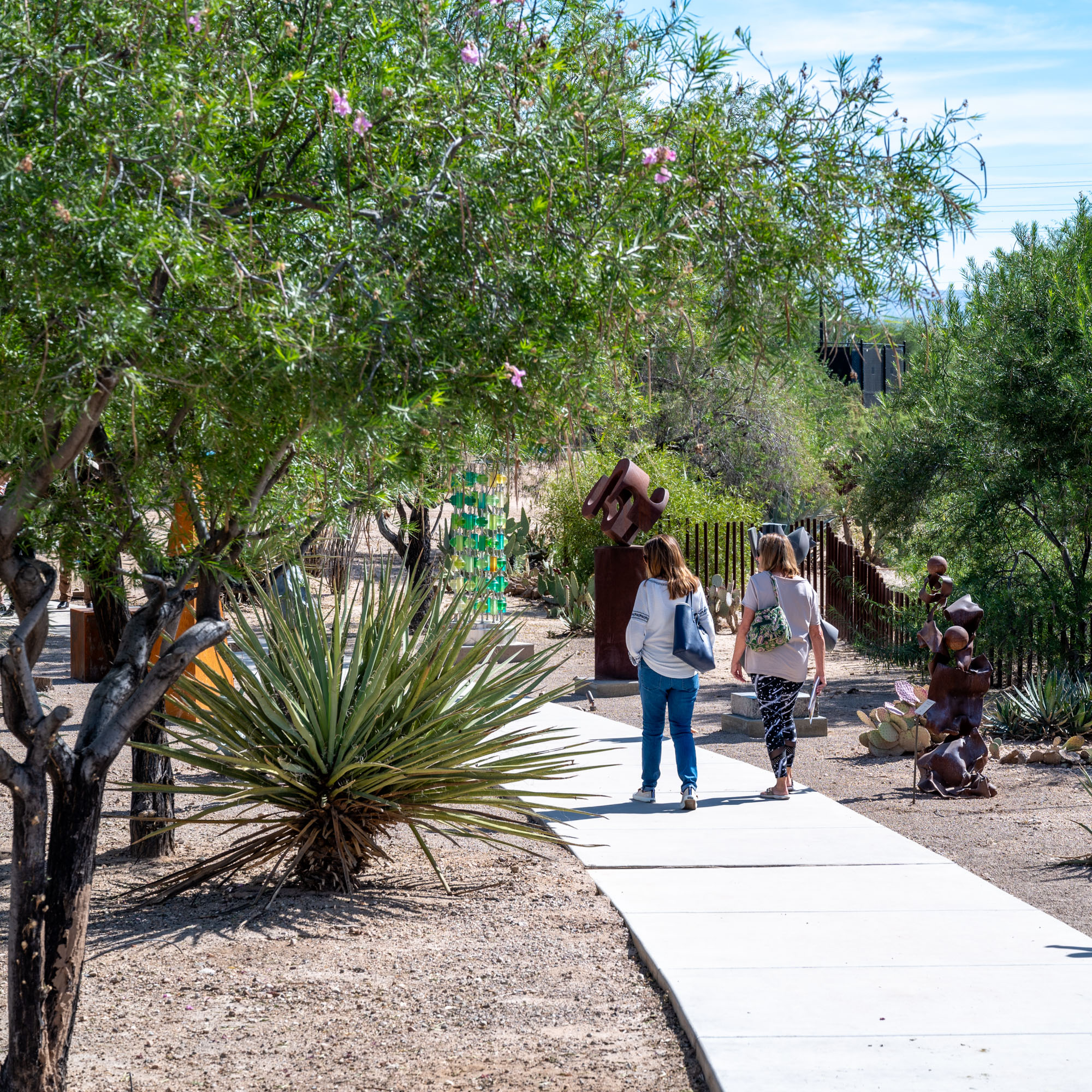
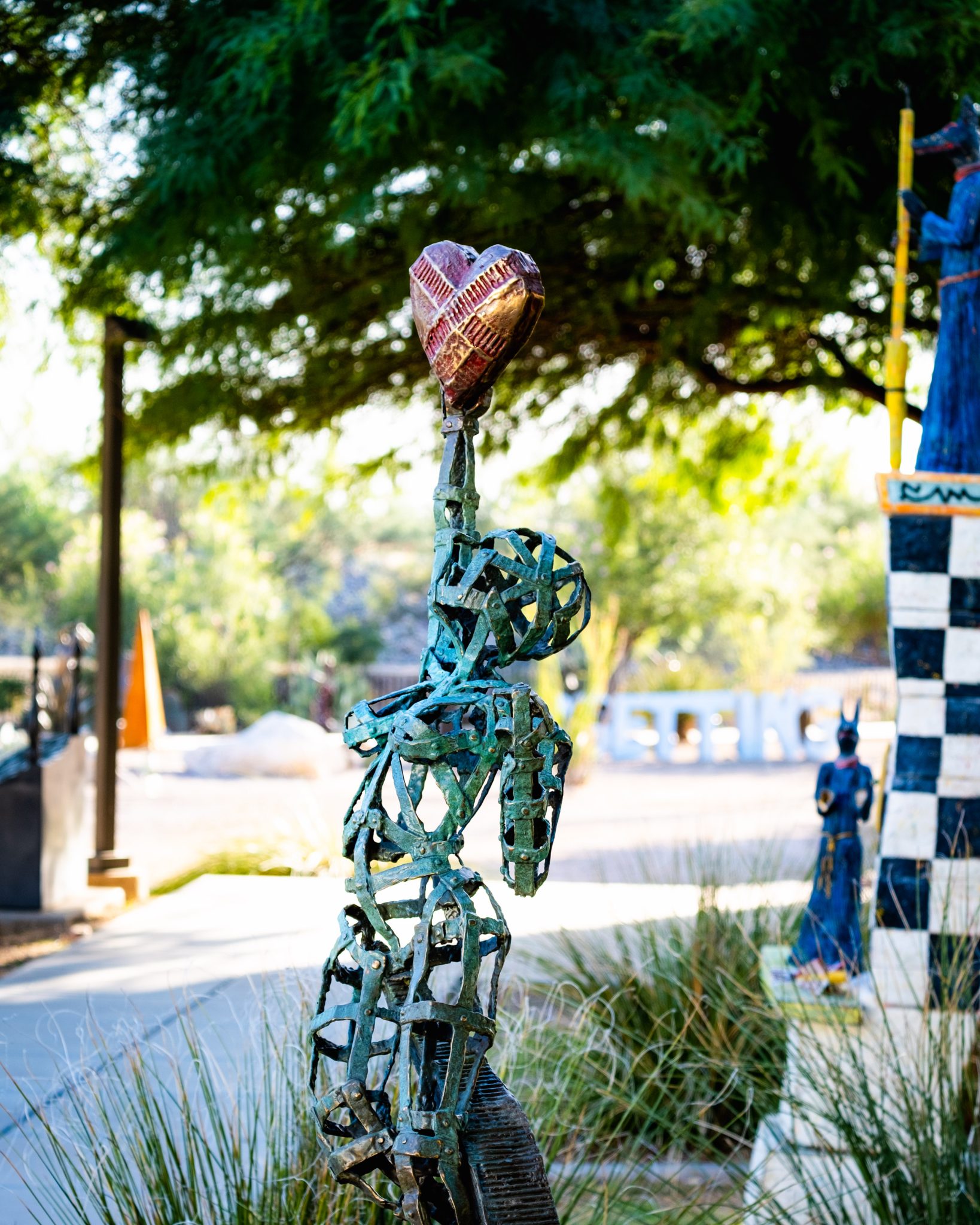
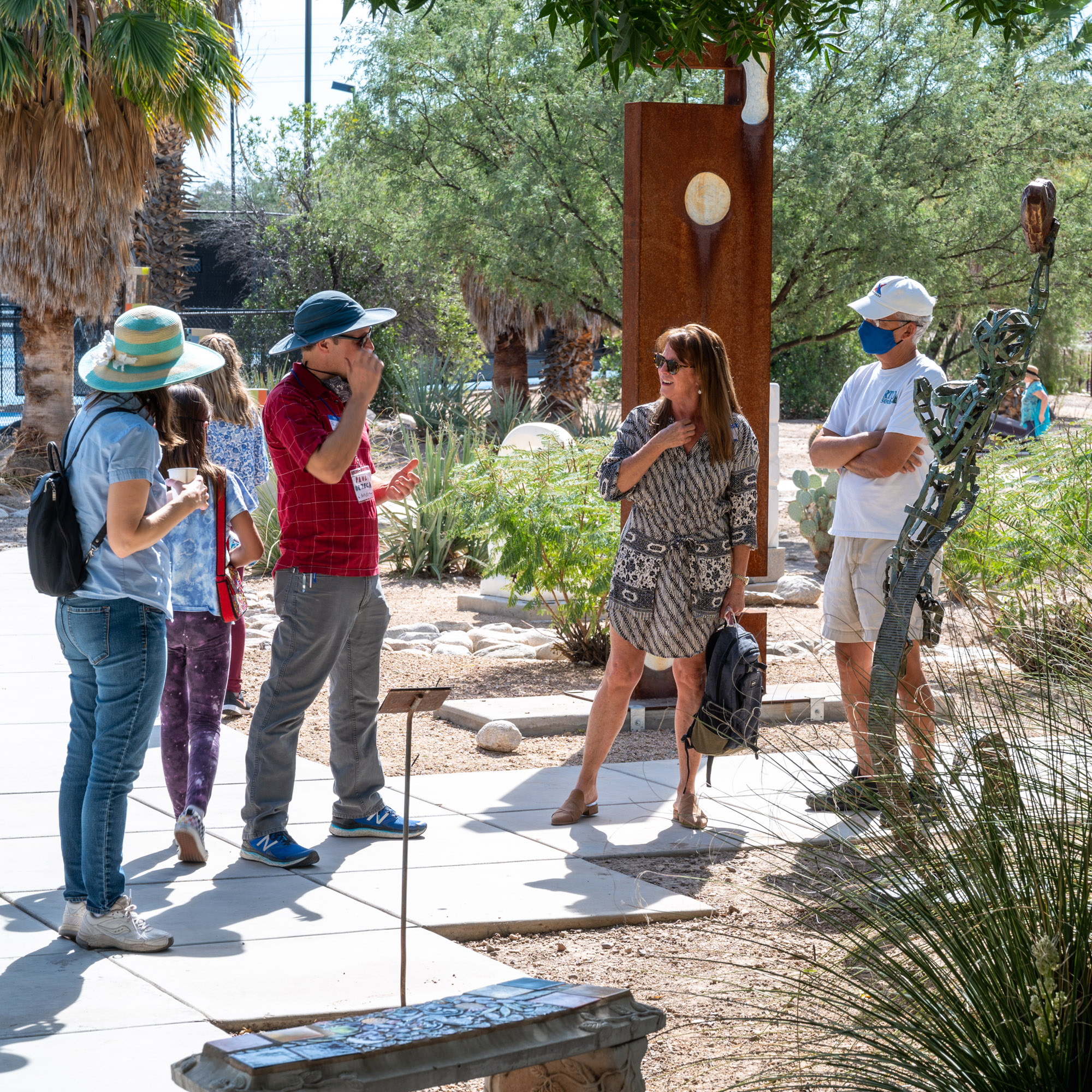
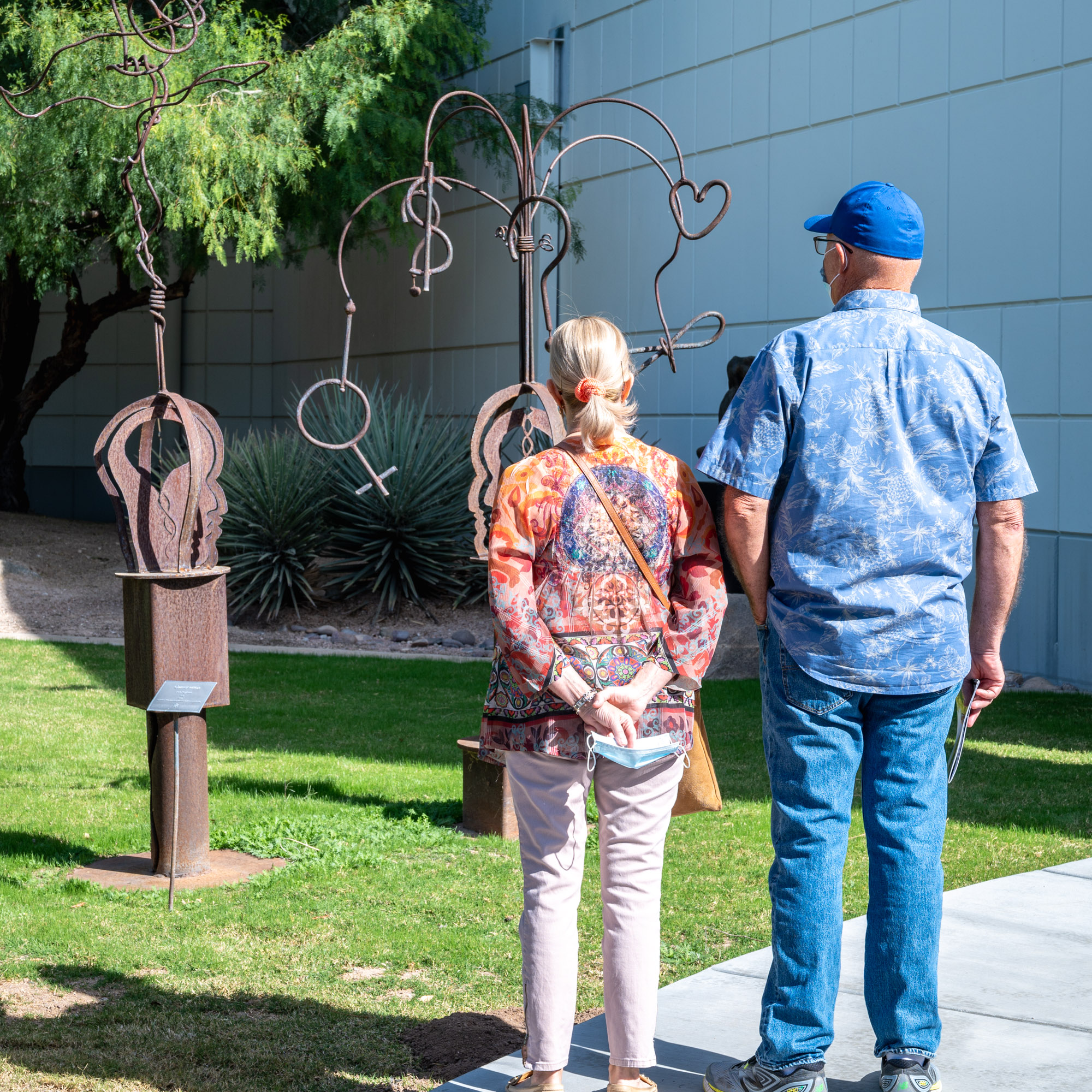
Did you know the Tucson J is home to one of the largest public sculpture gardens in the state? The Jill Rosenzweig Memorial Sculpture Garden is home to over 40 large-scale sculptures, and, in addition to revolving exhibits in the Fine Art Gallery, and a variety special events throughout the year, the Garden has helped to put the J on the map as a premier destination for arts in Tucson. To mark both the closing reception for the indoor Tucson J Fine Art Gallery sculpture show, “Sculpt: A Celebration of Sculpture,” and welcome new temporary and permanent pieces in the Sculpture Garden, each year, the Tucson J holds a celebratory sculpture event. 


“The Jill Rosenzweig Memorial Sculpture Garden opening event has grown from a private event for limited attendees to a celebration open to the entire community,” said Jennifer Selco, Senior Director of Jewish Living + Engagement. “Artist talks and demonstrations continue to be important staples of the event in addition to live music, delicious food, and time to stroll the Jill Rosenzweig Memorial Sculpture Garden to view the sculptures.”


With a focus on reflection and connection, this year’s event, “
Sculpt: Sculpting the Season, An Evening of Art, Intention & Renewal,” will be Sunday, September 14 from 4-6pm at the Tucson J.  


“This year, Sculpt falls right before the High Holidays, so I drew a lot of inspiration from the month of Elul, which is understood as a time of reflection, introspection, and teshuvah (return). I hope this year’s event encourages people to pause and truly engage with the works and with themselves,” said Chloe Loos, the Director of Arts + Culture at the Tucson J. 
 

Behind the Selections

A juried show, each piece was chosen with careful consideration by fellow artists. These jurors include:  

  • Joan Rudd, a seattle-based figurative sculptor and curator. 
  • Andy Iventosch, a Tucson potter, specializing in domestic ware and larger pieces, such as pots, vases, and jars.  
  • Amy Pozez, an artist and former art teacher, focused on custom art for common spaces of multi-family developments.  

“I made a point to view and review the entries multiple times in order to familiarize myself with the work in a variety of contexts,” said Ivantosch. “I tried to discern what kind of story  each entry is trying to say. What kinds of expression are the artists trying to convey in their pieces. I reviewed the entries with considerations towards their uses of materials and craftsmanship with the chosen materials.” 


The jurors agreed that sculpture offers guests a unique and, in some ways, a more immersive experience than a traditional 2D exhibition. “
Sculpture is an artistic feat of engineering, said Pozez. “It’s a blend of expression and structure. Which to me, adds a whole layer of awe and creates more questions. How does it stand? What is it made of? Is there something inside? Why did they choose that material? How did they make it? What does their studio look like? How did it get here?” 


While each juror has a favorite piece chosen for the show, Pozez put it best, “Each time I consider this question, I pick a different piece, which tells me we picked some good stuff.”


Five new pieces have been chosen to be added to the Jill Rosenzweig Memorial Sculpture Garden for a one-year residency.
Guests are invited to view them beginning August 14.  

Previous Sculpt events in the Jill Rosenzweig Memorial Sculpture Garden.

An Invitation to Pause

“We are often go-go-going all the time, and the idea of taking intentional time for reflection and contemplation while surrounded by these beautiful works of art and really letting them to speak to us is exciting to me,” said Chloe.  


“It is my hope that this event serves as an oasis in the whirlwind of post-summer, back-to-school, new Jewish year timeline and reminds us to slow down, observe both ourselves and the things around us, and reflect.” 


Sculpt: Sculpting the Season
is free and open to the public. Along with viewing the sculptures and meeting the artists, guests will be able to participate in creative reflection-based activities and enjoy wine tastings, charcuterie from Humbleboard and music from local musicians, Leila Lopez and Rebecca Foreman.   


Please reach out to Chloe Loos with questions. 
 

In the Beginning, We Created: Why Art Belongs to Everyone

From the desk of Chloe Loos, Director of Arts and Culture

This may surprise you if you don’t identify as an artist, but if there’s one thing I know to be true, it’s that everyone is, innately, creative and artistic. 


The human urge to create something, to express oneself, to leave an indelible mark somewhere lives within all of us. Before we built cities or wrote laws, we were painting on cave walls, telling stories around a fire, weaving, carving, singing, and dancing. Creativity is part of what makes us human.
 

Even the Torah begins with the ultimate act of creativity, with the very first line of Bereshit declaring: “In the beginning, God created…” The world itself was born from acting upon imagination and creating something real and tangible from it. And if we are all b’tselem Elohim, created in the image of G-d, then creativity is not only a human urge, but a divine right. 


Nurturing our creative spark isn’t just fun (though it definitely is); it’s also essential for our well-being. Creativity boosts problem-solving, reduces stress, enhances mental well-being, fosters personal growth, and strengthens our connection to ourselves and to others.


That’s why I’m so passionate about the adult art classes we offer at the Tucson J. These classes aren’t about perfection or competition or making something “good enough” to hang in a gallery. They’re about giving yourself permission to play, to explore, to be curious, and to take time to rediscover yourself.
 

This fall, most classes meet in the evenings to accommodate working adults, and every offering is designed to be accessible, welcoming, and low-pressure. From a 2D/3D Mixed Media Drop-In workshop, to a charm making workshop with local shop Sigfus Designs, along with a variety of polymer clay, ceramics, and other art classes, there’s something for everyone to enjoy. 


Whether you’ve always dreamed of making art or simply need a break from the noise of daily life, I invite you to join us. You don’t need to call yourself an artist to make art—but you just might discover you’ve been one all along.