
From the desk of ChLOE LOOS, DIrector of Arts AND CULTURE
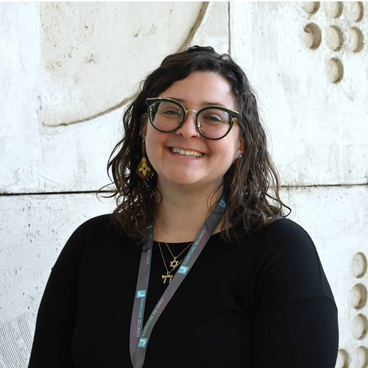
We are thrilled to be part of the rolling world premiere of theatre dybbuk’s Dracula (Annotated). This production, with its blend of artistry, history, and provocation, offers a rare opportunity to engage audiences on multiple levels. From the outset, our goal has been to create a month of festivities that speaks to all ages and interests by inviting people into the world of the play and sparking conversations that extend far beyond the stage.
In our early conversations with Artistic Director Aaron Henne, he shared how deeply he values the educational component of theatre dybbuk’s work as a way to ground audiences in the themes and questions explored in performance. This inspired us to develop programming that could illuminate those ideas from different angles. True to the company’s mission of “create[ing] provocative performances and innovative educational encounters that explore Jewish thought to illuminate universal human experience”, we envisioned opportunities for the community to not only witness but also to investigate and express themselves.
From the “One Community, Many Stories” event and a masterclass for artists, to a historical panel at the Tucson Jewish Museum & Holocaust Center, we sought ways to connect the audience to the production. Congregation Chaverim graciously selected Dracula for their October book read, giving participants a literary doorway into the material, while our cooking class playfully explores cultural flavors tied to the story’s setting. Together, these programs form a constellation of exploration, inviting you in to wrestle, revel, and understand the experiences at the heart of this work.

Residency Events
Wednesday, October 8, 2025, 6:45pm at Congregation Chaverim
Even if you don’t read the book—come for the conversation! This month, Chaverim is taking a bold turn with Bram Stoker’s Dracula. While not a Jewish book, this gothic classic offers a rich opportunity to explore themes of othering, fear, and cultural projection—especially resonant in light of current conversations around antisemitism. The discussion will begin with a 30-minute framing session offering context for those who haven’t read the novel (many don’t—it’s totally okay!). Together, we’ll reflect on how Dracula has shaped narratives around “the outsider” and examine the ways literature can reflect and reinforce societal bias.
Thursday, October 9, 2025, 5:30-7:30pm at the Tucson J
Free • Fun • Fang-friendly!
Join us for a wine and juice tasting, garlicky snacks, and good company as we welcome in the spookiest month and the holiday of Sukkot. This informal gathering is our way of saying: You’re invited. You belong. Whether you’re new to the community or catching up with friends, come raise a glass with us.
Thursday, October 16, 2025, 6-8pm at the Tucson Jewish Museum and Holocaust Center
This panel explores how folklore (Jewish and otherwise) shapes our understanding of fear, identity, and survival. Drawing on Dracula’s symbolic legacy and Jewish storytelling traditions, we’ll investigate the role of supernatural tales, antisemitic myths, and oral histories in carrying memory across generations as well as how institutions preserve and reinterpret communal stories in the digital age. Featuring Lori Shepherd from the Tucson Jewish Museum & Holocaust Center, along with distinguished author, editor, and scholar of fiction and fairy tales Kate Bernheimer, and additional guests to be announced.
Friday, October 17, 2025, 3-5pm at the Tucson J
Explore the rich flavors and cultural history of the knish—an iconic Ashkenazi dish that has survived for generations through migration, adaptation, and resilience. In this hands-on workshop, you’ll learn how to craft your own savory pastries under the tutelage of Jeremy Kneller, owner of Kneller’s Delicatessen! As you knead, fill, and bake, reflect on the lives of Eastern European Jewish immigrants at the turn of the 20th century—navigating unfamiliar landscapes, preserving tradition, and feeding both body and soul in times of great change. This two-hour-long cooking class is perfect for home cooks, history lovers, and anyone who believes food is a powerful link between past and present. P.S. You’ll also make bagel chips!
Monday, October 20, 2025, 5:30-7:30pm at the Tucson J
Join us at the Tucson J for One Community, Many Stories—an evening that blends creative writing, storytelling, and performance into one powerful communal experience.
Under the guidance of Aaron Henne, artistic director of theatre dybbuk, you’ll take part in a writing workshop open to all levels, where you’ll craft personal essays or stories rooted in your own lived experience. These pieces will then be curated and performed in a staged reading by Aaron and his ensemble of actors.
Between the workshop and the live performance, enjoy some immersive engagement: sink your teeth into Dracula-inspired snacks and drinks, connect fellow community members, and enjoy a talk by Dr. Joela Jacobs on Jewish icon Franz Kafka—another scholar of the monstrous and the “other.” Whether you mingle, reflect, or just relax, it’s a chance to deepen your engagement with the evening and with one another. This October gathering is playful, powerful, and rooted in the belief that every voice deserves to be heard—even in the shadows.
The workshop is open to participants ages 14 and up. Minors must be accompanied by a parent or guardian. On-site childcare will be available—please email cloos@tucsonjcc.org if you plan to use this service.
Tuesday, October 21, 2025, 1-2:30pm at the Tucson J
Learn about the first Jewish play, and how the 2nd-century BCE fragment became a 21st-century theatrical experience. Join theatre dybbuk’s artistic director Aaron Henne for a behind-the-scenes exploration of Exagoge, the earliest known Jewish play. Written in Alexandria and modeled after Greek tragedy, this ancient retelling of the Exodus story survives in only 269 fragmented lines.
In this dynamic “page-to-stage” salon, Aaron shares how theatre dybbuk transformed those remnants into a powerful theatrical ritual infused with music, movement, and contemporary stories of exile and belonging. Through conversation, Q&A, and selected excerpts, discover how ancient texts still speak to our most urgent modern questions.
This event is free to the public and designed for adults 60+.
Tuesday, October 21, 2025, 6-9pm at CATALYST Creative Collective
theatre dybbuk specializes in using historical narratives that intersect with considerations of identity and heritage to illuminate the forces at play in our contemporary societies. In this three-hour masterclass, artistic director Aaron Henne will lead participants through a process in which they gain tools to investigate their own personal and/or communal narratives, texts, and turning points as vessels to create new theatrical work that explores the complexities of our world. The workshop includes guidance for envisioning and developing a new piece. Writing prompts and related structures provide entry points to the artist participants, enabling them to begin creating in the moment. The session uses movement and ensemble-based techniques to help participants identify key moments in the work they are creating and to find new ways to interact with collaborators. Open to all creatives, but particularly relevant to theatre artists, writers, musicians, and dancers.
Dracula (Annotated)
In this rolling world premiere of Dracula (Annotated), theatre dybbuk excavates Bram Stoker’s famous tale, using a unique blend of historical investigation and heightened theatricality to weave together the gothic characters and plot of Dracula with references to societal forces at play in Victorian England that are still timely today. Under the direction of writer/director Aaron Henne and accompanied by a live musical score, a company of five performers play the multitude of characters in the novel while also bringing to life a variety of voices from its time.
How do long-held prejudicial beliefs show up in a popular novel from England written at the turn of the 20th century, and in what ways do those beliefs still operate today? To what extent can perceptions of antisemitism, racism, and xenophobia be deemed as accurate and true, and how much is in the eye of the beholder?
The year is 1897. The British Empire is in the midst of its imperialist expansion. Major technological advances are occurring, with the first wireless communication being sent across open sea. The women’s suffrage movement is growing and the “new woman” is emerging. Eastern European Jewish immigrants are making their way to England in large numbers. And Bram Stoker’s novel Dracula is published; this story of a Transylvanian vampire who invades England captures the popular imagination for generations to come.
This is the second in a series of “Annotated” productions in which theatre dybbuk explodes and explores classic or well-known and culturally influential works to disrupt more familiar or comfortable ways of engaging with them.
Please note the house will be held until 20 minutes before the performance. Please be prepared to park on campus; we will notify registrants if that changes. The performance will be followed by an audience talkback.


