

From the desk of Davis Hubbell, Director of Teen Engagement

In January, Davis Hubbell, the Tucson J director of teen engagement, spent several weeks in Israel attending a seminar as part of the Merrin Teen Professional Fellowship, a program through JCC Association of North America. Designed for JCC staff who work with teenagers, fellows build leadership skills, strengthen their professional networks, grow their Jewish knowledge, and learn more about engaging with and supporting teens.
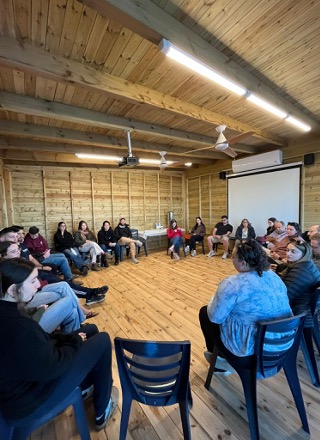
Our trip began in Tel Aviv, the starting point of modern-day Israel, which felt deeply inspirational. A city built on the motto, “make your dreams a reality,” it’s a credo I do my best to live by. Seeing the photo of the original pioneers standing on a sand hill, with the backdrop of what is now a sprawling city filled with skyscrapers and public transit, was an incredible launching point for the journey.
We visited some of the first schools in Israel and learned the story of how one of Israel’s earliest standout writers came to find his name, Eliezer Ben-Yehuda, originally Eliezer Yitzhak Perelman, and in doing so helped shape the birth of modern Hebrew. It set an intention in my heart: the world is always ripe for innovation, and it truly is what you make of it.
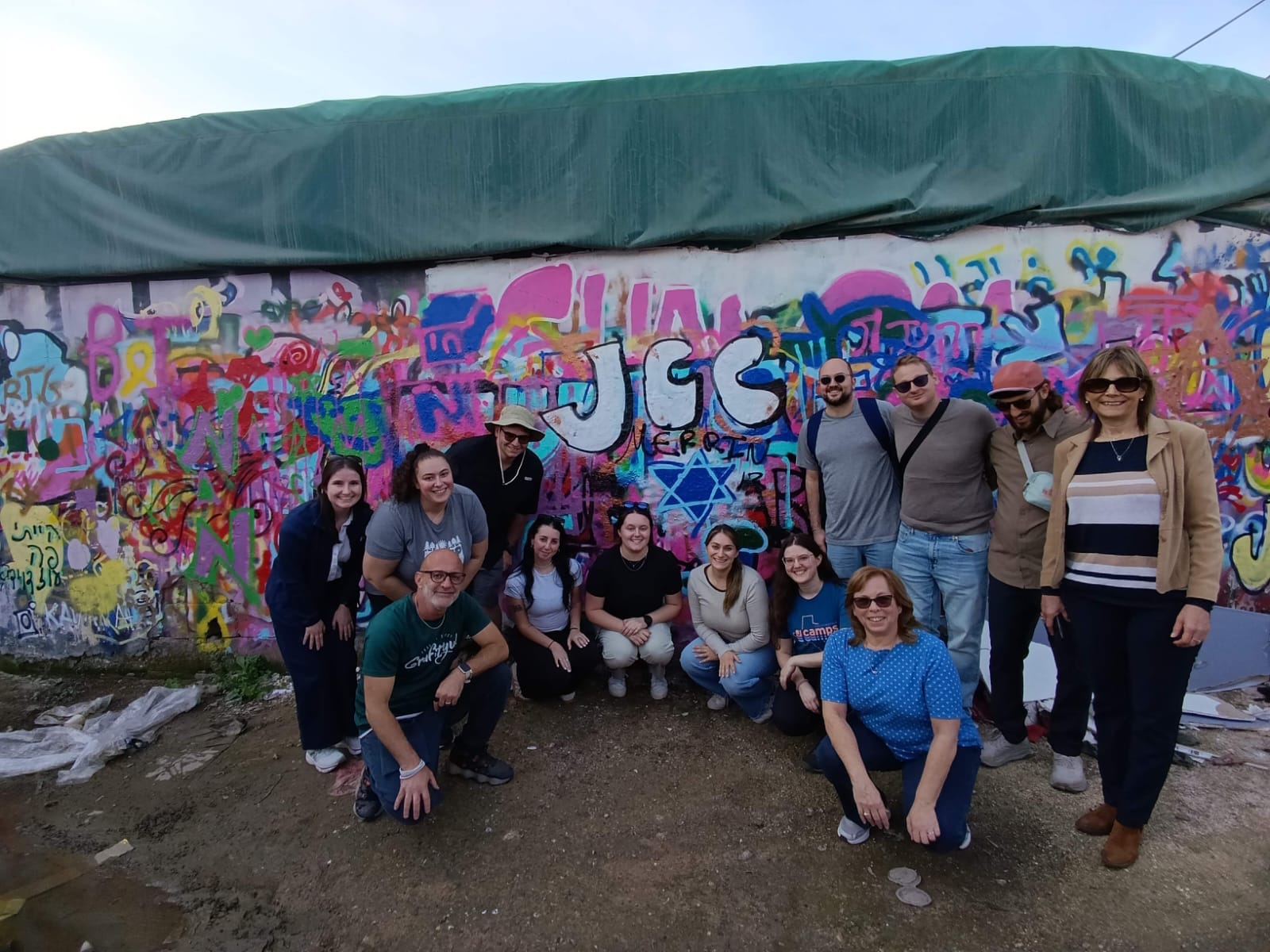
On the graffiti tour, we began to dive into the soul of Israelis and what it looks like to move through life during war, navigating the time of the hostages and the mixed bag of opinions and storylines that exist in Israel. From there, we got into the nitty–gritty geopolitics and the formation of this young democracy. Guided by our speaker Joe Perlov, we participated in a map exercise exploring neighboring countries and when they gained independence. The exercise was called the “Changing Map of Israel,” and it’s a program I plan to do with our Tucson teens.
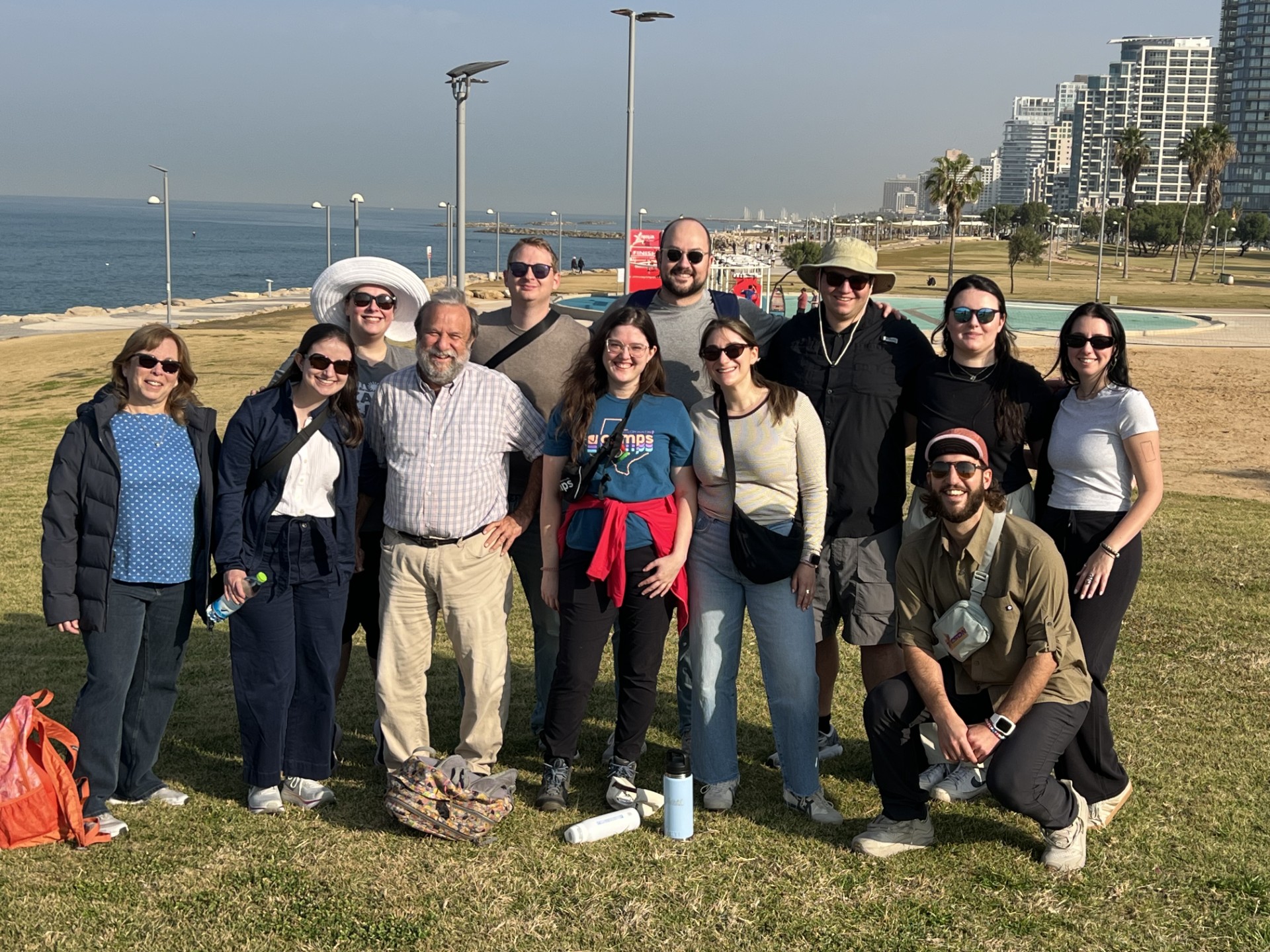
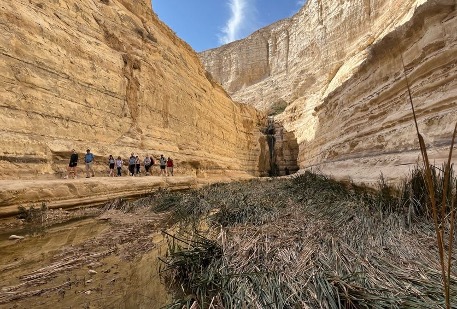
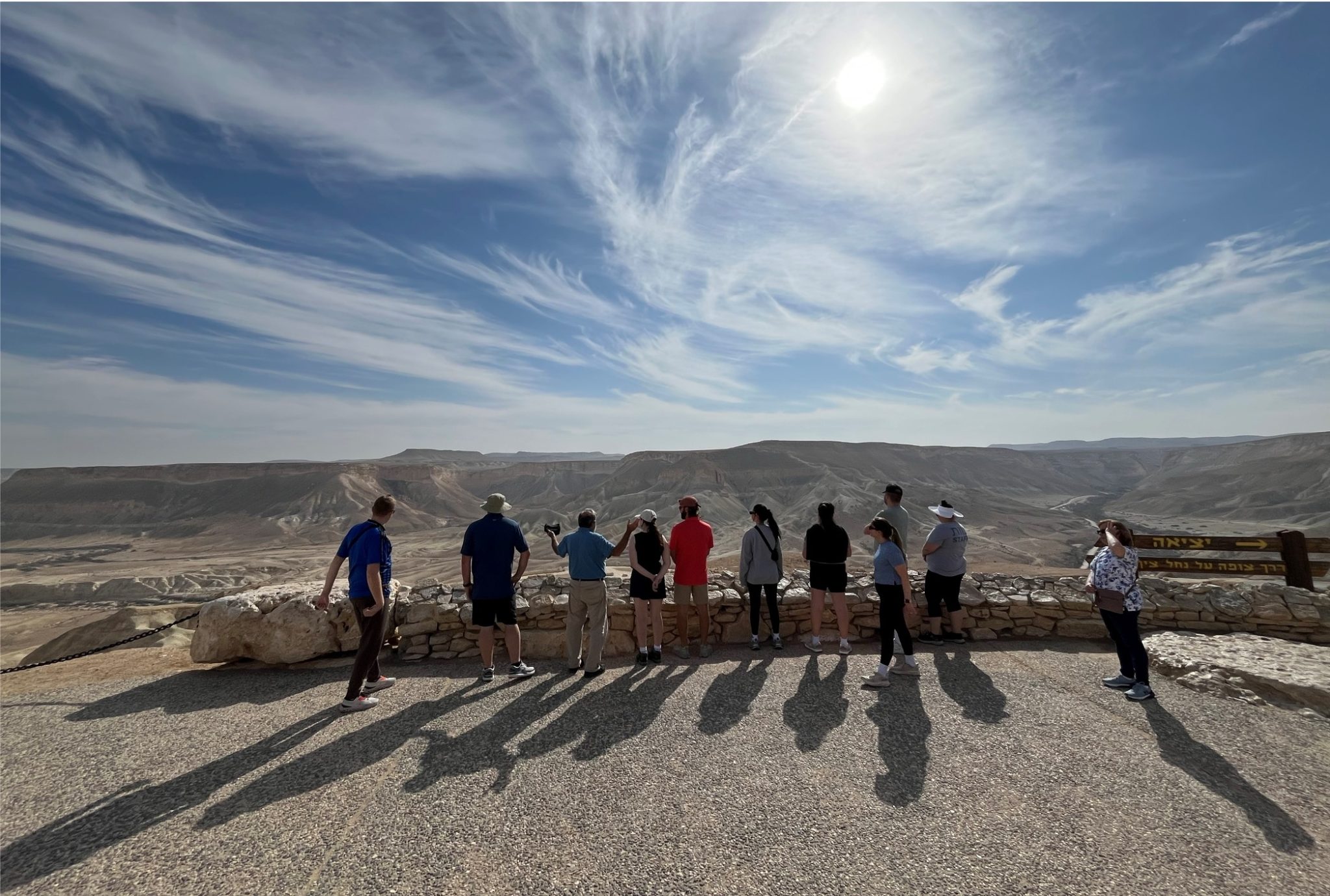
The following day, we returned to our roots with a walk in the desert before visiting Ben-Gurion’s grave. The trip created a deeply personal connection for me to Ben Gurion. Ben Gurion has always been a name that looms large as someone you know is important, but learning about his early failures and the journey that led him to become Israel’s first Prime Minister made him feel like a friend, someone I genuinely know in my heart.
The day also included a visit to the Ramat HaNegev Research and Development Center, which felt particularly like home for me, coming from Tucson. The kind of innovative agricultural research being done in Israel draws strong parallels to the research happening in Arizona. There was even a Tucson pioneer recognized for his time in Ramat HaNegev, Sol Resnick, a University of Arizona professor in the Department of Hydrology and Water Resources.

From there, we visited Shanti House, a place that continued to inspire and reaffirm what the best of any society is capable of: caring for young people who are truly in need. I can’t say enough great things about Shanti House, and meeting the staff member who showed us the facility truly filled my cup. The visit left me with a deep sense of pride around youth engagement and the impact that I can have on young lives.
The next day, we headed to Nova, the site of an October 7 attack— the worst pogrom since the Holocaust and a horrific event that has left a lasting mark on Israeli society and the Jewish experience worldwide. There are no words to adequately describe the devastation or the loss of life among one of the most beautiful, vibrant groups of people I have ever borne witness to. Seeing the vehicles stacked in piles was staggering. It was hard to wrap my mind around the sheer scale of the destruction. How could this have been done in so little time? What kind of monsters could do this, and how many did it take?
We then went to Sderot, a town also deeply woven into the events of October 7, where a police station had been overtaken and ultimately brought to the ground. There we met Liron, who, after a day filled with devastation, overflowed with hope and a true belief in a path forward toward a better future. Liron has a mission of returning young adults to the kibbutzim in the Gaza envelope through the Turainu (Our Turn) project.
We returned to Tel Aviv, embraced by the warm, vibrant culture of the city, and shared a dinner focused on how JCCs around the world can unite in bringing light to one another and to our communities. The next day, we visited ANU Museum of the Jewish People, a place that truly anyone, Jewish or not, should experience. It’s less of a museum and more of a celebration of Jewish Peoplehood, and the visit brought clarity and perspective to our collective memory and left me feeling inspired and full of pride.
From ANU, we met with Vera, an Israeli Palestinian Christian who broadened my perspective through a viewpoint I was less familiar with. Her story highlighted the deep complexities and conflicts of this land, while also offering hope, reinforcing the idea that people on opposite sides can seek peace and prosperity without it meaning the other must lose or die.
That evening, as Shabbat approached, we began to wind down and shift the pace. It was time to breathe, to take in the weight of the previous days, and to celebrate Shabbat. We sang songs on the beach and settled into the evening together. The following day, I was lucky enough to attend Shabbat services with our guide, gaining new insight into the size and scope of Conservative and Reform Judaism in Israel. We wrapped up Shabbat by learning about the diverse landscapes of each other’s JCCs and held a Havdalah led by a respected leader in the field— one of many professionals we met who felt like they were passing a torch to us.
We were incredibly fortunate to have a tour educator with a powerful personal story living on a kibbutz, finding love, moving on in a healthy and grounded way, and eventually finding his path to Tel Aviv and to guiding groups like ours. His insights into kibbutz life and the path a young American might take in moving to Israel were eye-opening.
The next day, we began to leave Tel Aviv, first making a meaningful stop at Save a Child’s Heart. The organization is making an unmistakable difference in countless lives and, in doing so, serves as a powerful representation of Israel and Jewish values rooted in compassion. One small but poignant detail stood out: seeing the name of a Palestinian doctor from the West Bank written on the board of pediatric trainees.
As we made our way toward Jerusalem, the landscape began to change, climbing in elevation, trees filling the canyons, yet for much of the drive, Tel Aviv was still visible in the distance, a reminder of how small Israel truly is. We stopped at a colleague’s home in the hills outside Jerusalem, an area I hadn’t experienced before that gave off strong California-hills vibes and felt like a beautiful place to live. We arrived at our hotel later that evening and checked in.
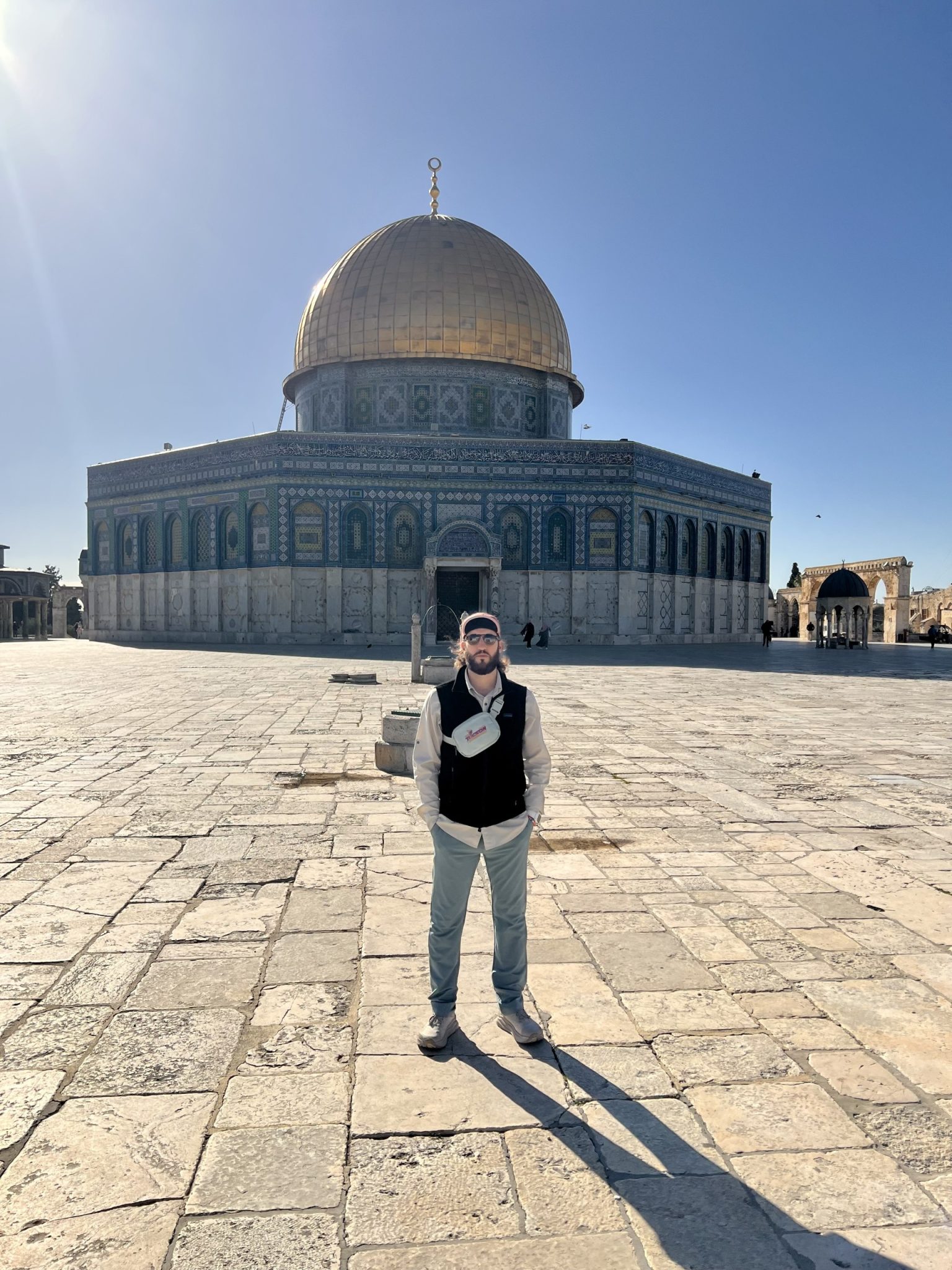
The next morning brought an unexpected and powerful opportunity: a visit to the Temple Mount. Many of us never imagined we would be able to go, but our guide identified a brief window, and we took it. Standing in a place sacred to three religions— the Temple Mount for Jews, the Golden Gate for Christians, and Al-Aqsa Mosque and the Dome of the Rock for Muslims— it felt surreal. It is a place that feels enormous in conversation, yet surprisingly approachable when walking in its courtyards.
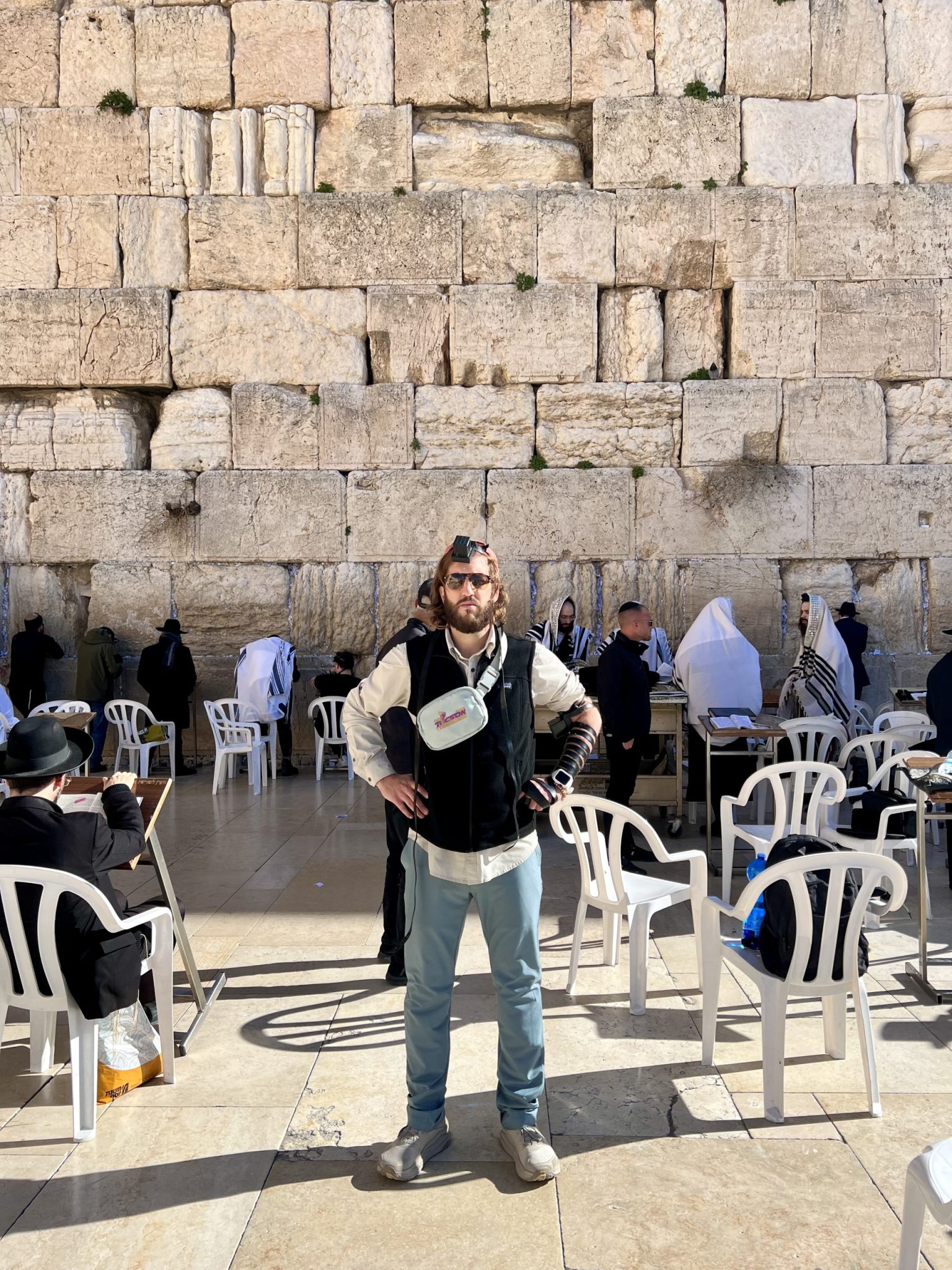
From there, we made our way to the Kotel via a path I had never taken before, one that felt reminiscent of how people might have traveled from the Temple through backroads and tunnels into the Old City. At the Wall, we each took time for personal prayer, writing notes and sitting with our thoughts. While the main plaza was packed, I was struck by how quiet and powerful the surrounding ruins felt, broken pillars from the original Temple and lesser-visited sections of the Western Wall were also so meaningful.
After visiting the Church of the Holy Sepulcher and tracing the layered timelines of Jerusalem, we transitioned to the ultra-modern National Library of Israel. The contrast was striking— a state-of-the-art facility housing ancient texts, paired with an impressive, automated sorting system. We sat with education directors from the library, shared experiences, and gained access to the wealth of resources they offer online, shifting from simply taking things in to doing the work in real time.
That evening, we participated in a cooking workshop mastering Israeli salad, making pita bread from scratch, and preparing a traditional chicken and rice dish called Maqluba that is flipped as part of the process. Bonding with our cohort throughout the trip was deeply meaningful, and this moment stood out as one of many where it simply felt good to be part of the group.
The following day took us through the West Bank toward the Jordan River, to the site traditionally believed to be where Jesus was baptized. Over these days, we learned a great deal about Jesus, which felt fitting given that he is such a prominent and famous Jew. Approaching the river involved passing through minefields, and at the water itself, we stood directly across from the Jordanian side, able to wave to guards and exchange warm greetings, another surreal reminder of how complex and interconnected this region is.
We continued to a winery in the West Bank, enjoying both the wine and a deep conversation around the three non-negotiables often discussed when talking about the region’s future: Jewish identity, democracy, and safety. The conversation underscored how difficult it is to find solutions that honor all three simultaneously, even when the desire for resolution feels strong.
From there, we went to an incredible, meat-focused restaurant where we began with a drum and instrument circle. Once again, the diversity and openness of our cohort added immeasurable value to the experience. The family-style meal that followed did not disappoint, and the family-style format had become a staple of the trip.
The next morning began with a session led by a Holocaust scholar, setting the tone for our visit to Yad Vashem. During a warm-up exercise, I had the opportunity to create a character who had survived the Holocaust and was now sitting in a displaced persons camp, deciding where to go next. I was given the outline of a metropolitan, less-religious Jewish attorney, while the other side in the discussion was Matan, who played a more traditional Orthodox character. The exercise revealed deep insights into identity, values, and how Jewish people at the time viewed their own victimhood and responsibility around the Holocaust. It taught me things about myself I hadn’t fully articulated before, and things about Jewish people I had not previously grasped.
Yad Vashem is a place that should never have to exist. It is gut-wrenching. Sitting in front of the Nazi racial laws defining who was considered Jewish, I couldn’t stop thinking about my three nieces and my nephew, children who currently have little connection to their Jewish heritage, yet under those laws would have been sentenced to death, along with their future children, based solely on having one Jewish grandparent.
After a long lunch to reset, we visited Krembo Wings, a youth movement focused on inclusion and leadership for youth with and without disabilities. As JCC professionals, this felt like familiar ground, and connecting with the teen leaders and participants was both heartwarming and inspiring. Amid war and chaos, here was an organization devoted to uplifting those often overlooked.
On our final day, we visited a film school known for producing acclaimed work that captures many layers of Israeli society. It felt like the perfect way to end the trip, encouraging us to think about memory, storytelling, and how we might bring the essence of this journey back to our own communities.
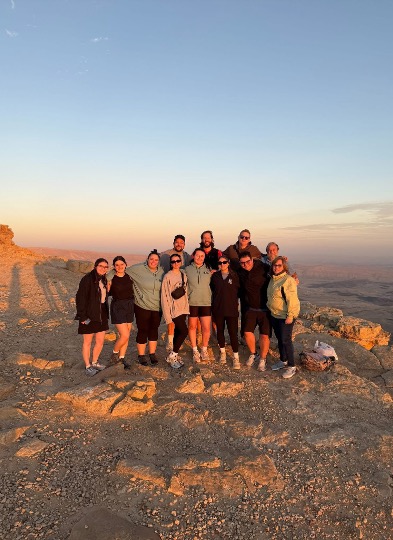
I wanted to walk through the trip day by day, but even this still feels like a version that doesn’t fully encapsulate the smaller moments of learning and connection. I walked away from this experience feeling tremendously grateful for a profession that provides work I am deeply passionate about and colleagues I have come to cherish.
When I think about how to connect Israel to our local community and teens, it was both inspiring and refreshing to learn how deeply Israel is rooted in teenagers and young adults— the same age group that helped found the nation, and in a camp culture that so strongly resonates with the life and values of our JCCs. My goal moving forward is to bring back our shared sense of belonging through both Judaism and community, and to help convey the intrinsic connection I feel to Israel so that others in my community can feel some piece of that as well.
Resources
Graffiti Tour: עמוד הבית – English – גרפיטיול
Shanti House: The Shanti House- A warm home for youth at risk – בית השנטי
Anu Museum: ANU – Museum of the Jewish People in Tel Aviv
National Library of Israel: The National Library of Israel
Turainu (Our Turn) project: Young Adults Say It’s “Our Turn” to Support Israel’s Border Communities
Save A Childs Heart: Save A Child’s Heart: Improving Pediatric Cardiac Care
Krembo Wings: Home – Krembo Wings
Cooking Class: טעמים – english
Film School: Ma’aleh | School of Television, Film & Arts
Ramat HaNegev Desert R&D: R&D | Frontier RNG Innovation Center