Jewish Disability Awareness, Acceptance, and Inclusion Month (JDAAIM) is celebrated every February by Jewish communities worldwide and realized year-round at the Tucson J. The month creates awareness around the stigma and stereotypes people with disabilities face, builds solidarity, empowers people with disabilities, and works to ensure their inclusion in Jewish life and community.
Everyone belongs at the Tucson J, and we celebrate, support, and recognize the uniqueness of every person. Our programs and spaces are designed with accessibility in mind, so that everyone can thrive and grow while they are at the J.
Eight Guiding Principles on Inclusion
JCC Association of North America’s Eight Guiding Principles on Inclusion are foundational to the work of the JCC Movement. Rooted in Jewish values, they provide a shared language and direction to these vitally important endeavors. The principles originally were developed as a collaborative effort among JCC Association staff, leaders in the field, and external partners and professionals, including people with lived experience of disability. Although these principles were created specifically for the inclusion of people with disabilities, their core values are universally applicable to all areas of inclusion. The Tucson J is committed to living these eight principles:
Shlemut — Wholeness
People with disabilities are whole people who do not need to be cured or fixed. We view disability as a rich and essential part of human diversity. JCCs strive to be places where our whole selves are celebrated.
B’tselem Elohim — Inherent worth
We respect the inherent dignity and autonomy of each person. We value people because of who they are, not because of how much they produce or accomplish. Each person has something to learn, something to teach, and something to contribute to community. JCCs strive to be places where each individual is valued.
Arevut — Interdependence
No one is entirely independent. Every person is dependent on others, in one way or another. Each person functions differently depending on context and environment. JCCs strive to be communities that acknowledge and celebrate our interdependence
Negeshut – Accessibility
We are deliberate and mindful about the environment we shape. As our tradition teaches: “You shall not insult the deaf, or place a stumbling block before the blind.” (Leviticus 19:15) Starting from where we are, we look at how we can shift our policies, communications, programs, processes, and facilities to increase and enhance accessibility to JCCs and their programs—and ein sof (we do not finish). We always strive to become more accessible. JCCs actively seek to identify, remove, and prevent barriers to full participation and to become more accessible by learning about and practicing inclusive design.
Al Pi Darko — Inclusive education
Building upon Proverbs 22:6—“Teach children according to their way,”—JCCs offer inclusive programs that meet the individual learning needs of children, families, and people of all ages. JCCs strive to support and collaborate with program professionals, educators, and families to ensure educational programs are inclusive
Kavanah — Acting with intention
JCCs embrace the principle of “Nothing About Us Without Us” and include people with disabilities in all facets of planning and decision-making. We plan with accessibility in mind, so we do not create new barriers. When we are not intentionally inclusive, we may be unintentionally exclusive. JCCs strive to be proactive and anticipate access needs
Svivat Avodah Tovah — Positive work environment
JCCs plan for and accommodate staff access needs, from the initial recruitment process to the day-to-day work environment of employees. JCCs strive to be accessible and supportive workplaces in which staff can learn, grow, and achieve
Tzedek — Justice
We view inclusion as the work of tzedek (justice) rather than tzedakah (charity). Because ableism is intertwined with other systemic barriers, we draw on an intersectional approach in undertaking this work. Efforts to remove barriers to full participation are acts of tikkun olam (repair of the world), and we seek to center people with disabilities as contributors and leaders in these endeavors. JCCs strive to be communities engaged in the work of justice for and with people with disabilities.
Read the JCC Association Inclusion Statement and check out the 8 Guiding Principles Poster Series here.
Advancements to our Commitment
Each week through our Disability Program Services department Day Program, we welcome over 70 adults with disabilities to the J to build relationships, practice wellness, exercise their creativity, and contribute to our vibrant community. The program, one of the largest in Southern Arizona of its kind, began as the Taglit Day Program founded in 2008 with support from a committee of dedicated lay leaders. Disability Program Services has grown to serve more people each year and deepened in its impact not only for the participants, but for the entire Tucson community. Over the past several months, with support from grants, outstanding leadership, and a commitment to evolve, the J has expanded its offerings with an enriching vocational training component, JJobs. Interns in the Day Program undergo resume writing, the job interview process, and comprehensive job training ahead of working at the JShop, where community members can purchase a variety of items, including J-branded hats, swim goggles, and even coffee. This new opportunity has not only enhanced the experience of DPS participants, but of everyone who spends time at the J. We all benefit when our peers are uplifted— a beautiful example of arevut (interdependence) and svivat avodah tovah (positive work environment). Learn more about DPS JJobs and the JShop here!
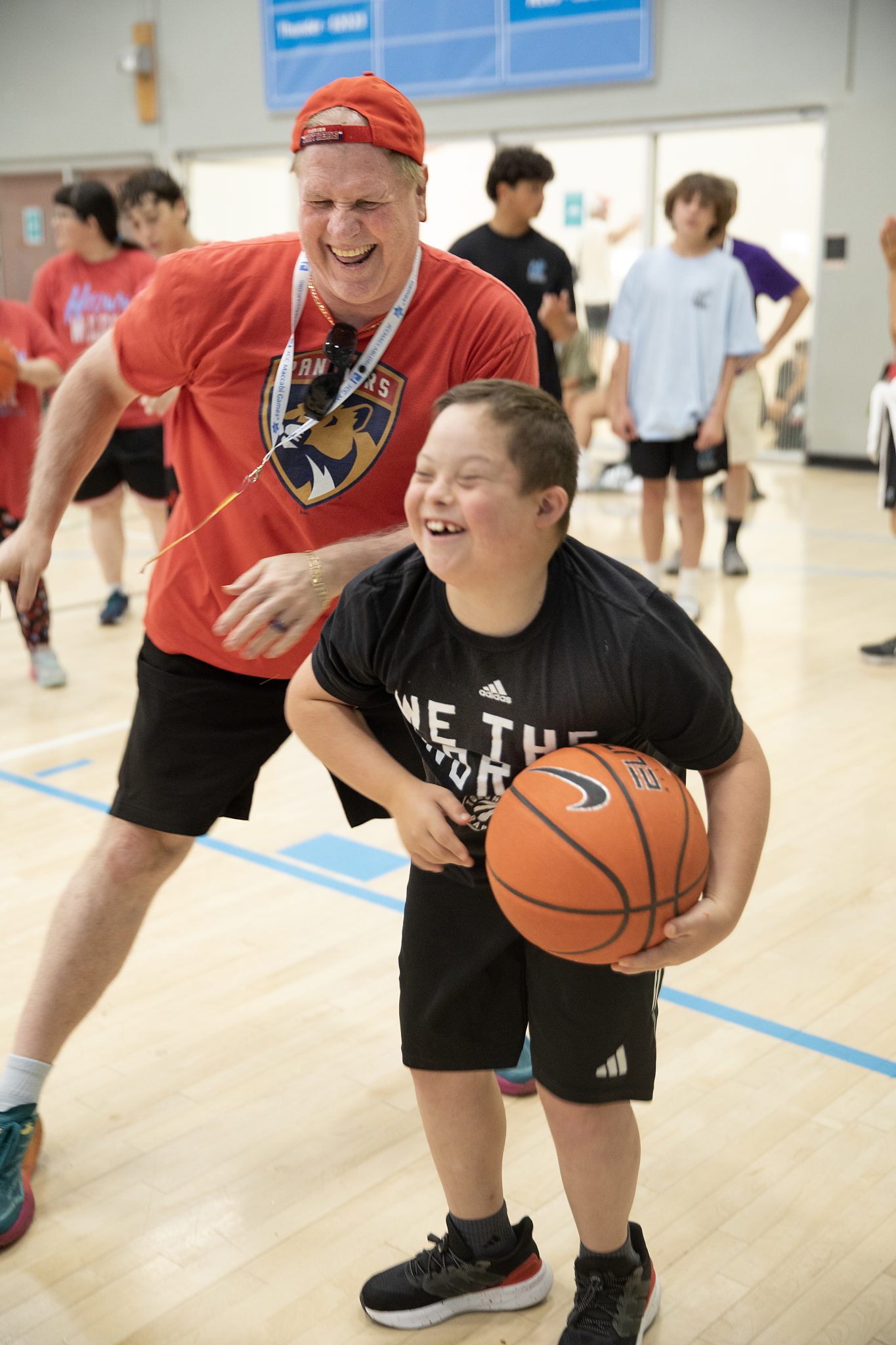
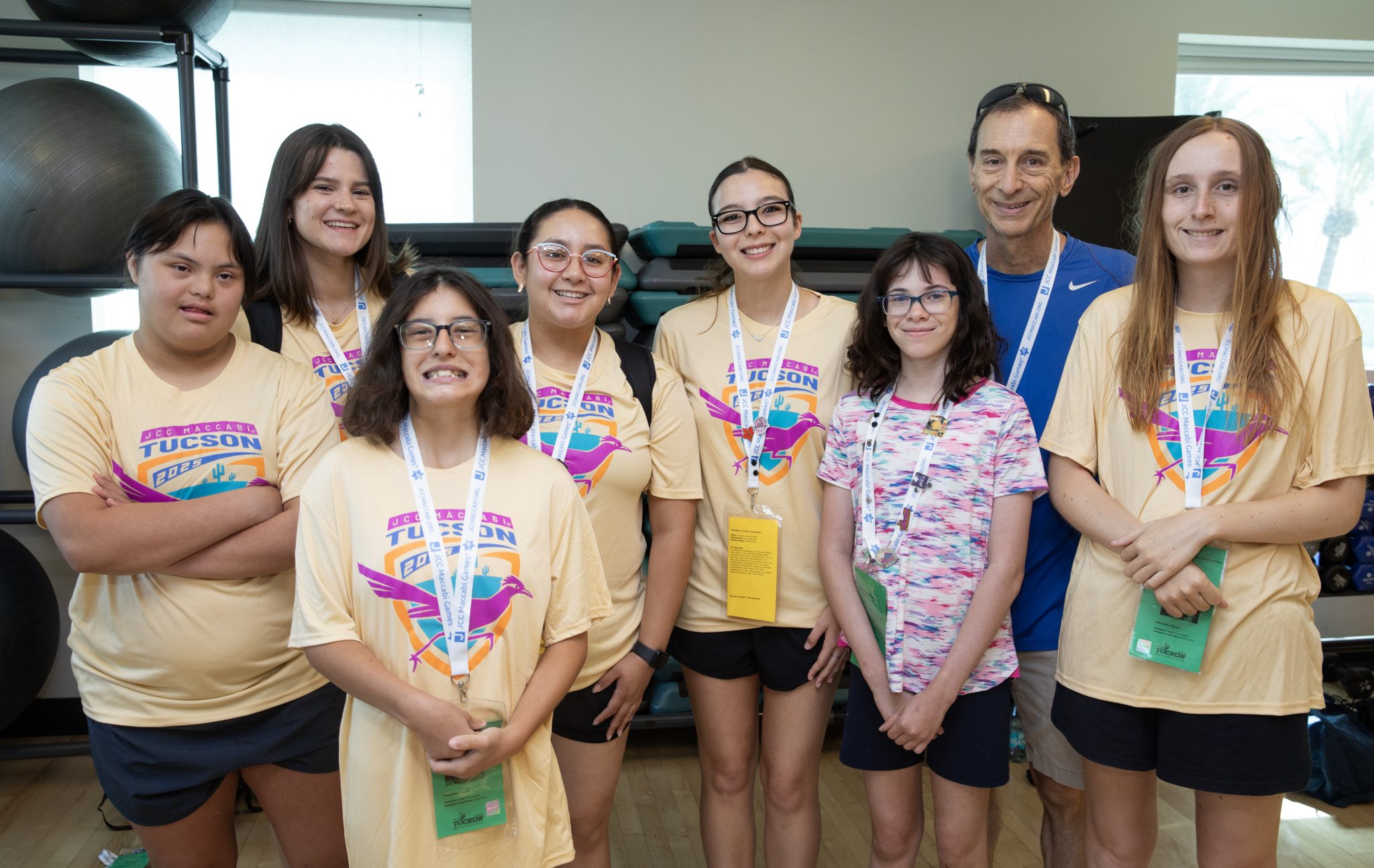
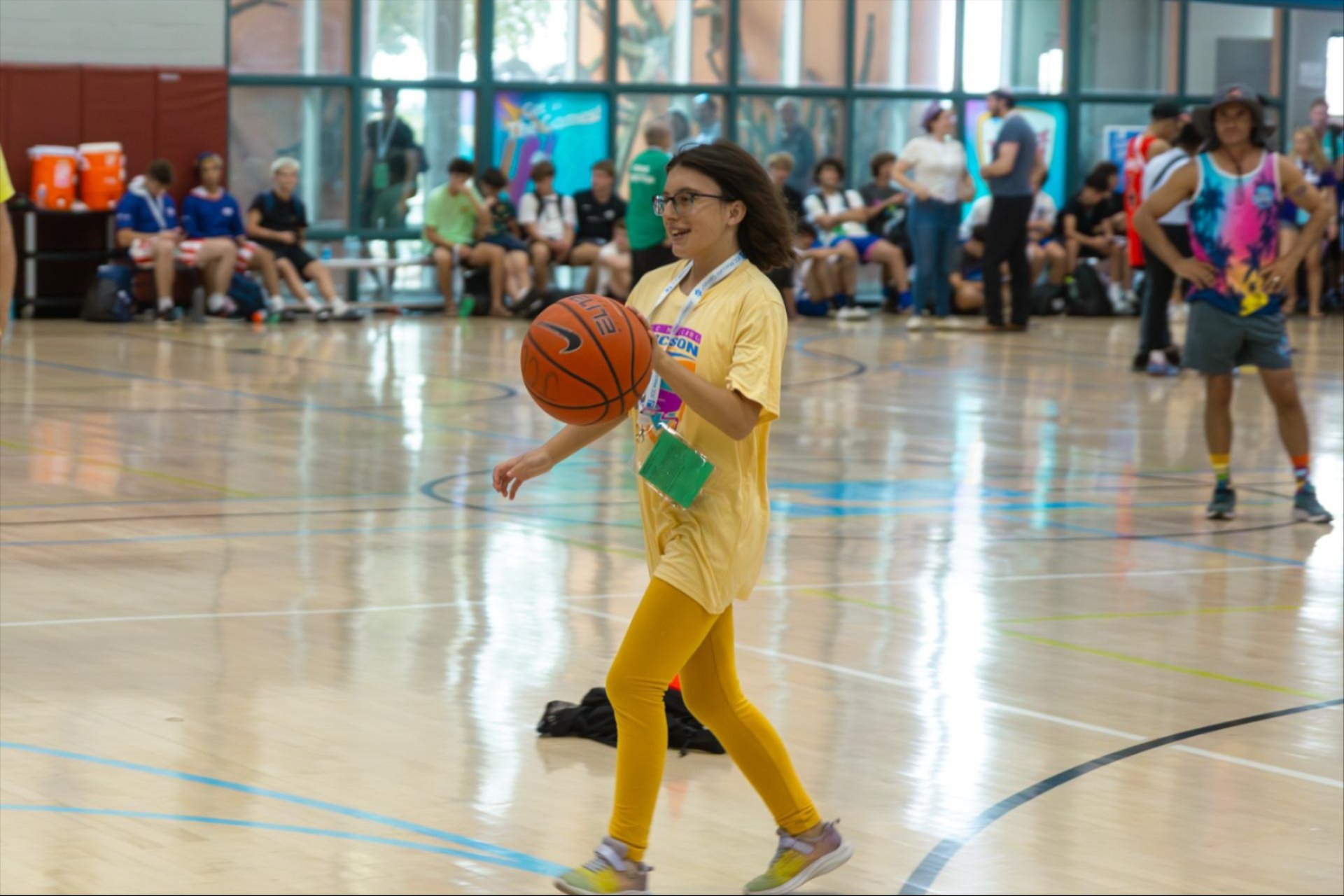
Last summer, the Tucson J had the honor of hosting 21 JCC Maccabi Access Games athletes—including four from right here in Tucson—the largest delegation since the program was first piloted in 2022. The Access Games offered an inclusive and meaningful way for athletes with cognitive and developmental disabilities to join thousands of their Jewish peers from around the world in experiencing the magic of JCC Maccabi. The program, now out of its pilot phase, also provides JCCs with opportunities to develop and strengthen connections for these teens and their families in their own communities. Check out this story about the 2025 Access Games at the Tucson J here.
In November, we were proud to once again partner with ACEing Autism, a national nonprofit dedicated to helping children with autism grow, develop, and benefit from social connections and fitness through affordable tennis programming. Over 20 youth aged 5-18 learned new skills, made friends, and most importantly, had a whole lot of fun. The program is supported by a team of Tucson volunteers who paired up with participants to lead them through the clinic. Many of the volunteers were faculty and students from the Speech, Language, and Hearing Sciences department at the University of Arizona,which offered a unique and valuable mutual learning opportunity! Families, participants, and volunteers alike found meaningful connection and movement throughout the ACEing Autism experience. Read more about ACEing Autism here and stay tuned for information about the next clinic coming to the J in March!
Questions for Reflection
What does JDAAIM mean to you? This month, take some time to reflect on the following questions:
- What assumptions do I hold (consciously or unconsciously) about disability
- When have I felt included or excluded in Jewish or communal spaces, and what can that teach me about inclusion?
- What does a fully inclusive community look like?
- How can I help make the J and my communities outside the J more inclusive?
Resources for Jewish Disability Acceptance, Awareness, and Inclusion Month
- Check out this awesome book list for adults from some of our favorite voices in the Disability Rights Movement, including Jewish activist, Judy Huemann (z”l)
- And JDAAIM recommendations for the kids, from PJ Library.
- Listen to this podcast from the Jewish Women’s Archive about a woman who reads the Torah in Braille
- Watch the powerful film Crip Camp
- Learn more about Jewish Values and Disability Rights from this very insightful guidebook
- Check out State of Arizona Disability Resources and more here.
- Read more about how JCC’s are practicing inclusion here.