Q+A: Inti Salinas, Basketball Coordinator + Coach

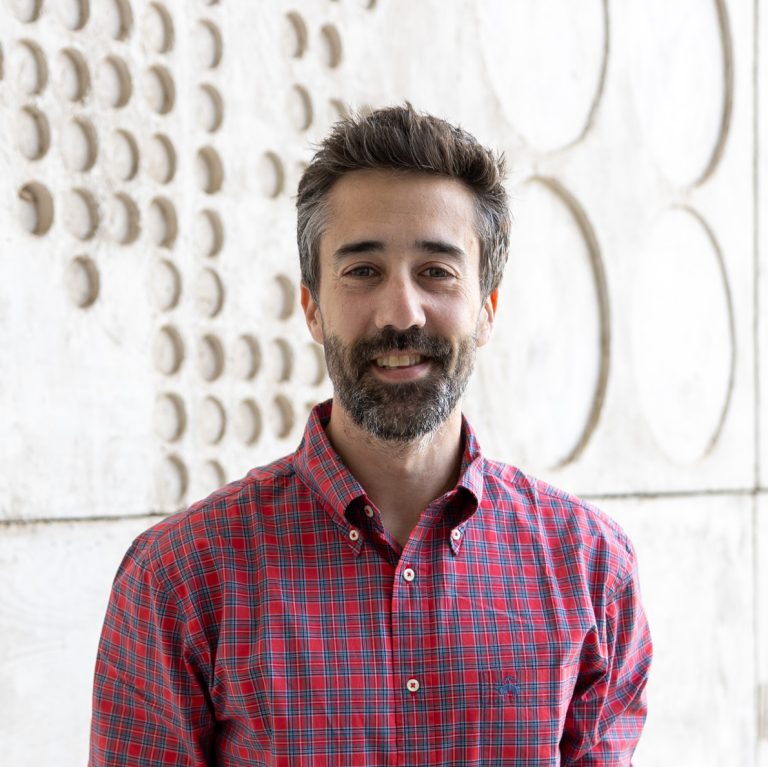
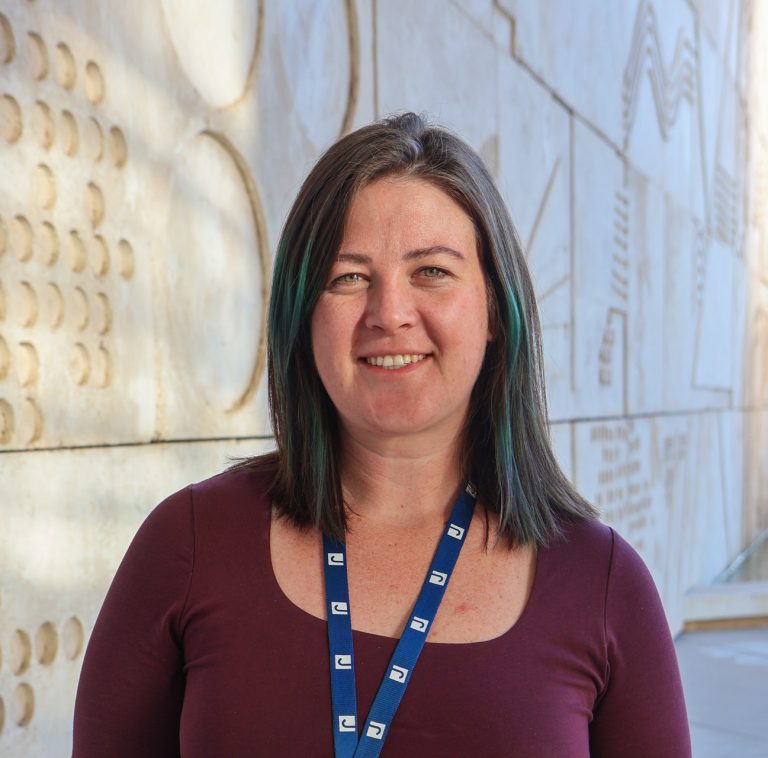
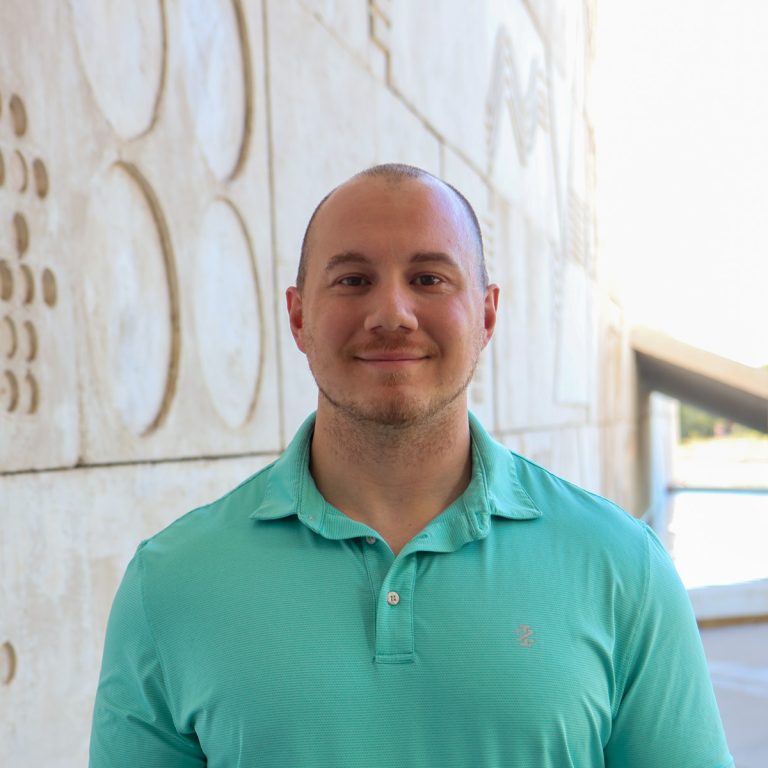
The Tucson J is excited to welcome Inti Salinas to our team as basketball coordinator. Inti is a seasoned collegiate and professional basketball trainer and spent last summer working on the JCC Maccabi Games and Access in Tucson. We are happy to welcome him back to offer elite basketball lessons.  


Continue reading to learn more about Inti, his expertise, and how a lesson can support your game!  
What can participants expect from your lessons? 

Athletes can expect a high-level training session with me, a coach and trainer with 15+ years of experience working with top athletes. I have worked with over 30+ D1 athletes and 10+ professionals and have a lot of experience with what it takes to develop athletes. I am highly detailed and focused on not only making skilled basketball players, but also successful basketball players, on and off the court.  


Can you share how you personalize each lesson to the athlete?  

The first lesson will be an overview of all the essential skills required to play the game. Some drills will be very easy, some may be very difficult, but the purpose is to get to know the strengths and weaknesses of each athlete. 


Depending on the athlete’s age, we may also dive into developing workouts tailored to their current and future roles as players. The more we work together, we will also review recorded footage of the player and comparable players.  


Why should an athlete consider adding private lessons to their training routine? 
Basketball, like any youth sport, often relies on volunteers, parents, or teachers who are doing their best but lack the experience to truly develop athletes. They also often lack time and resources to focus on each player individually. Private lessons are a great way to build confidence, good habits, and a growth mindset. I also like to say that my goal is to “teach them how to fish,” so that when athletes train alone, the growth can continue.    


Who has guided your success as a trainer or informed your training style?  

I am blessed to have been guided by many great coaches and trainers in my time. I was lucky to coach for five years at one of the top prep schools in Canada alongside Michael Chmielewski, where he taught me the science behind the game. I was also very lucky to have been invited to the NBA academy in Africa, where I was able to meet a lot of great coaches, scouts, and trainers who not only validated my training system, but also taught me a lot about the business behind the game.  


Your lessons cater to both the mental and physical aspects of basketball. Why is it important to focus on both while training? 

Yes, in my opinion, they go hand in hand. I believe that the mental aspect is actually more important because even if you make it far in basketball, you still have a life after. I believe cultivating a growth mindset and building confidence can push a player further than just working on skills. Building strong habits that attract success both on and off the court is the key. During our training, both of these elements are constantly present.  


Do you have a meaningful success story or memory you can share from a past client? 

The most recent success story was with an athlete whom I’ve been working with for almost 10 years. He had played university ball in Canada and had one more year of eligibility upon graduation. He asked me to connect him with some pro scouts to get him a role in Europe. I personally felt he should play his last year; he agreed but didn’t want to stay in Canada. He wanted to live his dream of playing in the NCAA. He wasn’t interested in the offers he received…until the Kansas Jayhawks came calling. The team will be playing at the University of Arizona on February 28th and seeing him on the McKale court will be a very special moment for me.  


Inti's training has definitely helped me improve as a basketball player. From when I first started training with him to now, I'm a completely different player. His take on basketball philosophy is unique. It's more modern and built for this generation of basketball. And I can really see it when I watch high-level games. I see exactly what he's working on with me and how it translates to a higher level of basketball. He tailors to my needs as a basketball player and helps me develop skills for what I need as a basketball player. I play for Premier Prep, and I play club basketball with Peak. And I competed at a national level for high school basketball.

Merrin Teen Professional Fellowship: Israel Seminar Reflection

From the desk of Davis Hubbell, Director of Teen Engagement

Davis Hubbell

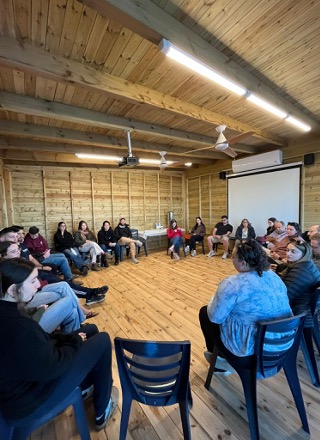
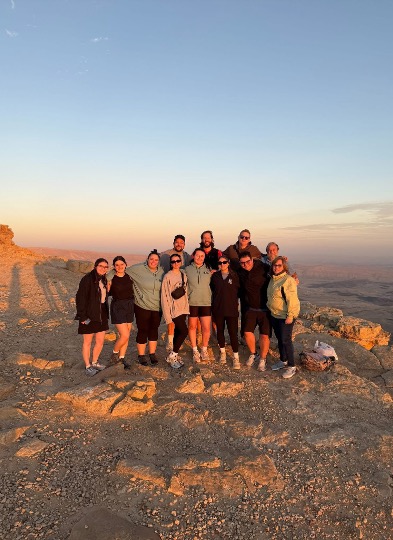
In January, Davis Hubbell, the Tucson J director of teen engagement, spent several weeks in Israel attending a seminar as part of the Merrin Teen Professional Fellowship, a program through JCC Association of North America. Designed for JCC staff who work with teenagers, fellows build leadership skills, strengthen their professional networks, grow their Jewish knowledge, and learn more about engaging with and supporting teens.

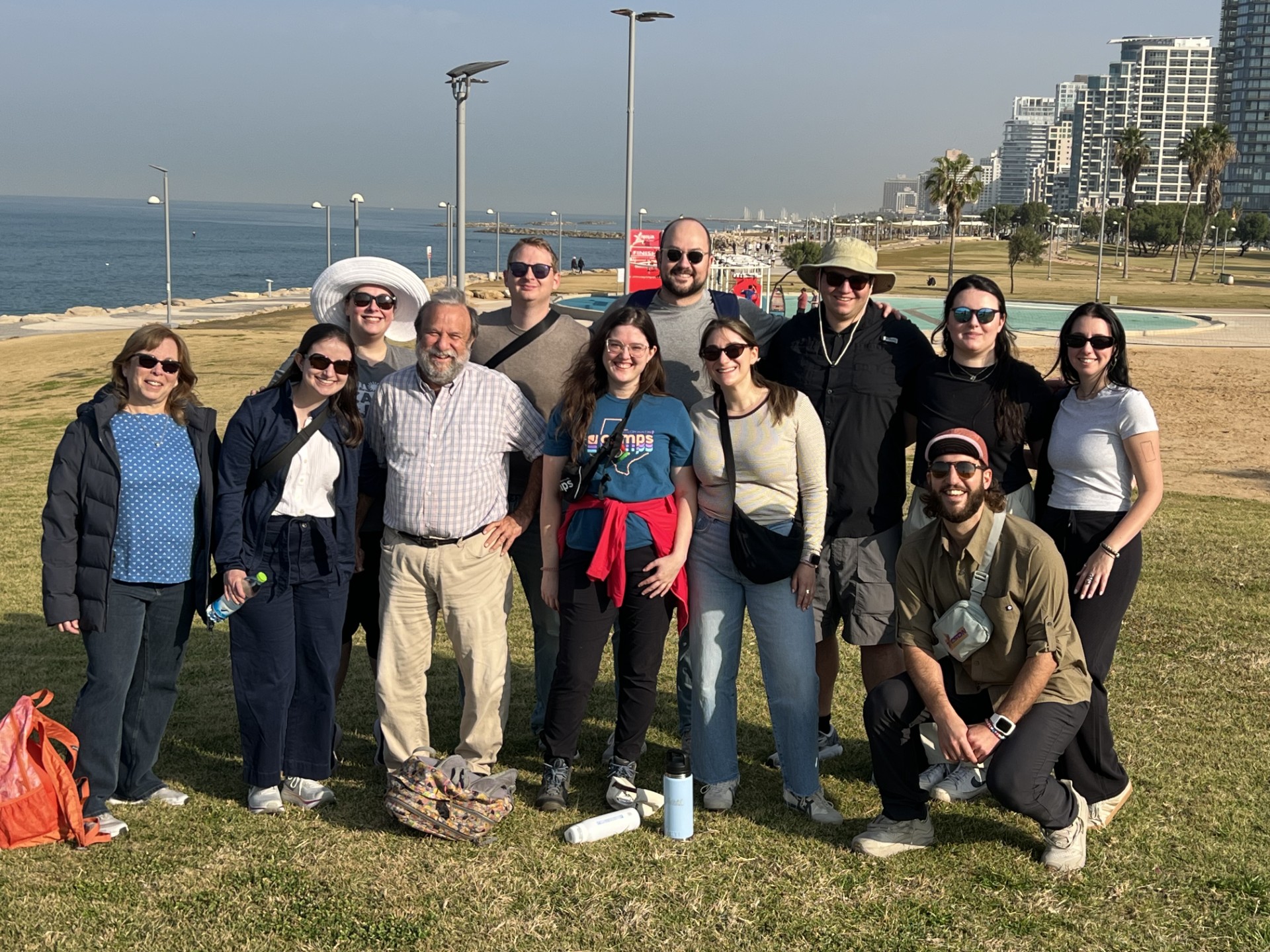
Our trip began in Tel Aviv, the starting point of modern-day Israel, which felt deeply inspirational. A city built on the motto, “make your dreams a reality,” it’s a credo I do my best to live by. Seeing the photo of the original pioneers standing on a sand hill, with the backdrop of what is now a sprawling city filled with skyscrapers and public transit, was an incredible launching point for the journey.  


We visited some of the first schools in Israel and learned the story of how one of Israel’s earliest standout writers came to find his name, Eliezer Ben-Yehuda, originally Eliezer Yitzhak Perelman, and in doing so helped shape the birth of modern Hebrew. It set an intention in my heart: the world is always ripe for innovation, and it truly is what you make of it. 


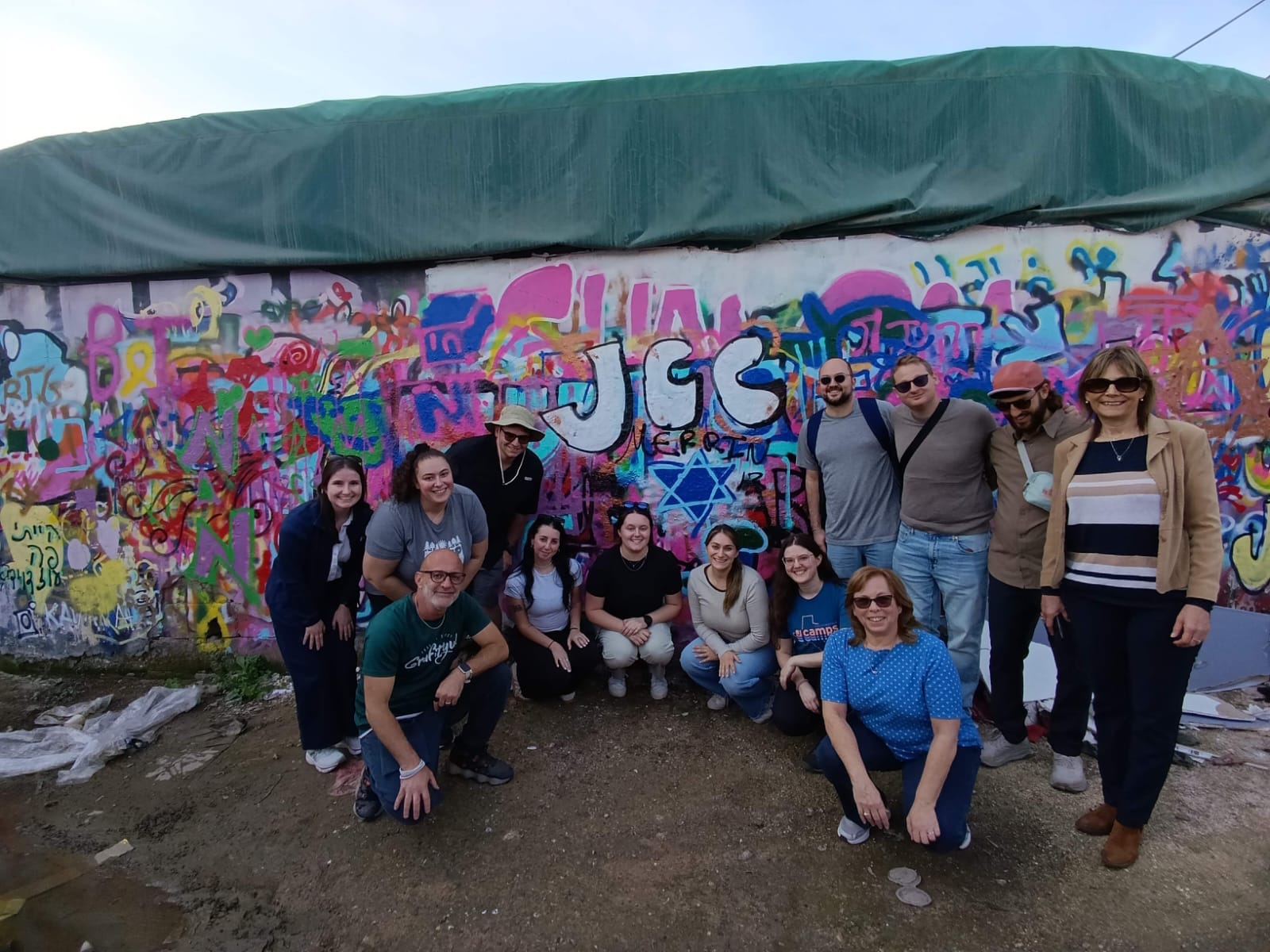
On the graffiti tour, we began to dive into the soul of Israelis and what it looks like to move through life during war, navigating the time of the hostages and the mixed bag of opinions and storylines that exist in Israel. From there, we got into the nitty–gritty geopolitics and the formation of this young democracy. Guided by our speaker Joe Perlov, we participated in a map exercise exploring neighboring countries and when they gained independence. The exercise was called the “Changing Map of Israel,” and it’s a program I plan to do with our Tucson teens. 

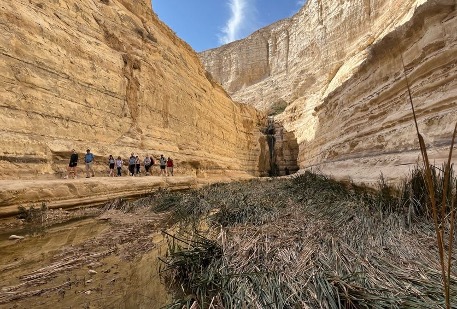
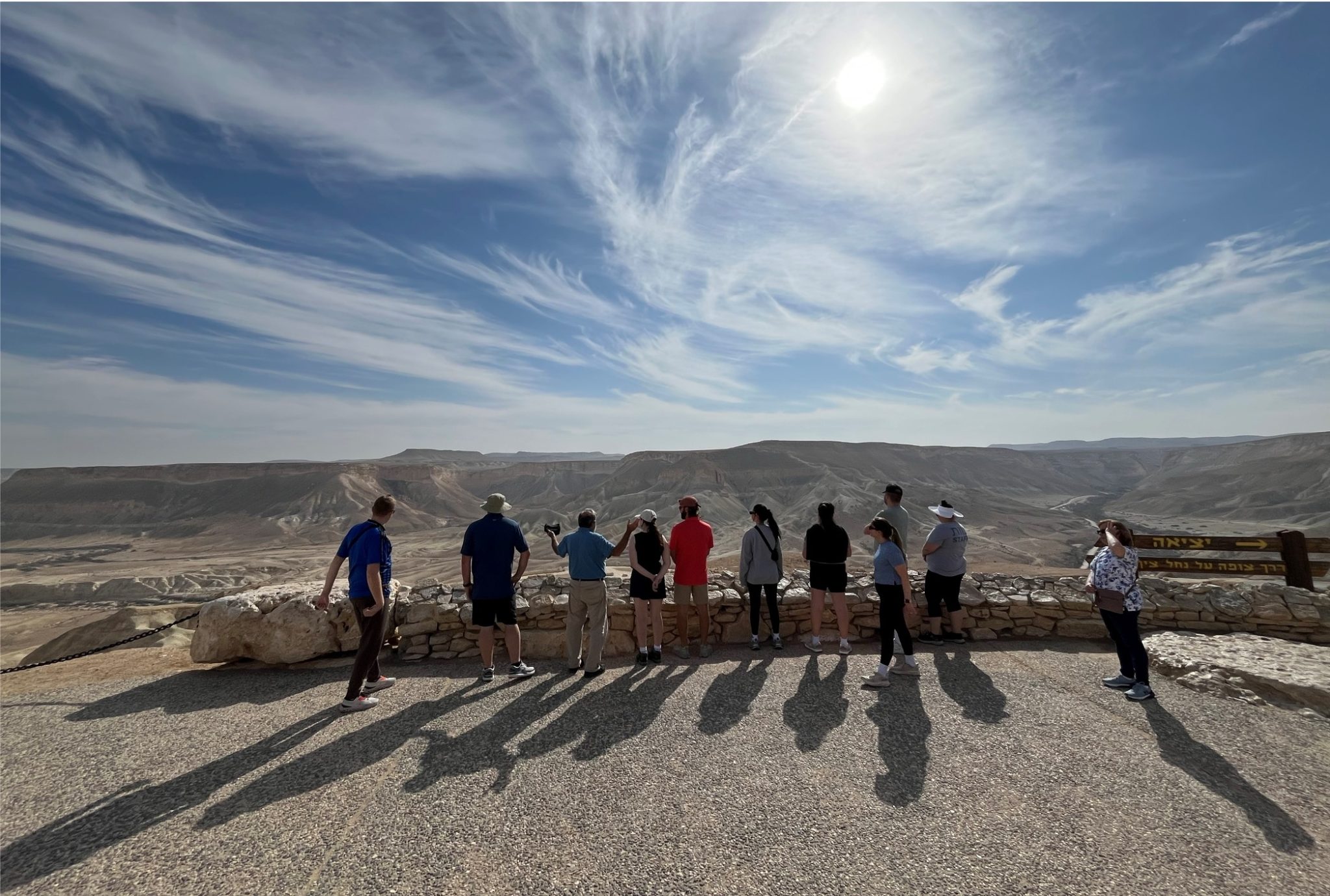
The following day, we returned to our roots with a walk in the desert before visiting Ben-Gurion’s grave. The trip created a deeply personal connection for me to Ben Gurion. Ben Gurion has always been a name that looms large as someone you know is important, but learning about his early failures and the journey that led him to become Israel’s first Prime Minister made him feel like a friend, someone I genuinely know in my heart.  


The day also included a visit to the Ramat HaNegev Research and Development Center, which felt particularly like home for me, coming from Tucson. The kind of innovative agricultural research being done in Israel draws strong parallels to the research happening in Arizona. There was even a Tucson pioneer recognized for his time in Ramat HaNegev, Sol Resnick, a University of Arizona professor in the Department of Hydrology and Water Resources. 

From there, we visited Shanti House, a place that continued to inspire and reaffirm what the best of any society is capable of: caring for young people who are truly in need. I can’t say enough great things about Shanti House, and meeting the staff member who showed us the facility truly filled my cup. The visit left me with a deep sense of pride around youth engagement and the impact that I can have on young lives. 


The next day, we headed to Nova, the site of an October 7 attack— the worst pogrom since the Holocaust and a horrific event that has left a lasting mark on Israeli society and the Jewish experience worldwide. There are no words to adequately describe the devastation or the loss of life among one of the most beautiful, vibrant groups of people I have ever borne witness to. Seeing the vehicles stacked in piles was staggering. It was hard to wrap my mind around the sheer scale of the destruction. How could this have been done in so little time? What kind of monsters could do this, and how many did it take? 


We then went to Sderot, a town also deeply woven into the events of October 7, where a police station had been overtaken and ultimately brought to the ground. There we met Liron, who, after a day filled with devastation, overflowed with hope and a true belief in a path forward toward a better future. Liron has a mission of returning young adults to the kibbutzim in the Gaza envelope through the Turainu (Our Turn) project. 


We returned to Tel Aviv, embraced by the warm, vibrant culture of the city, and shared a dinner focused on how JCCs around the world can unite in bringing light to one another and to our communities. The next day, we visited ANU Museum of the Jewish People, a place that truly anyone, Jewish or not, should experience. It’s less of a museum and more of a celebration of Jewish Peoplehood, and the visit brought clarity and perspective to our collective memory and left me feeling inspired and full of pride. 


From ANU, we met with Vera, an Israeli Palestinian Christian who broadened my perspective through a viewpoint I was less familiar with. Her story highlighted the deep complexities and conflicts of this land, while also offering hope, reinforcing the idea that people on opposite sides can seek peace and prosperity without it meaning the other must lose or die. 

That evening, as Shabbat approached, we began to wind down and shift the pace. It was time to breathe, to take in the weight of the previous days, and to celebrate Shabbat. We sang songs on the beach and settled into the evening together. The following day, I was lucky enough to attend Shabbat services with our guide, gaining new insight into the size and scope of Conservative and Reform Judaism in Israel. We wrapped up Shabbat by learning about the diverse landscapes of each other’s JCCs and held a Havdalah led by a respected leader in the field— one of many professionals we met who felt like they were passing a torch to us. 


We were incredibly fortunate to have a tour educator with a powerful personal story living on a kibbutz, finding love, moving on in a healthy and grounded way, and eventually finding his path to Tel Aviv and to guiding groups like ours. His insights into kibbutz life and the path a young American might take in moving to Israel were eye-opening. 


The next day, we began to leave Tel Aviv, first making a meaningful stop at Save a Child’s Heart. The organization is making an unmistakable difference in countless lives and, in doing so, serves as a powerful representation of Israel and Jewish values rooted in compassion. One small but poignant detail stood out: seeing the name of a Palestinian doctor from the West Bank written on the board of pediatric trainees. 


As we made our way toward Jerusalem, the landscape began to change, climbing in elevation, trees filling the canyons, yet for much of the drive, Tel Aviv was still visible in the distance, a reminder of how small Israel truly is. We stopped at a colleague’s home in the hills outside Jerusalem, an area I hadn’t experienced before that gave off strong California-hills vibes and felt like a beautiful place to live. We arrived at our hotel later that evening and checked in. 


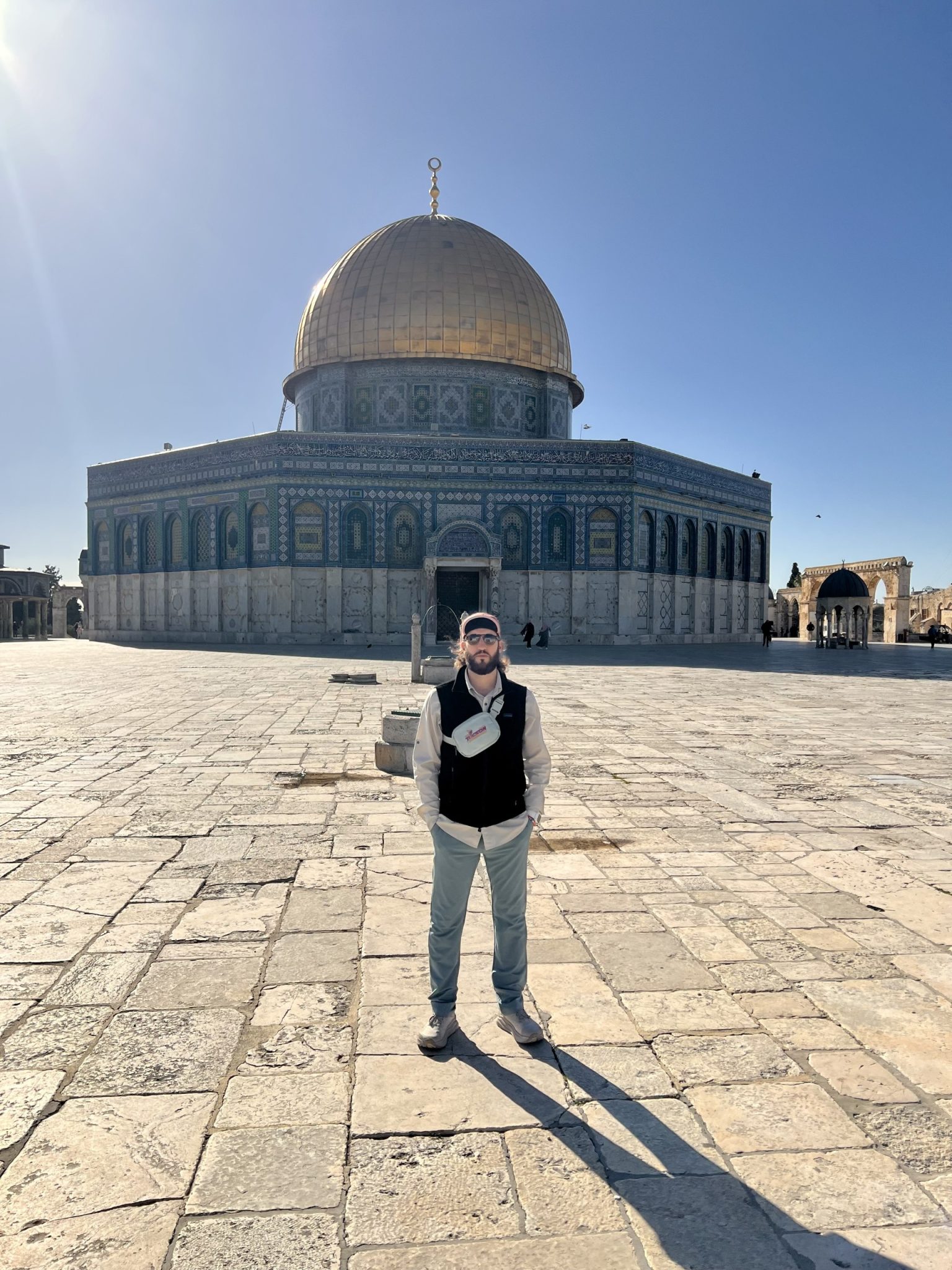
The next morning brought an unexpected and powerful opportunity: a visit to the Temple Mount. Many of us never imagined we would be able to go, but our guide identified a brief window, and we took it. Standing in a place sacred to three religions— the Temple Mount for Jews, the Golden Gate for Christians, and Al-Aqsa Mosque and the Dome of the Rock for Muslims— it felt surreal. It is a place that feels enormous in conversation, yet surprisingly approachable when walking in its courtyards. 

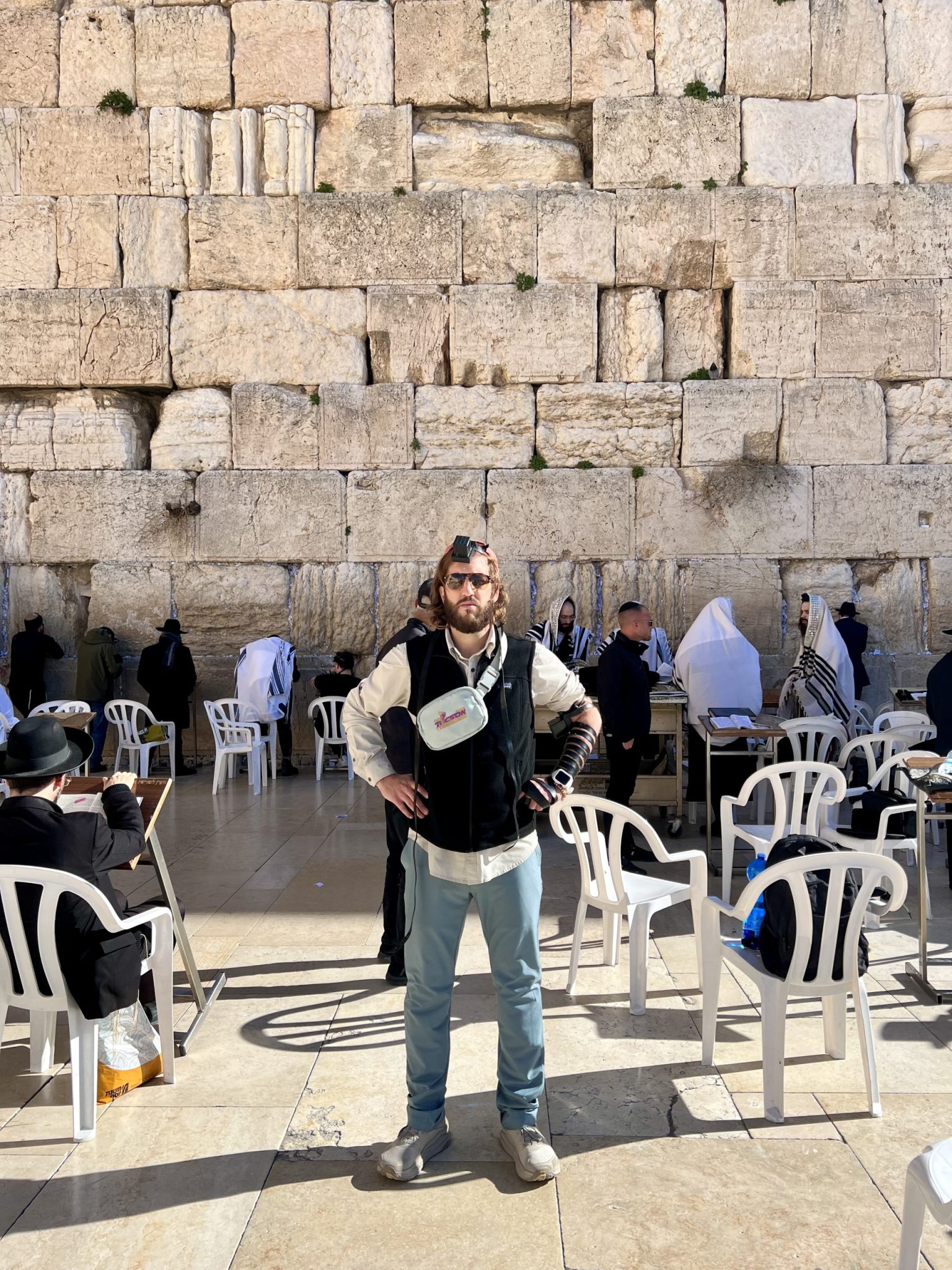
From there, we made our way to the Kotel via a path I had never taken before, one that felt reminiscent of how people might have traveled from the Temple through backroads and tunnels into the Old City. At the Wall, we each took time for personal prayer, writing notes and sitting with our thoughts. While the main plaza was packed, I was struck by how quiet and powerful the surrounding ruins felt, broken pillars from the original Temple and lesser-visited sections of the Western Wall were also so meaningful.  


After visiting the Church of the Holy Sepulcher and tracing the layered timelines of Jerusalem, we transitioned to the ultra-modern National Library of Israel. The contrast was striking— a state-of-the-art facility housing ancient texts, paired with an impressive, automated sorting system. We sat with education directors from the library, shared experiences, and gained access to the wealth of resources they offer online, shifting from simply taking things in to doing the work in real time. 


That evening, we participated in a cooking workshop mastering Israeli salad, making pita bread from scratch, and preparing a traditional chicken and rice dish called Maqluba that is flipped as part of the process. Bonding with our cohort throughout the trip was deeply meaningful, and this moment stood out as one of many where it simply felt good to be part of the group. 


The following day took us through the West Bank toward the Jordan River, to the site traditionally believed to be where Jesus was baptized. Over these days, we learned a great deal about Jesus, which felt fitting given that he is such a prominent and famous Jew. Approaching the river involved passing through minefields, and at the water itself, we stood directly across from the Jordanian side, able to wave to guards and exchange warm greetings, another surreal reminder of how complex and interconnected this region is. 


We continued to a winery in the West Bank, enjoying both the wine and a deep conversation around the three non-negotiables often discussed when talking about the region’s future: Jewish identity, democracy, and safety. The conversation underscored how difficult it is to find solutions that honor all three simultaneously, even when the desire for resolution feels strong. 


From there, we went to an incredible, meat-focused restaurant where we began with a drum and instrument circle. Once again, the diversity and openness of our cohort added immeasurable value to the experience. The family-style meal that followed did not disappoint, and the family-style format had become a staple of the trip. 


The next morning began with a session led by a Holocaust scholar, setting the tone for our visit to Yad Vashem. During a warm-up exercise, I had the opportunity to create a character who had survived the Holocaust and was now sitting in a displaced persons camp, deciding where to go next. I was given the outline of a metropolitan, less-religious Jewish attorney, while the other side in the discussion was Matan, who played a more traditional Orthodox character. The exercise revealed deep insights into identity, values, and how Jewish people at the time viewed their own victimhood and responsibility around the Holocaust. It taught me things about myself I hadn’t fully articulated before, and things about Jewish people I had not previously grasped. 


Yad Vashem is a place that should never have to exist. It is gut-wrenching. Sitting in front of the Nazi racial laws defining who was considered Jewish, I couldn’t stop thinking about my three nieces and my nephew, children who currently have little connection to their Jewish heritage, yet under those laws would have been sentenced to death, along with their future children, based solely on having one Jewish grandparent. 


After a long lunch to reset, we visited Krembo Wings, a youth movement focused on inclusion and leadership for youth with and without disabilities. As JCC professionals, this felt like familiar ground, and connecting with the teen leaders and participants was both heartwarming and inspiring. Amid war and chaos, here was an organization devoted to uplifting those often overlooked. 


On our final day, we visited a film school known for producing acclaimed work that captures many layers of Israeli society. It felt like the perfect way to end the trip, encouraging us to think about memory, storytelling, and how we might bring the essence of this journey back to our own communities. 


I wanted to walk through the trip day by day, but even this still feels like a version that doesn’t fully encapsulate the smaller moments of learning and connection. I walked away from this experience feeling tremendously grateful for a profession that provides work I am deeply passionate about and colleagues I have come to cherish.  


When I think about how to connect Israel to our local community and teens, it was both inspiring and refreshing to learn how deeply Israel is rooted in teenagers and young adults— the same age group that helped found the nation, and in a camp culture that so strongly resonates with the life and values of our JCCs. My goal moving forward is to bring back our shared sense of belonging through both Judaism and community, and to help convey the intrinsic connection I feel to Israel so that others in my community can feel some piece of that as well. 

Resources

Q+A: Colored Pencil Society of America District Chapter 212

From Wednesday, February 25, to Sunday, April 5, the Tucson J is excited to welcome the Colored Pencil Society of America’s District Chapter 212 (Phoenix and Tucson) to our Fine Art Gallery for Fine Art Gallery for “Rhapsody in Hue.” 


The exhibit beautifully showcases the diverse artistic expression achieved through the medium of colored pencil by highlighting the unique experiences and styles of each artist. The meticulous layering process involved in colored pencil work not only takes time but also reflects the artist’s excitement, dedication, and love for their craft. The Colored Pencil Society of America plays a vital role in elevating the medium’s recognition and providing valuable resources for artists.


Keep reading to learn more about the show and CPSA!
 

ABOUT THE SHOW: 


This exhibit beautifully showcases the diverse artistic expression achieved through the medium of colored pencil by highlighting the unique experiences and styles of each artist. The meticulous layering process involved in colored pencil work not only takes time but also reflects the artist’s excitement, dedication, and love for their craft. The Colored Pencil Society of America plays a vital role in elevating the medium’s recognition and providing valuable resources for artists.

About CPSA District Chapter 212

With over 70 members in Arizona and beyond, artists utilize a range of art styles and experience, predominantly working in colored pencils. The group strives to elevate the medium, educate others about it, and encourage innovation with the use of colored pencils. We are part of the national non-profit organization, the Colored Pencil Society of America (CPSA). 


Can you share your creative process, both in the studio and in shaping the overall vision for the show? 

Most of our artists in the group use a reference photo for their creative foundation, but it is what they do with the image that is most fascinating. Whether the artwork is stylized, photo realistic, or abstract, our show will leave its audience inspired. 

What themes are you exploring in this show, and why are they important to you? 

Rhapsody in Hue is a show that celebrates color. Many emotions can be invoked by color, like love, joy, peace, and serenity. It is an element of art that people have strong feelings about. Most people have a favorite color, or a personal experience associated with a color, whether we are aware of it or not. Our chapter wants to share our excitement for the power of color and how it can be used beautifully in a work of art. 

How do you hope viewers feel after experiencing the show? 

We hope the viewers feel inspired by our exhibit and uplifted by our creations. I hope that they leave with a new appreciation for the medium and perhaps want to try it out for themselves. Most people have used colored pencils at some time in their lives, but after a few lessons on colored pencil techniques, the sky is the limit. We are an encouraging group of artists who welcome artists of all levels, whether they are beginners or professionals. 

Why are you excited to share your work at the Tucson J? 

We are excited to exhibit at the Tucson J because our group would like to reach a broad audience and exhibit our work in a beautiful venue. Our mission is to elevate our medium to fine art standards and to share the experience and collaboration of our community of artists. 


Everyone is invited to an opening reception on Sunday, March 15, from 2-3:30pm, featuring light refreshments and artist talks.


In connection with the show, the Tucson J is offering fine art colored pencil classes, taught by artists from CPSA!

January Staff Spotlight Round-Up

Whether through a swimming lesson, an art class, or simply a smile, each day the Tucson J staff brightens the lives of our members and guests. We are proud of the variety of skills and stories that our staff bring to their work, and celebrate this each week through our Facebook and Instagram “Staff Spotlight” series.  


Continue reading on for a preview of our January spotlights, and check out the full posts at all @tucsonjcc accounts!

Gabi Tronziger | Youth Gymnastics + Dance Coach

“I am super excited to be coaching dance and gymnastics here at the J!


I began dancing at the age of 4, studying various dance forms such as contemporary, jazz, hip-hop, and tap. Complementing my dance experience, I also trained in gymnastics, which provided me with a solid foundation. My dance and gymnastics background has allowed me to coach with a broad perspective, developing each student’s technique, confidence, and creativity.


My personal commitment is to inspire dancers and gymnasts at all levels, creating a fun and supportive atmosphere here at the Tucson J. Going forward, I’m excited to continue to grow as a coach while pursuing dance and gymnastic training.


I hope to see you or your kids in the gymnastics room or in the dance studio soon!”

Jo Dee Lawson | ECE Teacher

“Hi! My name is Jo Dee, and I have been working at the J for 18 years. I have worked with 3’s and Pre-K children and am now working with Pre-K on the THA campus. My absolute favorite part of the day is seeing the lightbulb go off as the children learn something new. It’s as if you can see the wheels turning, their eyes get big, and their face lights up, and then the excitement comes as they explode with their newfound knowledge. Boom!


Outside of the J, I enjoy getting my hands dirty in the garden, camping, birding (amateur), hiking, being creative, reading, and my brand-new E bike (also amateur)! I am also very active in my church and love spending time with my fur babies.”

Alba Elena Montalvo Canez | DPS Program Manager

Q: Tell us about your background and role at the J! 

A: I’m a Tucson Native, and I’ve worked in different fields, but none of them compared to this job. I’ve worked at the Tucson J’s DPS program for about 3 and 1/2 years. I was introduced to this field by one of my friends, and I’ve been grateful since! Hoping to continue learning and experiencing new things in this field.


Q: If you could instantly learn any skill, what would it be and why? 

A: How to crochet, because I want to knit a sweater.


Q: What is your favorite part of your role? 

A: The best part of my job is the chance to connect with everyone! No two days are alike, but each one brings joy.

Zach Glicksman | Chief Operating Officer

Watch Zach’s video Q+A here! 

Tucson J Welcomes Two New Team Members to Hanhallah (Executives)

The Tucson Jewish Community Center (the J) has welcomed two new senior leaders whose professional expertise and personal connections to Jewish communal life are poised to strengthen the J’s impact across Southern Arizona. Matt McQuoid joined the organization in November as Chief Experience Officer (CXO), and Zach Glicksman recently came on board as Chief Operating Officer (COO), each bringing deep experience, complementary skill sets, and a shared commitment to community. 


“We are grateful to have Matt and Zach join our team,” said Todd Rockoff, President and CEO of the Tucson J. “They bring a wealth of experience and a new perspective to our work. As we implement our new strategic plan, I look forward to working with each of them as we deepen our impact on the community.”


As Chief Experience Officer, McQuoid oversees many of the J’s most member-facing departments, including membership, aquatics, sports and recreation, racquet sports, fitness, healthy aging, and marketing. He comes to Tucson from the JCC of Central New Jersey, where he served for five years, and brings more than a decade of nonprofit experience, along with a background as a teacher and multi-sport coach.


“What excites me most is the multitude of ways I get to serve the community,” McQuoid said. “Through fitness, wellness, healthy aging, sports, and aquatics, and a focus on providing an exemplary member experience, I’m able to connect with people in so many different aspects of their lives. That’s a really special position to be in.”
 

McQuoid earned his bachelor’s degree in Health and Physical Education from Montclair State University and a master’s degree in Sport Administration from the University of Miami. He credits his early career in education with shaping a leadership style rooted in empathy and understanding. 


His coaching experience has influenced his approach as well, “Coaching taught me the importance of culture, vision, and having a game plan,” McQuoid said. “You need to know where you’re going and how you’re going to get there—and you need everyone to feel part of that journey.”


Since arriving in Tucson, McQuoid has been struck by the character of the Tucson J community. “People are active, engaged, and genuinely invested in one another,” he said. “You feel it the moment you walk in—people smiling, asking about each other’s families, caring about the wellness of the community. That energy is unique.”


Joining McQuoid on the J’s executive team is Zach Glicksman, whose role as Chief Operating Officer draws on an extensive background in behavioral health, operations, and nonprofit leadership. Glicksman began his career as a case manager working directly with individuals living with serious mental illness, an experience that grounded his professional approach in advocacy, compassion, and person-centered care.


A Tucson native, Glicksman’s connection to the Tucson J is deeply personal. “This role feels like a homecoming,” he said. “I grew up here, did Hebrew school at the J, and played basketball through Maccabi. Some of my fondest memories are from this place—feeling safe, welcomed, and part of something. I’m excited to help create those same experiences for people today.”


Glicksman holds a bachelor’s degree in psychology from University of Arizona and a master’s in social work from Arizona State University; he is a Licensed Master Social Worker. Over his career, he has held senior leadership roles across clinical, operational, and system-level organizations, including serving as Director of Social Work at a Cornerstone hospital, Director of Operations for Arizona Community Physicians, and overseeing Southwest regional operations for Spectrum Healthcare Group. Most recently, he was National Director of Behavioral Health for Equality Health and co-founded One Small Step, a mental health and substance use support company focused on accessibility and early intervention.


Balancing operational efficiency with compassion is central to Glicksman’s leadership philosophy. “You have to make sure the train stays on the tracks,” he said, “but you also must remember that every member and every staff person is a unique individual. Taking the time to listen, learn what people do well, and understand what they need is essential to building a place where people feel they truly belong.”


From his entrepreneurial experience, Glicksman hopes to bring a spirit of innovation and collaboration to the J. “Even in a well-established organization, it’s important to keep evaluating, iterating, and asking what the community needs now,” he said. “Strong programs don’t stay strong unless you continue to invest in them.”


Together, McQuoid and Glicksman represent a blend of operational expertise, human-centered leadership, and genuine passion for Jewish community life. As the Tucson J moves into the year ahead and forward with its strategic plan, their leadership promises to help ensure the J remains a welcoming, vibrant, and responsive hub for generations to come.


Meet the 2026 JRays Swim School Staff

Whether poolside, lakeside, or oceanside, swimming skills are essential for creating safe and fun memories in the water. In fact, learning to swim can reduce the risk of drowning by 88% for 1-4 year olds who take formal swim lessons. 


The JRays Swim School at the Tucson J is proud to host group swim lessons for toddlers and children Monday through Thursday from March to October. With options for every schedule, classes meet for 30-minute lessons over four-week sessions. Students are split by age and skill level, as determined by staff.  


Looking to get involved with your child’s swim instruction? Toddler + Me classes are a great option for family learning.  


If you’d prefer more personalized instruction, the JRays Swim School offers private and buddy lessons year-round for people of all ages. Don’t forget — learning to swim is important at any age. Private lessons are essential for kids learning to swim, but are also perfect for teenagers and adults looking to learn the basics or brush up on their skills.  


Keep reading to learn more about our JRays Swim School Staff!  

Morgan Montague

Morgan Montague

Swim School Coordinator, Head Swim Instructor

Morgan has been teaching at the J since 2016, helping build the Swim School from the ground up. She has 22+ years of swimming experience and has swum competitively since the age of 5. Throughout her time teaching at the J, Morgan has taught the majority of the swimmers who have participated in the various swim programs, many of whom still remember her and know her by name. Morgan has a true passion for teaching, engaging in playful instruction of her younger swimmers, and full cognitive instruction for her older swimmers. Morgan teaches all ages and skill levels and is a regular on the pool deck.

Ryan Perham

Private Instructor, Group Instructor, Stingrays Swim Team Coach

Coach Ryan is a dedicated swim coach and former Division I athlete with over 20 years of experience in competitive swimming and water polo. He competed for the University of Arizona, specializing in sprint freestyle and butterfly events. During his collegiate career, Ryan earned CSCAA All-American honors and contributed to setting a school record in the 200 freestyle relay, which placed 12th at the NCAA Division I Championships. He also helped secure a third-place finish in the 400 freestyle relay at the Pac-12 Championships. After his competitive years, Ryan transitioned into coaching, working with swimmers of all ages and skill levels, including those with special education needs. He now coaches the Tucson J Stingrays Swim team and does private swimming lessons. 

Chrisa Whitmore

Private Instructor, Group Instructor

Chrisa has been part of the Tucson J swim family for about 2 years. At the J, Chrisa has been focused on teaching all levels at the J Rays Swim School and the Toddler Class. She began teaching swim lessons at 16 years old and quickly discovered a passion for helping swimmers build confidence and find joy in the water. Chrisa’s teaching style centers on trust, comfort, and fun, ensuring every swimmer feels safe and supported. She celebrates every victory, no matter how big or small, and loves supporting each swimmer’s unique journey. By tailoring her approach to each swimmer’s pace and individual needs, Chrisa creates a positive and empowering learning experience for all. Outside of the pool, Chrisa is pursuing her PhD in environmental science at the University of Arizona and loves relaxing with her dogs and family.  

Carrick Montague

Group Instructor

Carrick was a competitive swimmer from five years old until sixteen, when he decided to take up fencing.  He is a self-proclaimed nerd and a lover of all things art, and he enjoys programming video games and writing music for them. He has been teaching in the Tucson J Stingray Pups, Learn to Swim, and Camp J programs for two years now. 

Leila Stafford

Private Instructor, Group Instructor

Leila has been teaching lessons at the Tucson J for over a year. She has been a competitive swimmer since age four and has committed to swim Division 1 at the University of Michigan. Leila loves teaching children of all ages to work on strong fundamentals, water safety, and eventually stroke techniques, and she enjoys watching them grow. 

Amber Janky

Private Instructor, Group Instructor

Amber is a D1 swimmer and enjoys working with kids and teaching them valuable lessons like swimming. Her favorite color is purple.  

Ian Choi

Private Instructor, Group Instructor

Ian has been swimming his whole life, from club teams to the competitive scene, and loves how the sport constantly pushes oneself to improve. That is why he enjoys teaching lessons— swimming imparts so many useful habits and skills that are applicable throughout life. Whether it is discipline in pushing through tough sets or patience through working out a difficult technique, each quality is essential in providing younger generations with a foundation of good habits to build on. As for himself, Ian likes to hike Mount Lemmon and Sabino Canyon or read in his free time. 

Caitlyn Schmid

Private Instructor, Group Instructor

Caitlyn has been swimming since she was five years old and basically grew up in the water, swimming all the way through the end of high school! Her love for swimming led her to start teaching swim lessons in her freshman year of high school, and she has happily continued teaching on and off ever since. Now, as a parent of two young children, water safety is close to her heart. Caitlyn teaches swim lessons because she truly believes swimming is one of the most important (and fun!) life skills a child can learn. Starting early builds confidence, safety, and a lifelong love for the water—and Caitlyn loves being part of that journey!  

Abby Anderson

Private Instructor, Group Instructor

Abby is a former competitive swimmer with over 3 years of experience teaching swim lessons. She especially enjoys teaching beginner water comfortability and survival skills. 

Avery Howayeck

Private Instructor, Group Instructor

Avery is a 2X SAAA breaststroke record holder with over 8 years of experience teaching the basics of swimming to stroke technique for all ages—babies to adults. Avery’s fun–loving personality and passion for swim lessons make swimming fun to learn, and she does her best to personalize all of her lessons to each student.  

Kyle Lopez

Private Instructor, Group Instructor

Kyle is a swim instructor with over three years of experience teaching swimmers of all ages and skill levels. He currently teaches private swim lessons with Sunsational Swim School and provides both private and group instruction at the Tucson Jewish Community Center. Kyle has previously worked as a lifeguard and swim instructor with the YMCA of Southern Arizona, as well as an assistant coach at Ventana Canyon Swim team. He is recognized for building strong relationships with students and families, earning multiple five-star reviews for his instruction. He is passionate about water safety and helping swimmers build confidence in the water. In his free time, Kyle likes to play basketball, go hiking, listen to music, and play video games. 

Shelby Johnson

Private Instructor, Group Instructor

Shelby has been swimming for two years and has one year of swim instructor experience. She teaches lessons because she genuinely loves helping people feel confident in the water—and promises lessons are productive and fun. 

Miguel Villalpando

Private Instructor, Group Instructor

Miguel has been teaching for over 4 years. He is experienced with teaching every age range and has taught a variety of classes, including summer swimming, preschool, youth classes, infant, adult swim lessons, SAW (Safety around water), and more. Miguel looks forward to being your teacher! 

Katherine Montague

Group Instructor

Katherine has been teaching at the Tucson J for two years for both Camp J and ECE swim lessons. In her spare time, she forges fun tools with her dad and swims year–round. 

Jeffrey Bartholomeusz

Private Instructor, Group Instructor

Jeffrey is a former competitive swimmer and water polo player with 4+ years of experience teaching swim lessons. He is comfortable with all age groups and skill levels. 

Landry Moore

Private Instructor, Group Instructor

Landry began lifeguarding in her hometown of Dallas, Texas in 2023 and quickly advanced to teaching lifeguard certification courses the following summer. She joined the Tucson J in October 2024, bringing both skill and enthusiasm to the aquatics team. Passionate about safety and teamwork, Landry works hard to create a welcoming environment at the pool. Outside of work, Landry travels to play competitive rugby, representing her team in matches and tournaments across the country. 

Raegan Seip

Private Instructor, Group Instructor

Raegan works best with young swimmers who are new to lessons.

Viridiana Henikman

Private Instructor, Group Instructor

Viridiana is a current competitive swimmer with over 10 years of swimming experience. She is comfortable teaching swimmers of all levels.

Desiree Blute

Private Instructor, Group Instructor

Desiree has been competitively swimming since age 4, and loves teaching lessons to share her love of the sport with others. One fun fact about Desiree is that she also plays the harp!

Q+A: Olympian Jason Lezak

This February, the Tucson J is excited to host Jason Lezak, a 4-time Olympian, 8-time Olympic medalist, World Record holder, and Maccabiah Games gold-medalist, for three swim clinics for people of all ages. Both recreational and competitive swimmers are invited to attend, where they will explore a series of drills focused on freestyle, backstroke, and starts, and end with a Q+A and photo opportunities with Jason.


The three clinics include:

  • adults from 8-9:30am
  • teenagers 13 and older from 9-11:45am
  • kids under 12 from 11am-1:30pm.  

About Jason Lezak


A four-time Olympian (2000, 2004, 2008, 2012), Lezak earned eight Olympic medals—four gold, two silver, and two bronze. He played a pivotal role in securing gold and setting a world record in the legendary 4x100m freestyle relay at the 2008 Olympic Games in Beijing. Lezak also served as team captain for the U.S. Olympic swim team in both 2008 and 2012.

Outside the pool, Lezak channels his passion for the sport through motivational speaking, leading swim clinics, and promoting swimming as a dedicated ambassador. Beyond his professional endeavors, he takes pride in being a devoted father to his three children—Ryan, Blake, and Layla.


Read on to learn more about Jason and why he dedicates time to nurturing the next generation of swimmers.

What does being an Olympic champion mean to you? 

Being an Olympic champion is the honor of representing my country, carrying on a legacy, and using that platform to inspire others and make a positive difference in the world.

Can you walk us through a typical clinic — what can participants expect? 

A typical clinic includes the opportunity to wear my Olympic gold medal, take a photo, and get an autograph. In the water session, we focus on freestyle and backstroke drills, highlighting the techniques and tips that helped me over 31 years of swimming to reach the top of my sport. Finally, every participant gets the chance to hear my personal story of the challenges, setbacks, and perseverance that ultimately led to achieving Olympic success at 32, after many had counted me out.


What qualities do you think separate a good swimmer from a great one? 

What separates a good swimmer from a great one is a burning desire to win, combined with the willingness to learn and the perseverance to overcome obstacles. Great swimmers embrace every challenge, take lessons from every experience, and push themselves beyond their limits because they are driven not just by talent, but by the hunger to succeed.

How do you analyze and improve your own performance? 

I analyze my performance by breaking down every aspect, including technique, stroke rates, starts, turns, breakouts, and more, using video analysis and slow motion to focus on the fine details. From there, I work on small, consistent improvements through feedback, repetition, and goal-setting.

Why do you prioritize sharing your expertise with the next generation of swimmers? 

I mentor young swimmers to share what swimming has taught me and help them reach their potential. Hearing from Torri Huske and many others who remember my clinics keeps me inspired to keep giving back.

What do you hope participants take away from the clinic? 

I hope participants leave the clinic not just with improved technique, but inspired and motivated to get back to practice with the confidence and drive to reach their swimming dreams.

Thank you, Jason!


Swimmers of all ages and abilities are invited to join the clinic, including members and guests of the Tucson J. We look forward to seeing you in the pool!


Questions? Please contact Evan Holt, Director of Aquatics, at eholt@tucsonjcc.org.

December Staff Spotlight Round-Up

Whether through a swimming lesson, an art class, or simply a smile, each day the Tucson J staff brightens the lives of our members and guests. We are proud of the variety of skills and stories that our staff bring to their work, and celebrate this each week through our Facebook and Instagram “Staff Spotlight” series.  


Continue reading on for a preview of our June spotlights, and check out the full posts at all @tucsonjcc accounts!

Demaris Weitzel | ECE Teacher

This year, Demaris is celebrating 30 years at the Tucson J! As part of the celebration, Demaris answered a series of questions about her career, teaching philosophy, and memories. 

Cass Johnson | Director of Camp + Youth

Q: Can you share a little about yourself and your background?

A: I grew up going to an overnight camp, the Triangle Y Ranch Camp in Oracle, eventually becoming the camp director! I have spent the last 3 years as Day Camp Director for the Girl Scouts of Southern Arizona. I’m born and raised in Tucson and love that it is truly the world’s largest small town! My biggest priority and life mission is to build community and have fun everywhere I go.


Q: What’s your philosophy when it comes to leading the camp experience and setting the tone each day?

A: Every day at camp is a fresh opportunity to spark curiosity, build connection, and create unforgettable memories. I believe in setting the tone with positivity, presence, and purpose! My philosophy centers on creating an environment where everyone feels safe, seen, and inspired to try new things. My goal is to infuse an openness to the spontaneous magic that only happens in a camp setting. I hope the kids leave feeling a little braver, kinder, and a lot more connected. That’s the power of camp and why I show up every day with heart and intention.

Sara Hoag | Payroll + Benefits Specialist

We are thankful to Sara for 35 years of dedication to the Tucson J! She reflected on her career at the J in one of our latest blog posts!

Sara Hoag

Maddy Ahluwalia | Stingrays Swim Team Assistant Coach

Coach Maddy has been a competitive swimmer for 14 years, competing at the collegiate level for the University of Arizona for all four years. Throughout her college career, Maddy earned the CSCAA Second Team All-American honors, as well as helping Arizona get to a 3rd place finish in the 200 Medley Relay at the Pac-12 Conference. Now, as a retired swimmer, Maddy has turned to coaching the @tjccstingrays. She loves coaching kids of all ages and hosting breaststroke-specific stroke clinics.

Matt McQuoid | Chief Experience Officer

We are excited to welcome Matt McQuoid as our Chief Experience Officer! Click here to watch Matt’s video Q+A on Instagram. 

Camp J Welcomes Campers for Summer 2026

two kids and two counselors smiling to the camera

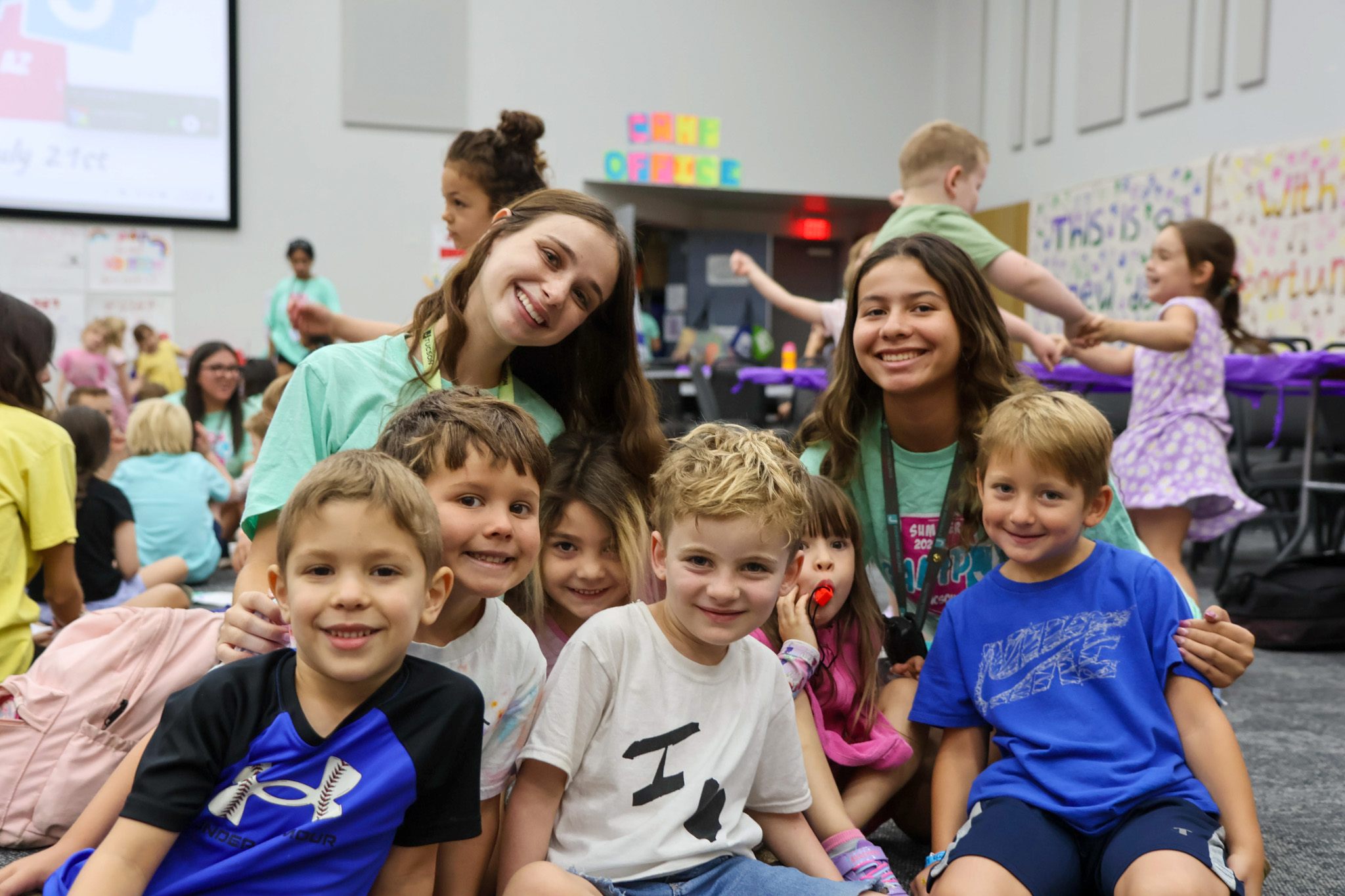
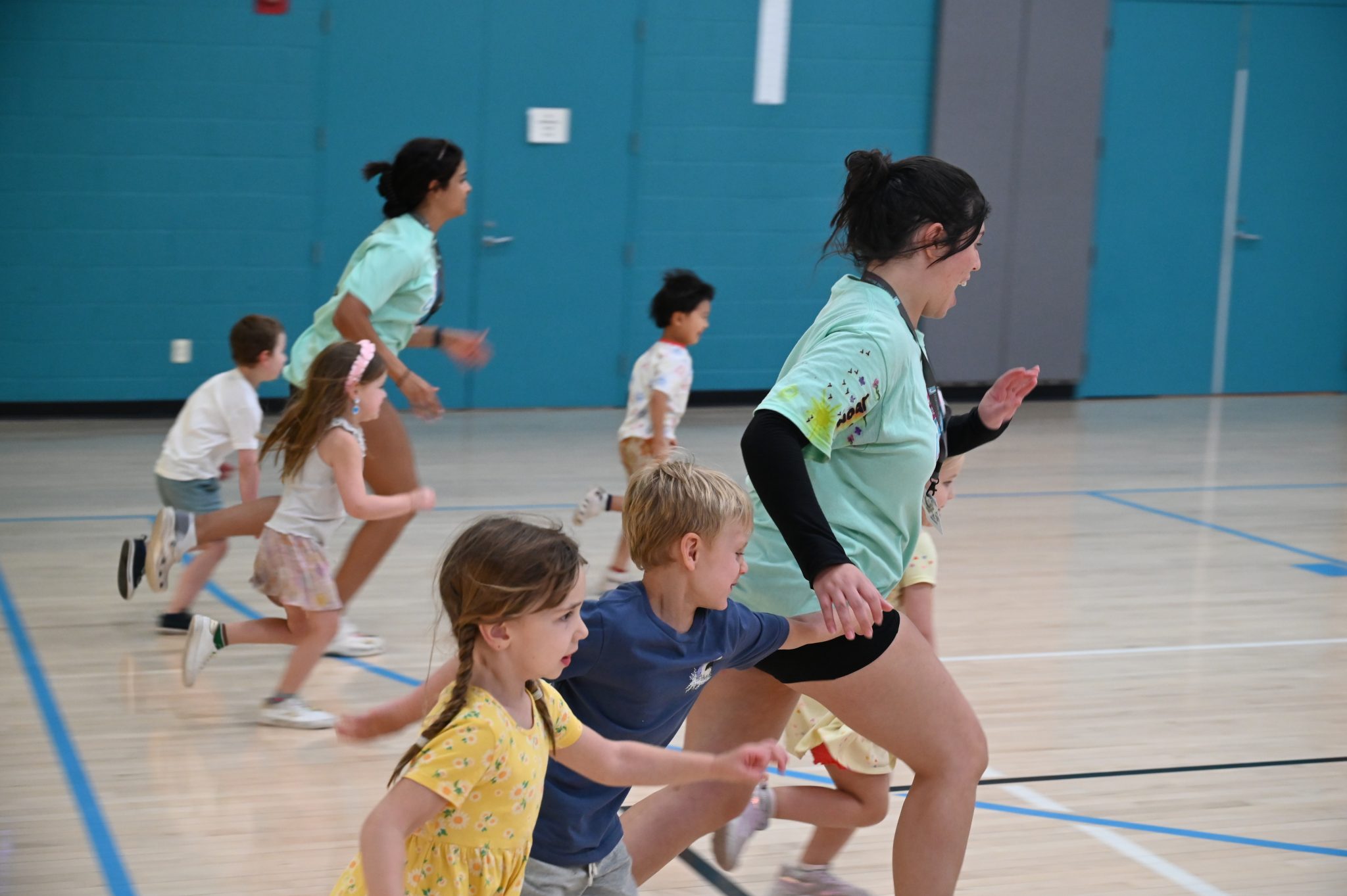
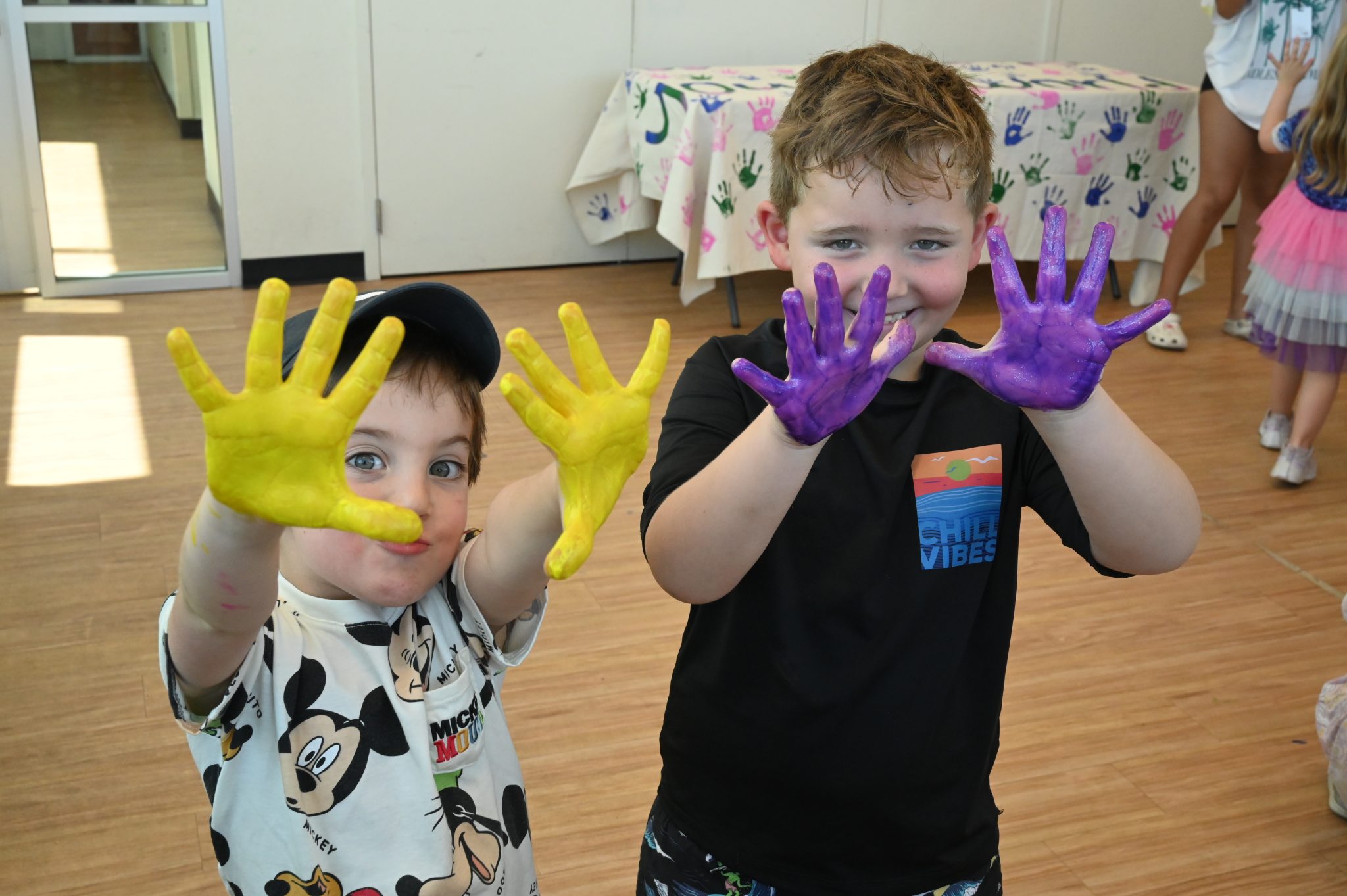
While winter has only just arrived, Tucson J staff are already busy preparing for summer, putting the final touches on what will be a magical summer at Camp J. From May to July, the Tucson J transforms to support hundreds of campers who spend the summer swimming, creating, playing, competing, and exploring. 

This summer will be particularly special as we welcome a new Camp J leader— Cass Johnson, who has joined the Tucson J as the director of youth + camp.  

Meet Cass Johnson

Across every chapter of her career, from running high–energy summer camps at the YMCA and Girl Scouts of Southern Arizona, Cass’s passion lies in creating spaces where people can grow, connect, and shine — the same core values that make camp a magical and transformative space. Cass’s primary goal is to create micro-communities where kids and adults alike can feel supported, confident, and engaged. This combination of experience and drive equips Cass to lead programs, support teams, and deliver impactful, well–executed initiatives that reflect strong organizational values and a commitment to growth and excellence. 

Cass Johnson-1

More than Just Summer Fun

“Camp is a uniquely magical place where kids get to step outside their everyday routines and discover who they are,” said Cass. “It’s one of the few environments designed entirely for growth, joy, and connection. Friendships form in minutes, confidence builds through meaningful challenges, and every day is filled with moments that are memorable and big.” 


“Camp gives kids space to try new things, take safe risks, and feel pride from realizing ‘I can do this.’ It’s exciting, transformative, and an experience that stays with them long after their journey.” 


Camp J is designed to ensure that all children can succeed, feel comfortable trying new things, and become more confident by summer’s end — whether that be trying new food in cooking, learning a new stroke in the pool, or creating a beautiful piece of art.  


“Kids spend a lot of time being told what to do, but camp gives them the freedom to play, explore, and learn who they are,” said Cass.  

The Camp J Experience

As one of the only American Camp Association-accredited camps in Tucson, Camp J adheres to the highest standards of safety, quality, and child-centered programming. The program is thoughtfully designed so that all campers can develop life skills, build confidence, and most importantly, have fun while doing so.  


“Camp J is distinctive in that our staff is trained to facilitate not only activities but to foster a deep sense of belonging and joy,” said Cass. “Every week, we include character-building themes that help kids grow not just as campers, but as people. Everything we do is intentionally focused on encouraging kids to recognize the strengths they have built and to explore new possibilities.”


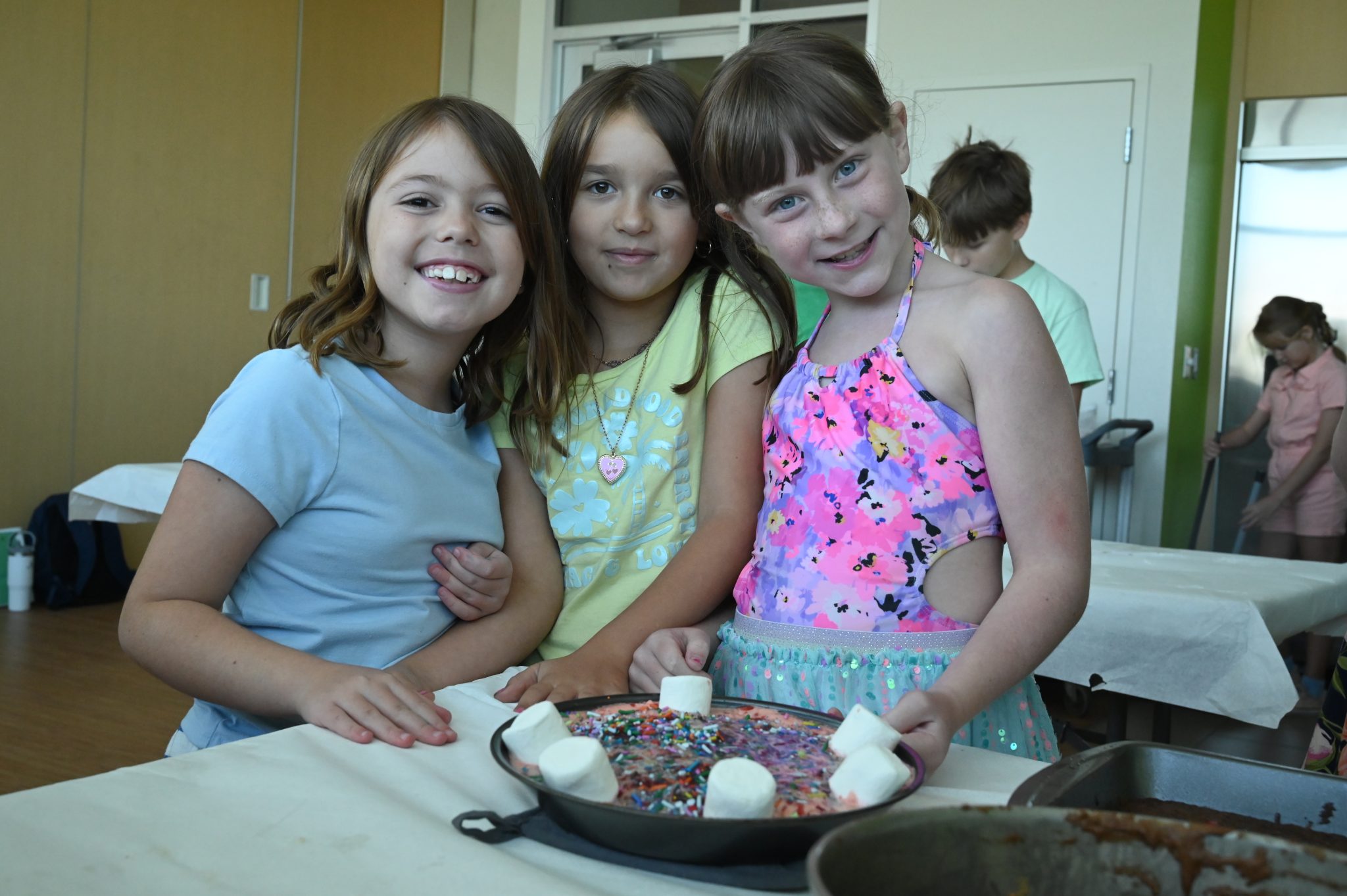
Campers are split into small groups based on age and spend the summer engaged in a variety of activities such as art, STEM, swimming, athletics, wilderness, cooking, and, for older campers, field trips around Tucson and Southern Arizona.   

The program is open to rising kindergarteners through 9th and 10th graders who enjoy a leaders-in-training program to prepare them to be counselors. Families enjoy flexible schedule options with camp running 9am-4pm and optional before and after care from 7am-9am and 4pm-6pm.  


Camp J also has access to the full amenities of the Tucson J — pool, splash pad, indoor play space, gymnasium, Fitness Center, sculpture garden, art studios, tennis courts, and outdoor areas — making each day dynamic and full of wonder. 


“Camp J is deeply inclusive. It’s a place where every child is known, supported, and given the chance to grow,” said Cass. 

Mark Your Calendar!

Registration for 2026 Camp J opens on January 4 for new and existing Tucson J members, and on January 11 for all guests. Pick and choose which weeks your camper will be at Camp J or register for all 10 weeks! 


Please contact Cass Johnson at 
cjohnson@tucsonjcc.org with any questions, and we look forward to seeing you next summer!  


Q+A: Artist Russell Kahn

We are excited to host artist and instructor Russell Kahn in our Fine Art Gallery for his upcoming show, Sense of Place. 


Opening January 14 and running through February 22, enjoy pastels, drawings, prints, and ceramics of the natural world through Russell’s eyes. “It’s an exploration of where one is and lives in this moment and time.” 


A reception featuring light refreshments and community engagement will be held on Thursday, January 22 from 6-7:30pm with a special presentation by Russell at 6:30pm. 


Keep reading to learn more about Russell and what you can expect in January!

Can you share your creative process, both in the studio and in shaping the overall vision for the show? 

I’ll share the creative process for my plein aire work. I find a spot to capture what I am seeing and complete a quick Sharpie drawing to get the essence of the composition, line, and possibly some of the shading. Finally, I’ll use a black or other dark paper color to create in oil pastels. My printmaking and clay work are directly related to my Sharpie sketches from observation or imagination. 
  

What themes are you exploring in this show, and why are they important to you? 

“Sense of Place” is the theme I’m exploring. It’s important to me because where I am, I need to remember to be 100 percent present, and if it’s with people, nature, or in a barrio, I need to feel it and hope my art reflects it. Plein aire painting has a way of capturing that sense of place; my prints and clay work are an extension of that feeling. 


Who is your favorite artist or one you draw inspiration from?  

I draw inspiration from many different artists. 


Old school: Tiepolo, Carravagio, Rembranndt, Monet, Van Gogh, Bonnard, Morandi, Giacometti, O’keefe, Janet Fish, Wolf Kahn, Mary Azarian, John Muafangejo, and many more.


Is there a particular piece in the show that holds a meaningful story or memory for you? 

The piece that holds a lot of memory for me is a recent piece that I did while visiting Maine and working there this past summer. “Breakwater Lighthouse” is located in Rockland, Maine, and it was a place I would go to for solace and begin my plein aire Sharpie drawings (and then oil pastels) when the pandemic first hit in Spring of 2020.  


These initial sketches take me back to the place where I was at the precipice of changing my life forever. In just a few months, I took a job in Kayenta, Arizona, teaching art on the Navajo Rez (20 miles from Monument Valley), and did a sketch and oil pastel a day for almost 2 years. Then, I ended up in Tucson, Arizona, and fell in love with the arts community here and was able to reconnect with family and see my dad and step-mom more often before my dad’s passing in October 2024.


It’s been a whirlwind, but with art as with life, it’s always best to make the next move from the heart or the gut feeling— it’s usually the right move.


How do you hope viewers feel after experiencing the show? 

I hope that any of my viewers will be excited about the sense of place I’ve captured and be inspired to go outside and see the beauty for themselves, and ultimately pick up a brush, pastel, or piece of clay and try it for themselves. 


Why are you excited to share your work at the Tucson J? 

I am excited to share my work so the viewers can feel and see the “SENSE OF PLACE” theme I have created and walk away wanting to explore places for themselves. 

About Russell Kahn 


I have traveled full circle creating and teaching art for the past 35 years in the Southwest and New England. I enjoy being part of my local community as well as globally. My roots growing up were in New York City and Cincinnati, Ohio. My parents all emigrated to America from other countries. My mom was from Tel-Aviv, Israel, my Dad from Capetown, South Africa ,and my Step Mom from Innsbruck, Austria. All of these places and cultures helped shape who I am today and how I see the world.  


I received my 120 credit studio diploma from the School of the Museum of Fine Arts in Boston and my K-12 teaching certificate through Tufts University in Medford, Mass.  While teaching art in Chinle, AZ, on the Navajo reservation I received my Master in Arts degree from Adams State College in Alamosa, Colorado.  I then moved to Tucson, Arizona and taught art in Sells, AZ at Baboquivari High School on the Tohono O’odham reservation. After that, I switched gears and taught elementary art in Vail School district at Desert Willow Elementary School. In 2003, it was time to go from the frying pan to the ice box and my family and I moved to mid-coast Maine. I taught art at 4-6 different schools in and around Belfast, Maine followed by the next 13 years at Camden High School.  I returned to the Southwest in 2020 in part due to the pandemic to teach at Monument Valley High School in Kayenta,AZ for 2 years.   


I now live in Tucson, Arizona and teach part time at Desert Sage High School, the Clay Co-op, and The Drawing Studio.  I enjoy exploring the arts in many different media but absolutely love printmaking, drawing with my sharpie, creating soft and oil pastel paintings and working with ceramics,  both wheel throwing and hand building.  My philosophy of art education is that everybody can express themselves through the arts, no matter what age or background. I enjoy facilitating my students through the processes of the creative arts and help them realize that their voice and risk taking is the most important thing about the arts.